Field note
Baked or pan fried tofu for rice bowls: compare oil, texture and effort
Compare oven and skillet recipes for tofu rice bowls, including oil added at each stage, texture cues and cooking work. Use matching rice and vegetables to compare the methods and read ingredient nutrition figures accurately.
Part 01
of 10
01 / Field note
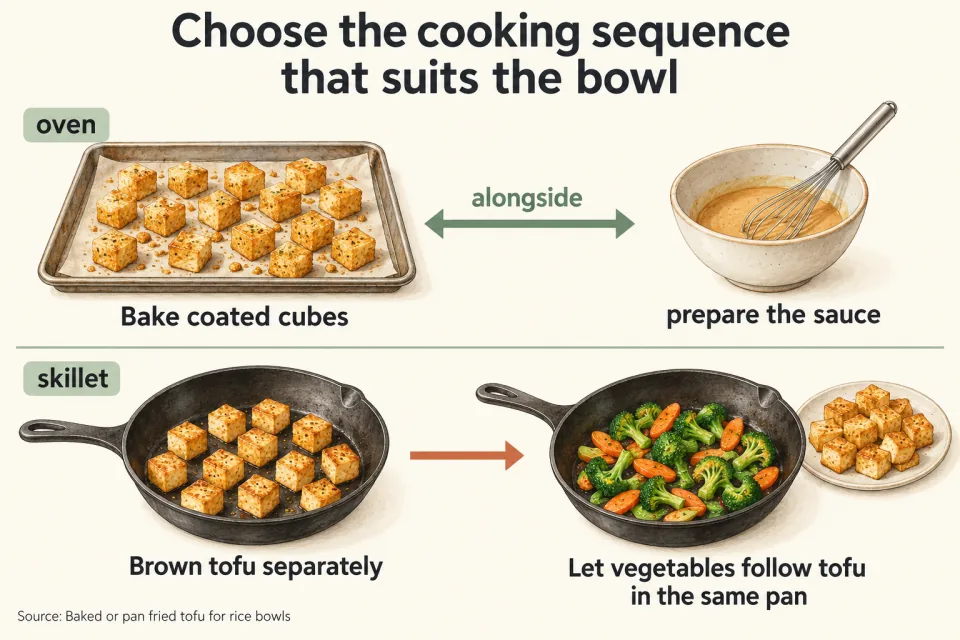
Choose the cooking sequence that suits the bowl
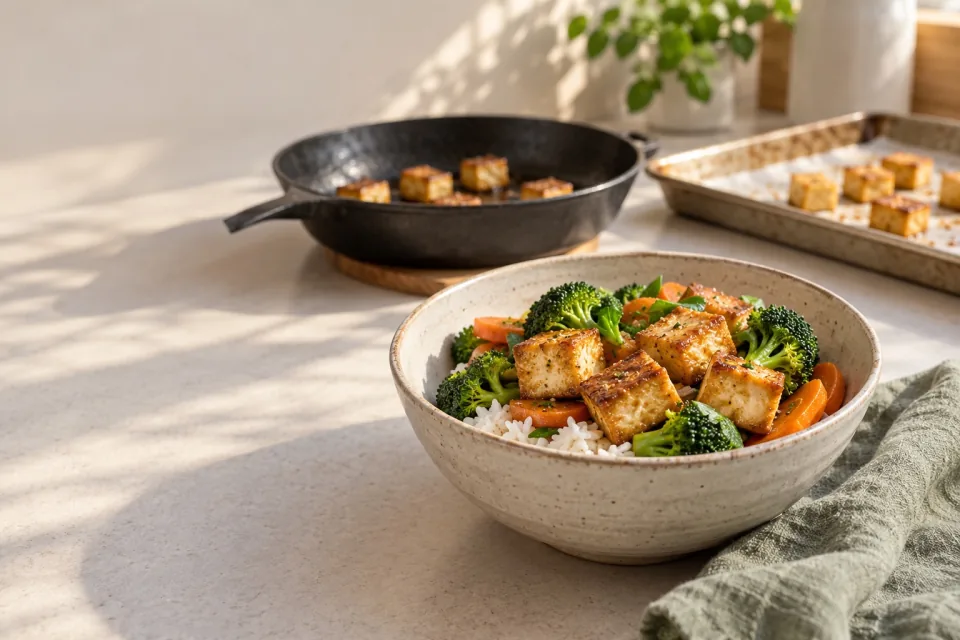
Baked tofu suits a tray method with a scheduled turn, while pan fried tofu suits a skillet sequence that moves from browning tofu to cooking vegetables. The recipes here offer different finishes: marinated tofu baked until lightly browned, coated cubes baked until golden, and tofu browned in a pan before vegetables and sauce enter the dish.
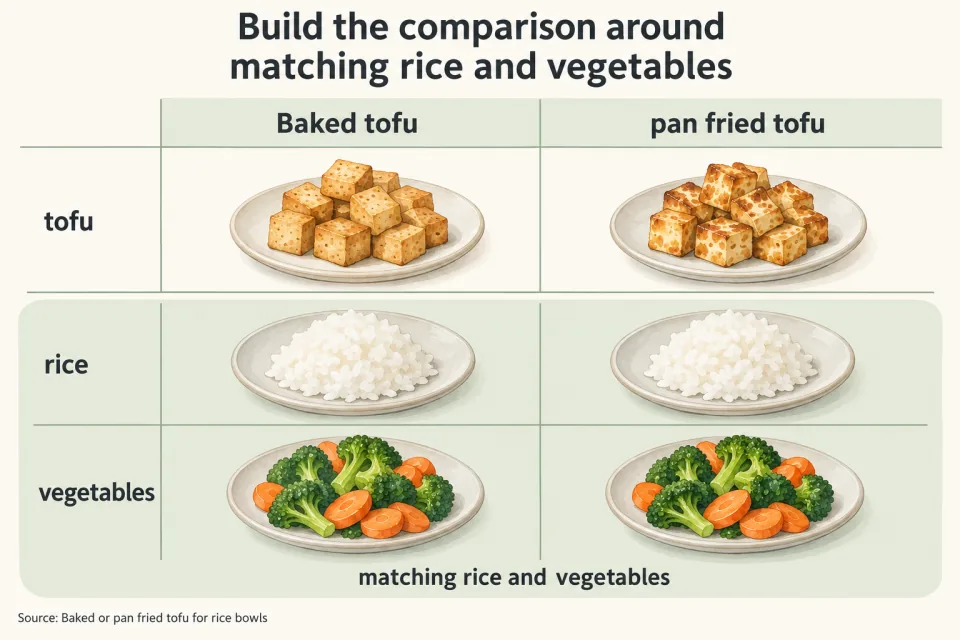
For a useful comparison, give the bowls the same cooked rice and the same vegetables in matching amounts. Also match the starting tofu type and weight, then note any coating, marinade or sauce used for each method.
Read the oil amount beside the step that uses it. Oil appears in these recipes in a tofu marinade, on coated cubes, in a vegetable pan or in a sauce. Start by choosing a recipe for the finish you want, then follow its order of work and account for the additions across the bowl.
Part 02
of 10
02 / Field note
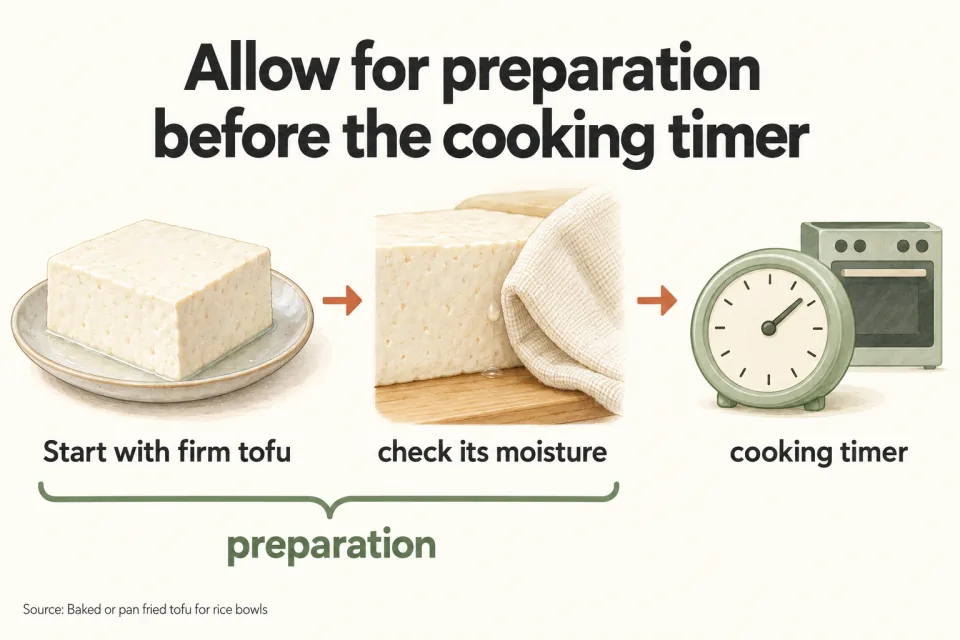
Start with firm tofu and check its moisture
Firm tofu is the starting point for these oven and skillet recipes. Rutgers Cooperative Extension describes firm tofu as suitable for baking and stir-frying. Illinois Extension explains that firmer tofu contains less water than softer types.
Allow at least 30 minutes for the Illinois Extension pressing method, which uses a weighted plate on top of tofu wrapped in a towel. Replace the towel when it becomes saturated, following the guide's method. Illinois Extension explains that pressing helps cubes hold their shape and helps tofu become crisp during cooking.
For extra-firm or super-firm tofu, Illinois Extension uses a very wet paper towel after wiping as a sign that pressing may be useful. The delicate texture is why Illinois Extension says to leave silken and soft tofu unpressed. Choose the firm tofu specified by the baking or pan recipe before starting this preparation.
After pressing, choose a cut from the recipe you are following. Food Hero offers several cuts, including sticks, triangles, slices and cubes. The University of Maine uses 1-inch cubes for its coated oven recipe. For a cooking comparison, choose matching cuts as well as matching starting weights, and record the shape with the method.
Tofu takes seasonings and spices well and has a mild flavor, according to Illinois Extension. The recipes put that seasoning step in different places: Food Hero marinates its pieces, while Health Canada seasons cubes before browning.
Part 03
of 10
03 / Field note
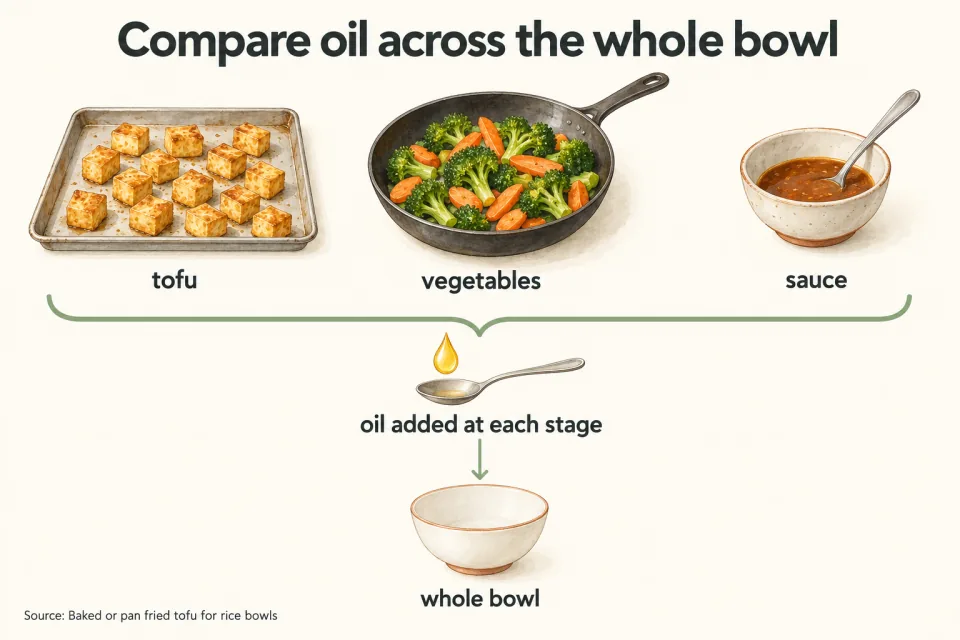
Compare oil across the whole bowl
The listed oil belongs to a particular recipe and cooking stage, so compare those stages before choosing a method on oil alone. Food Hero's baked recipe uses 16 ounces of firm or extra-firm tofu with either 1 tablespoon of oil in its soy-honey marinade or 3 tablespoons in its soy-lime marinade. The tofu quantity stays the same while the marinade changes.
Food Hero drains the pieces after marinating. When noting its oil, label the amount as oil mixed into the marinade. That describes the recipe input clearly, without presenting it as a measurement of oil in the finished tofu.
The tofu-browning step in Health Canada's recipe uses 2 teaspoons of sesame oil for 350 grams of extra-firm tofu; the vegetables get cooking spray. Give the spray its own place in a comparison, alongside the measured oil. Include the oil used for cooking vegetables when accounting for the bowl.
The University of Maine recipe adds oil to its tofu coating and also uses sesame oil in the sauce. South Michigan Food Bank uses oil in a pan sequence that starts with tofu and continues with vegetables. Count those additions across the preparation, with a separate entry for sauce when it contains oil.
For matching bowls, hold the rice and vegetable quantities steady and write down where the oil goes. Compare the recipe's stated tofu weight too. When a recipe calls for a block, record the weight of the tofu you use so that the comparison has a stated starting amount.
Part 04
of 10
04 / Field note
Bake marinated tofu until firm and lightly browned
Food Hero's marinated baked tofu finishes firm and lightly browned. Vinegar and either honey or brown sugar join the soy sauce and oil in its soy-honey option. Prepare this marinade before the tray reaches the oven.
Cut the pressed tofu into the chosen shape, then coat it with the marinade. Food Hero places a draining step after a marinade period of at least 30 minutes. Follow that order when choosing this method: the recipe moves from a wet marinade to drained pieces for baking.
Food Hero specifies an oven temperature of 350°F and about 30 minutes of baking, with the tofu turned once for a firm, lightly browned finish. Use the recipe's finish cues alongside the time, looking for the light browning and firm texture it specifies. The baking time describes the oven stage, with pressing and marinating coming earlier in the work.
When comparing this method with coated baked cubes, record the marinade and draining step alongside the oven setting. That gives the comparison a description of what happened to the tofu before baking, as well as how it cooked.
Part 05
of 10
05 / Field note
Bake coated cubes and prepare the sauce alongside
Cornstarch-coated baked tofu is coated, spread apart and baked before being tossed with sauce. A block of firm tofu gets a coating of pepper, 2 tablespoons of cornstarch and 1 tablespoon of oil in the University of Maine Cooperative Extension's recipe.
Arrange Maine's coated cubes in one layer, spacing them so none touch. Record the coating and tray arrangement when comparing this recipe with Food Hero's marinated tofu.
Maine uses a 400°F oven and flips the cubes after about 15 minutes. Its baking time is 25–30 minutes, ending with firm, golden brown cubes. Begin the sauce while the tofu cooks, as the recipe directs. Mix the cornstarch and water for the sauce separately, then stir that mixture into the simmering sauce to thicken it.
Maine's sauce contributes another teaspoon of sesame oil to the recipe. Toss the baked cubes with the sauce after cooking, then serve over white or brown rice. For an oil comparison, put the coating and sauce entries beside each other; for a texture comparison, distinguish the golden cubes leaving the oven from the finished sauced dish.
Part 06
of 10
06 / Field note
Brown tofu separately before cooking the vegetables
Health Canada's skillet method browns the tofu separately, then brings it back to vegetables and sauce. Its tofu and vegetable stir fry uses a nonstick skillet and seasons the tofu cubes with ginger, curry powder and pepper.
Brown the seasoned cubes, then move them to a plate. The vegetables cook next, giving the tofu a separate browning stage before it joins the sauce. Set out the plate for this step alongside the skillet and its lid.
After two minutes of cooking onion and garlic, Health Canada's recipe adds four cups of vegetables. The tofu returns after the vegetables have simmered, covered, for about five minutes with broth, hoisin and cornstarch. Follow the sequence through that final return to the pan when assembling the bowl.
The complete stir-fry has a preparation time of 10 minutes and a cooking time of 15 minutes in Health Canada's recipe. Put the rice on a separate line in a bowl schedule, so its preparation has a place alongside the stir-fry.
This is the pan sequence to choose when you want to remove the browned tofu during the vegetable stage. For comparison with an oven recipe, note the tofu's appearance when it moves to the plate, then compare the assembled bowls after the final combination with sauce, rice and vegetables.
Part 07
of 10
07 / Field note
Let vegetables follow tofu in the same pan
South Michigan Food Bank's tofu stir-fry leaves the tofu in the pan as the vegetables and aromatics join it. In South Michigan Food Bank's recipe, one tablespoon of sesame or olive oil accompanies a block of firm tofu and two cups of vegetables.
Start by sautéing the tofu until it is golden on every side. The vegetables and aromatics then cook with the tofu for five to seven minutes. Finish with two tablespoons of soy sauce, allowing another one to two minutes of cooking. Serve the mixture over rice or noodles; choose rice when comparing it with a rice bowl topped with baked tofu.
This sequence differs from Health Canada's method, which moves browned tofu to a plate while the vegetables cook. Here, the golden surface is the cue to move on to the vegetables, with soy sauce added at the finishing stage. Record that difference alongside the amount and kind of oil.
The vegetable and soy-sauce times describe the later cooking stages. Start the work plan with tofu browning, then add those later jobs in sequence. This gives the pan method a full order of work, including the browning that happens before the timed vegetable stage.
Part 08
of 10
08 / Field note
Build the comparison around matching rice and vegetables
Matching rice and vegetables gives the tofu comparison a consistent starting point. Use the same rice, the same vegetable mix and the same amounts in each bowl, and decide whether sauce is also being held constant or compared as part of each recipe.
For four servings, the University of Southern California WorkWell Center pairs 20 ounces of cooked rice with 18 ounces of vegetables and 7 ounces of baked tofu in its teriyaki bowl. That recipe supplies an assembly example with ingredient weights attached. Use the stated cooked rice weight when describing this bowl, and label the tofu as baked.
The vegetables in that recipe cook over medium heat until crisp-tender, using one tablespoon of olive oil and four to five minutes of cooking. It adds teriyaki sauce to the vegetables before the baked tofu joins them for further stir-frying. In this bowl, the tofu has a pan stage after baking, and the vegetable oil belongs in the bowl's ingredient accounting.
EatFresh builds its bowl on brown rice, adding pineapple, avocado, shredded carrot and cucumber before finishing with tofu and nori; sesame seeds are optional. Its marinade pairs soy sauce and toasted sesame oil with pineapple juice, lime juice and ginger, with chili-garlic sauce as an option. Include the marinade and toppings when describing this recipe's ingredients.
For a comparison of cooking methods, choose a common base before evaluating the tofu. For a comparison of complete recipes, record each recipe's vegetables, sauce and toppings as well. Write down which question you are answering so that changes to the bowl remain visible.
Part 09
of 10
09 / Field note
Read nutrient figures as values for named ingredients
Use nutrient values that match the tofu's stated preparation and ingredients. USDA FoodData Central lists energy and protein values for uncooked firm tofu prepared with calcium sulfate. Attach those figures to that particular tofu entry when comparing starting ingredients.
For that tofu, USDA FoodData Central lists fiber, carbohydrate and fat values. USDA FoodData Central also gives calcium and sodium values for the same tofu. Label these ingredient values with the food name and its uncooked state, separate from any estimate for a sauced rice bowl.
Carrot can be described separately when it appears among the bowl vegetables. USDA FoodData Central lists energy and fat values for uncooked carrot. The same USDA FoodData Central carrot entry lists sodium, fiber and carbohydrate values.
For a complete bowl estimate, lay out the weights of the tofu, cooked rice and vegetables, then the oil and individual coating and sauce ingredients. Match each ingredient to a USDA FoodData Central entry and its preparation state, using the uncooked tofu weight with the uncooked entry. Leave the rice and vegetable entries unchanged across the comparison, then track the recipe's additions beside the tofu. Label oil by the amount added at each step, noting any marinade-draining step beside it.
The calculation in USDA FoodData Central's documentation is the ingredient weight in grams times its nutrient value per 100 grams, with that result divided by 100. Its documentation also explains that household portion weights are specific to each data type. Use ingredient weights in the comparison, with the database entry and preparation state written beside each food.
Part 10
of 10
10 / Field note
Allow for preparation before the cooking timer
Plan from the recipe's starting ingredients, including any preparation already completed before its directions begin. The University of Southern California's teriyaki bowl starts with baked tofu and cooked rice. Schedule those preparations before combining the vegetables and sauce if you are making the components yourself.
EatFresh gives a ready time of 20 minutes for its bowl. The directions separately include pressing for at least 20 minutes and marinating for 30 minutes. Put the pressing and marinade stages into the work plan when using that bowl. Read the full sequence before choosing a recipe for a particular cooking window.
Include the equipment and cleanup steps in the choice as well. Food Hero suggests lining the baking sheet with foil to simplify cleanup, while Maine permits a lined or greased baking sheet. Health Canada's sequence uses a plate for the browned tofu, followed by a covered vegetable stage in the skillet.
Choose the oven route for its tray work and scheduled turn, or the pan route for its successive skillet stages. Pair that decision with the recipe's seasoning, coating and sauce, then use matching rice and vegetables to make the comparison about the tofu preparation you selected.
Sources / 11
- All About Tofu
- Baked Tofu
- General Tso’s Tofu
- Tofu and vegetable stir fry
- Tofu Stir-Fry
- No-Tuna Poke Bowls
- Teriyaki Tofu Rice Bowl
- Tofu Made Easy: A Simple Guide to a Nutritious and Versatile, Plant-Based Protein
- Tofu, raw, firm, prepared with calcium sulfate
- Carrots, raw
- FoodData Central Foundation Foods Documentation
Continue reading
Return to the card board