Field note
Beans on toast or eggs on toast: protein, bread and toppings
Compare breakfast preparations using the same bread, with sourced ingredient descriptions. See how bean sauces, butter and different egg methods change what goes on the plate.
Part 01
of 10
01 / Field note
Compare the topping on the same bread
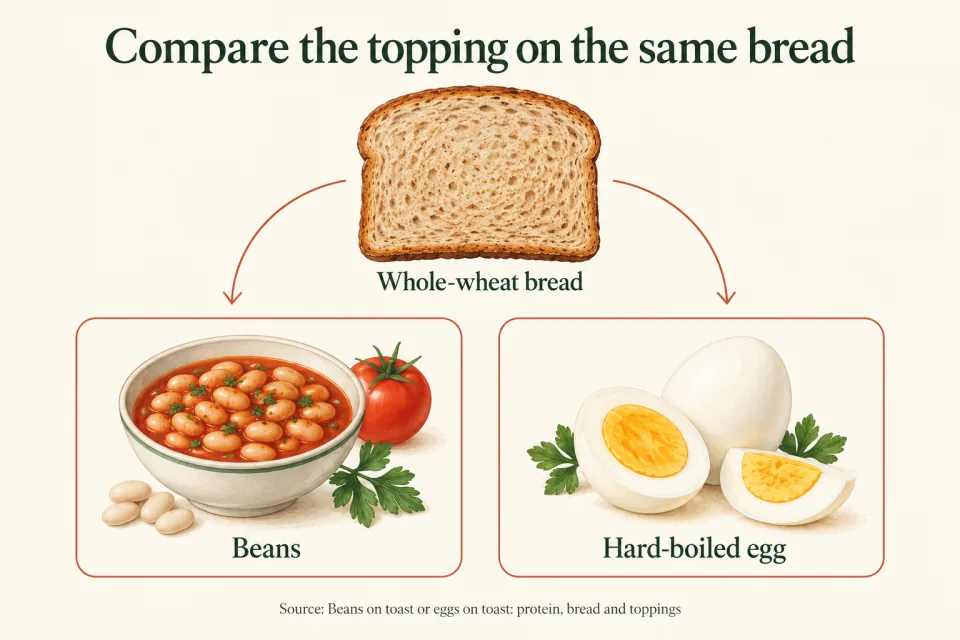
Compare beans on toast and eggs on toast using the same bread and the same bread weight, then describe the topping and its additions separately. This makes the breakfast comparison specific: baked beans in tomato sauce, for example, or boiled egg with butter on the toast.
Start by writing down the bread, the topping and anything added during cooking or at the table. For beans, include the sauce surrounding them. For eggs, name the cooking method and any oil, cream or butter. A description such as eggs on toast leaves those details open, while scrambled eggs with cream and butter identifies the preparation being compared.
Use ingredient nutrition records alongside those descriptions. A food record describes a particular food, so the hard-boiled egg entry belongs beside hard-boiled egg, and the whole-wheat bread entry belongs beside that kind of bread. Record the amount served separately from the ingredient description.
The practical comparison then has a clear order. Establish the bread base, describe the topping, and account for the spread and sauces. This also gives each cook a useful way to compare their usual breakfast without turning a recipe portion into an amount that everyone should eat.
Part 02
of 10
02 / Field note
Whole-wheat bread belongs in the comparison
Whole-wheat bread contributes protein, fibre and calories to the breakfast, so it deserves the same attention as the topping. USDA FoodData Central records these nutrients and calories in its entry for commercially prepared whole-wheat bread.
That entry describes the bread itself. Place it beside the bread description in a breakfast comparison rather than assigning all the protein to the eggs or beans. For a comparison focused on toppings, use matching bread portions and leave the bread reference unchanged as you move between the egg and bean preparations.
Bread also varies within a food category. The USDA FoodData Central record includes variation in protein measurements among the whole-wheat bread samples analysed. The record is therefore useful for describing the analysed bread, without making every loaf identical.
For a practical record, note both the kind of bread and its weight. Slice count can remain part of the serving description, but the food record expresses its values by weight. Butter, an oil drizzle and anything rubbed or spread onto the toast should have their own place in the preparation notes. This keeps the bread comparison readable when the toppings become more elaborate.
Part 03
of 10
03 / Field note
Hard-boiled egg gives a defined protein reference
Hard-boiled egg provides a clearly specified egg preparation for the ingredient comparison. USDA FoodData Central records protein and calories for whole hard-boiled egg. Its dietary fibre entry is classified as an assumed value in USDA FoodData Central.
Read the egg and bread entries side by side. The bread has its own protein contribution, while its fibre entry differs from the egg entry. This is why a useful breakfast description names the bread as well as the food placed on top, even when the question begins with eggs.
For the cooking method, Bill Granger's guide in Good Food places room-temperature eggs into boiling water, lowers the water to a simmer and gives 10 minutes for hard-boiled eggs. That is a specific method attached to a specific result. Use the hard-boiled food reference with this preparation when describing the ingredients in the comparison.
If the toast has butter or the egg is served with a sauce, record those additions separately. The ingredient reference remains a description of whole hard-boiled egg. A breakfast containing egg, bread and a spread should be named with all those components so the nutrition reference and the recipe description remain aligned.
Part 04
of 10
04 / Field note
Poached eggs need gentle water and careful draining
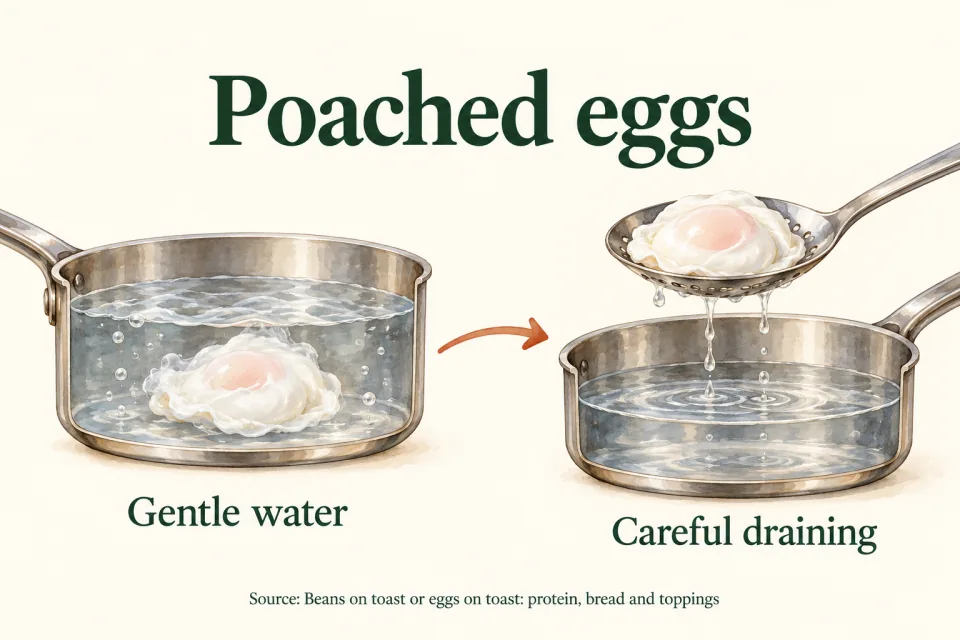
Poached eggs offer a toast topping with a cooking method that does not require oil, as the British Heart Foundation explains. The British Dietetic Association's recipe uses one or two eggs and one or two slices of wholemeal bread per person. These are recipe portions, separate from the weight-based ingredient figures.
The British Dietetic Association starts its poaching method with approximately 3 cm of water in a frying pan at a very gentle simmer. Crack each egg into a cup before carefully pouring it into the water. The cup is part of the method, so prepare it alongside the pan before beginning the eggs.
Draining deserves attention when the eggs are going onto toast. The association's method rests the slotted spoon on folded kitchen paper to remove excess water. Transfer the drained egg to the bread rather than carrying the pan water onto the plate with it.
This gives the egg preparation its own practical detail: gentle poaching followed by draining. In the breakfast comparison, name it as poached egg and describe any spread on the bread separately. Oil used elsewhere on the plate still belongs in that description, even though the poaching method itself does not require it. The method and the additions are distinct parts of the recipe.
Part 05
of 10
05 / Field note
Fried and scrambled eggs have different additions
Fried and scrambled eggs need a fuller ingredient description than the word eggs alone. Bill Granger's methods in Good Food illustrate the difference through their use of olive oil, cream and butter. These additions belong beside the egg method in any breakfast comparison.
For fried eggs, Bill Granger's Good Food method uses two teaspoons of olive oil for two eggs, with toast and spicy tomato relish at serving. Write the relish into the breakfast description as well as the oil. The frying ingredient and the condiment enter at different stages, but both are part of the finished preparation.
Bill Granger's scrambled eggs in Good Food combine two eggs with 80 ml of cream and cook in 10 g of butter. The method folds the setting egg from the edge of the pan towards the centre and serves it just set. Cream belongs in the egg mixture, while butter belongs to the pan stage; describing their roles makes the recipe easier to follow.
For a practical comparison, choose the actual egg method before attaching a nutrition reference. A note headed scrambled eggs with cream and butter conveys more than a general egg label. It also makes a comparison with beans in tomato sauce more useful, because the ingredients accompanying each topping are visible.
Part 06
of 10
06 / Field note
Name the beans and the sauce
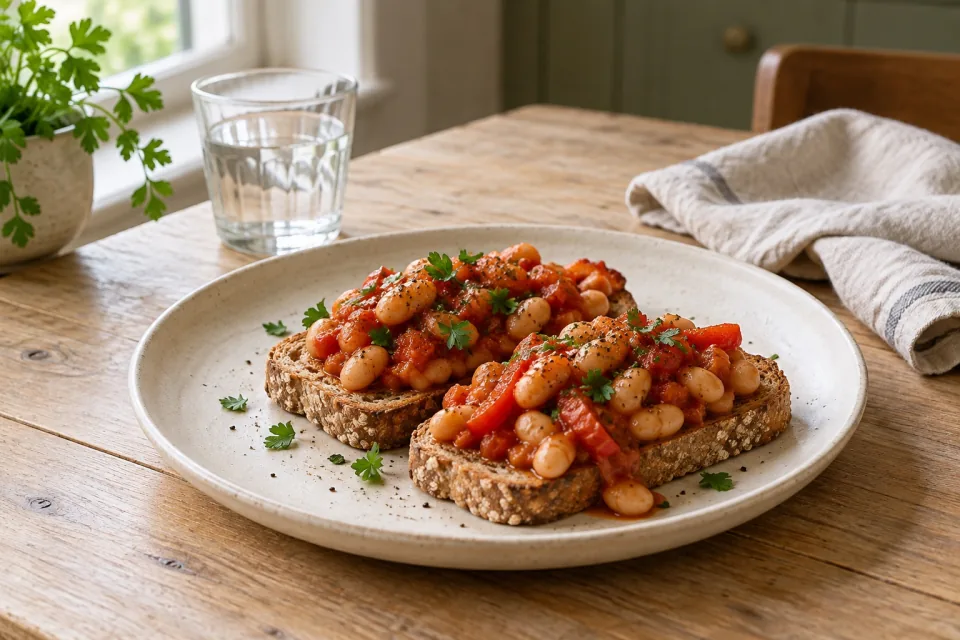
Beans on toast needs a description of the bean preparation, especially its sauce. The basic dish is baked beans served over toast. The British Heart Foundation explains that flavourings such as barbecue or curry, and additions such as sausages, change the composition of canned baked beans.
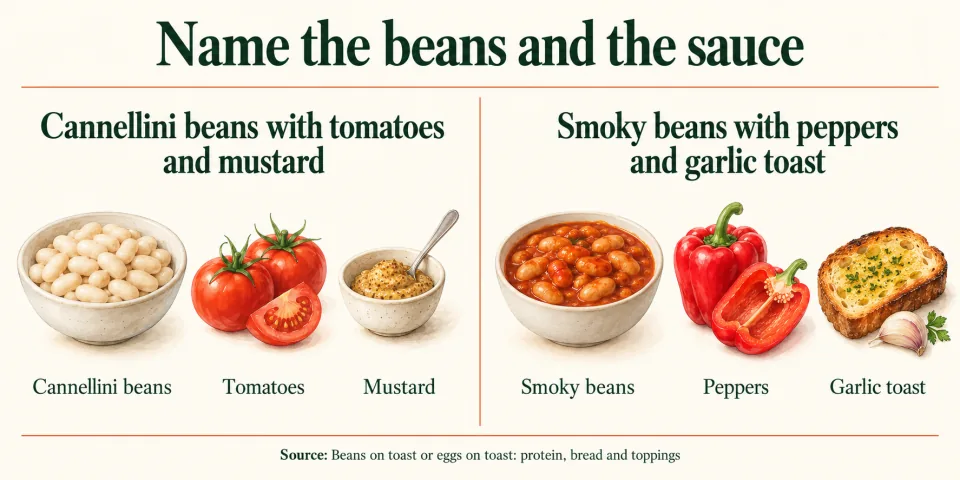
Use a name that identifies the preparation you are discussing. Baked beans in tomato sauce, cannellini beans with tomatoes and mustard, and butter beans with smoked paprika describe different recipes. The supplied cooking sources offer these distinct approaches, giving the comparison more detail than a general beans label.
The British Heart Foundation identifies tomato sauce as the main source of added sugar in baked beans. Its separate homemade bean recipe uses tomatoes, onion, mustard and vinegar without added sugar. These descriptions show why the sauce ingredients belong in the comparison alongside the beans.
For a breakfast record, write down the bean variety when the recipe specifies it, then describe the sauce and any ingredients added at serving. Include the sauce as part of the topping being served. This creates a useful distinction between the prepared beans and a condiment added afterwards, and gives the next cook enough detail to understand which dish the comparison concerns.
Part 07
of 10
07 / Field note
Cannellini beans with tomatoes and mustard
The British Heart Foundation's cannellini bean topping combines drained beans with chopped tomatoes, onion, Dijon mustard and apple cider vinegar. It is a specific homemade option for beans on toast, with the bean variety and sauce ingredients clearly named.
Begin with the onion, frying it gently until tender. In the British Heart Foundation recipe, the remaining topping ingredients then join the onion and simmer for 10 minutes. This sequence places the onion cooking before the beans and tomato mixture, rather than putting every ingredient into the pan together at the start.
The recipe's accompanying mushrooms have a separate preparation. They are brushed with garlic and olive oil, sprinkled with herbs and baked until tender, then finished with lemon juice. Describe them as an accompaniment when comparing breakfasts so that their oil and flavourings remain visible outside the bean topping.
The British Heart Foundation describes this homemade bean recipe as having no added salt or sugar. That describes what is added during preparation; use the same wording when naming the dish. The recipe can be served on toast with an optional egg, so beans and eggs can also share the plate.
For that combined version, record the bean topping, egg and mushrooms as separate components. This follows the recipe's structure and gives a clear account of what was served without merging the ingredients into a general breakfast label.
Part 08
of 10
08 / Field note
Smoky beans with peppers and garlic toast
Good Food's smoky beans on toast uses either drained butter beans or drained chickpeas in a tomato sauce. Onion and red pepper begin the pan mixture, while smoked paprika, red wine vinegar and garlic provide the sauce's named flavourings.
Soften the onion and red pepper in oil before adding the beans and sauce ingredients. The sauce includes chopped tomatoes and a little sugar as well as the paprika, vinegar and garlic. Naming the oil at the first stage makes it part of the recipe record, rather than allowing it to disappear behind the finished dish's bean label.
Simmer the mixture until the sauce has reduced and thickened, following the recipe's stated endpoint. This is a different instruction from the fixed simmering time in the cannellini preparation. For the smoky version, the sauce's consistency tells the cook when that stage is complete.
The toast has its own preparation: rub it with garlic and drizzle it with oil before adding the beans and chopped parsley. If comparing this dish with eggs on plain toast, identify that oil drizzle explicitly. For a comparison using identical bread preparation, describe the chosen bread base separately from this recipe's garlic-and-oil finish.
Record whether the pan contains butter beans or chickpeas. The recipe permits either, but naming the choice preserves the detail needed to describe the breakfast that was made.
Part 09
of 10
09 / Field note
Butter is a separate ingredient on the toast
Butter deserves a separate entry when comparing toast breakfasts. USDA FoodData Central records the calorie content of unsalted butter. Its entry describes butter by weight, separately from the records for bread or egg.
Measure and record butter as its own ingredient when describing a breakfast. Also note where it enters the preparation: spread onto toast or used in cooking. Bill Granger's scrambled-egg method puts butter in the pan, while the British Heart Foundation's discussion of beans on toast addresses butter on the bread. Those are different uses within a recipe.
The British Heart Foundation suggests omitting butter from beans on toast because the beans already provide moisture. For that preparation, the bean sauce supplies the moist topping. This gives a practical way to serve the dish without a butter layer beneath it.
For a comparison focused on the toppings, state the butter choice for each plate. If the egg toast is buttered and the bean toast is unbuttered, include that distinction in the description rather than presenting the breads as prepared identically. If both use the same spread, record that common preparation before comparing the toppings.
An oil drizzle also needs its own description. Good Food's smoky bean recipe puts oil both into the pan preparation and onto the garlic toast, so the spread question extends beyond butter alone.
Part 10
of 10
10 / Field note
Separate the cooked sauce from table condiments
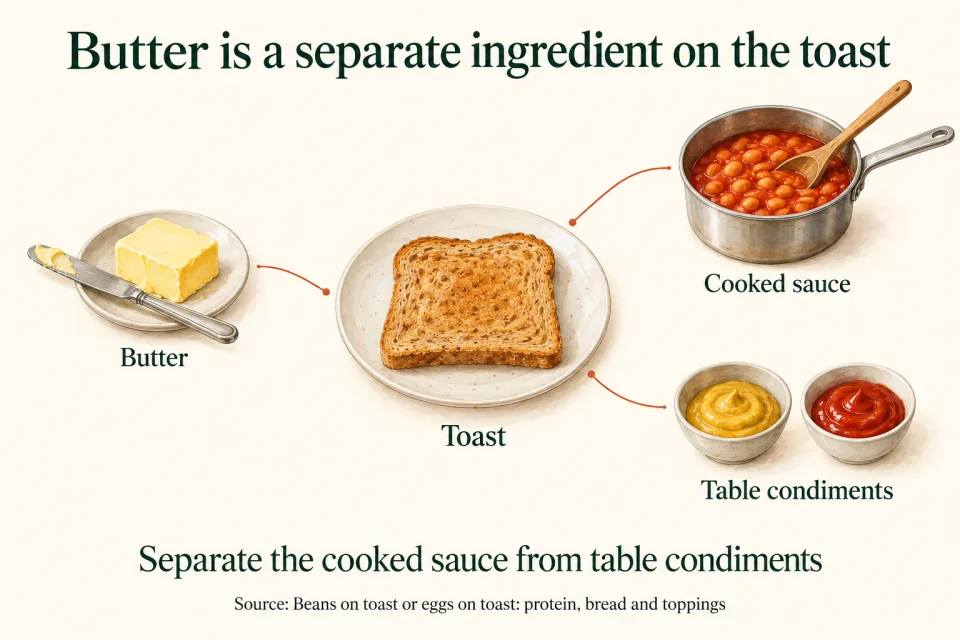
Sauce cooked with beans and sauce added at the table are separate parts of a breakfast description. The beans-on-toast reference names Worcestershire sauce stirred into the beans during heating, and ketchup or brown sauce served as condiments. Record the addition that belongs to the actual dish.
The same distinction applies to eggs. Bill Granger's fried eggs arrive with spicy tomato relish, while his scrambled-egg method includes cream and butter during cooking. A condiment served beside the toast should remain visible in the description even when the egg itself is the main focus.
A useful comparison can therefore read as complete preparation notes. For the bean option, name the bean variety, its cooked sauce, the toast preparation and any table condiment. For the egg option, name the cooking method, ingredients used in the pan, the same bread base and any relish or spread.
Place the sourced bread and hard-boiled egg records alongside the matching ingredients, with butter recorded separately where used. Distinguish the quantities used in a recipe from the food described in a nutrition record. This lets a reader follow what each record describes without turning an ingredient reference into a claim about the whole breakfast.
Choose the preparation that answers the cooking question at hand: drained poached eggs, a tomato-and-mustard bean topping, smoky beans with peppers, or the sourced beans-and-egg combination. Naming the dish precisely is the final step in making the comparison useful at the stove.
Sources / 10
Continue reading
Return to the card board