Field note
Chicken dinners that share the same burner
Cook chicken with rice, pasta, couscous or potatoes using clear ingredient quantities and a shared-burner sequence, including the preparation needed for dishes that start with cooked ingredients.
Part 01
of 09
01 / Field note
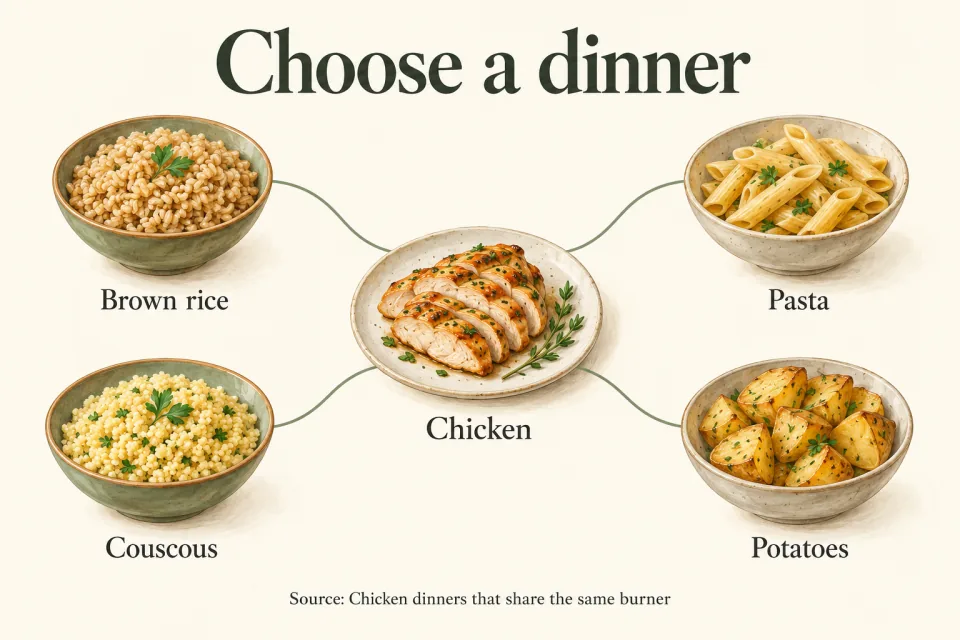
Choose a dinner by what needs cooking first
Chicken dinners fit a shared burner when the cooking order accounts for the starch, vegetables and any ingredients that need cooking beforehand. Rice can simmer alongside chicken, pasta can cook in its sauce, and couscous can finish in a covered pan after the heat is switched off.
Start by checking the ingredient list for the words cooked and hot. The chicken chowder below begins with cooked chicken, while the rice skillet begins with cooked brown rice. The chicken-and-leek dish calls for hot bouillon before its covered simmer. Those details decide what goes on the burner first.
The sequences here follow the published recipes, with an editorial adjustment where a separate component needs the same burner. Heat the bouillon before starting the main pan for the rice-and-leek dish. Brown rice needs to finish cooking before the rice skillet's celery and chicken go on the heat. Prepare the chowder's chicken before starting its vegetables.
Choose the dinner whose starting ingredients suit the cooking you want to do. The pasta dishes begin with uncooked pasta and chicken in the skillet, while the chowder includes a separate chicken stage. Read through the finishing step as well: cheddar goes into simmering pasta, but the Parmesan in the creamy pasta dish goes in after the pan leaves the heat.
Part 02
of 09
02 / Field note
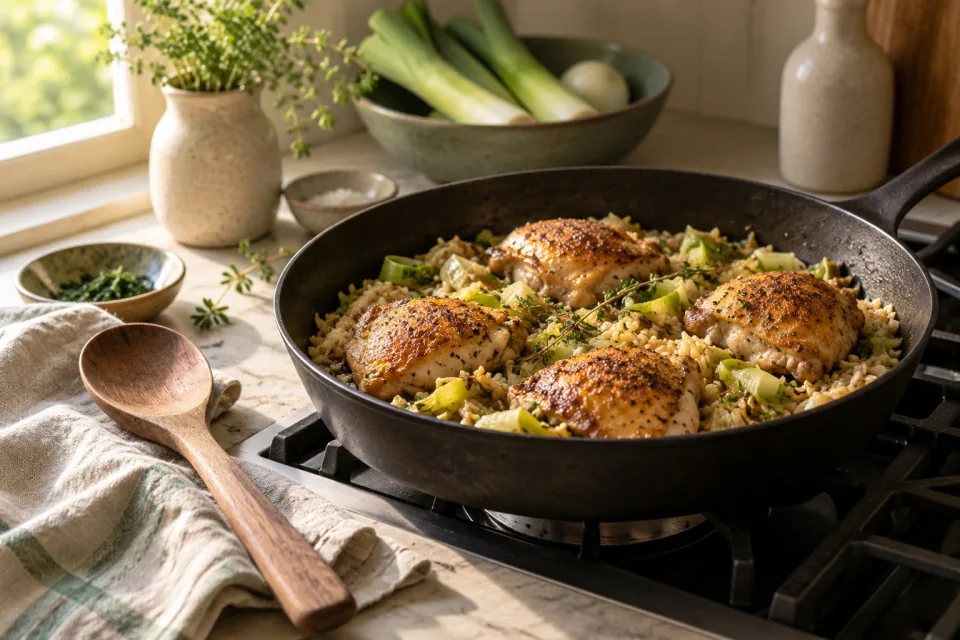
Chicken thighs with brown rice and leeks
Chicken thighs, leeks and easy-cook brown rice cook together after a brief browning stage. This Good Food Middle East recipe finishes with mixed vegetables and a covered rest, so the rice and vegetables need no separate saucepan.
For 4 servings, measure 600 g halved boneless skinless chicken thighs, 250 g easy-cook brown rice, 700 ml hot vegetable bouillon, 320 g sliced leeks and 320 g mixed frozen vegetables. The chicken coating uses 1 tablespoon each of smoked paprika and ground coriander, 2 grated garlic cloves and 2 teaspoons rapeseed oil. Mix the coating with the chicken before it goes into the pan.
For the shared-burner sequence, heat the bouillon first and move its vessel off the burner before starting the chicken. Have the rice and sliced leeks ready beside the large lidded nonstick pan. The next stage brings them into the pan together, so finish that preparation before browning begins.
Brown the coated chicken over medium-high heat for 5 minutes, turning halfway through, then transfer it to a plate. Pour the hot bouillon into the pan and stir it into the residue from the chicken. With the bouillon added, the pan is ready for the rice mixture after browning the chicken.
Add the rice and leeks with either 1 teaspoon dried oregano or 1 tablespoon fresh thyme, return the chicken, cover, bring to a boil and simmer for 20 minutes. Add the mixed frozen vegetables and simmer, still covered, for another 5 minutes. By this stage, the rice and leeks have already had their initial covered simmer.
Let the dish stand for 5–10 minutes before mixing and serving. Include that standing stage in the dinner sequence when deciding when to start. The brown-rice method below belongs to the separate rice skillet; this dish follows its own quantities and uses easy-cook brown rice.
Part 03
of 09
03 / Field note
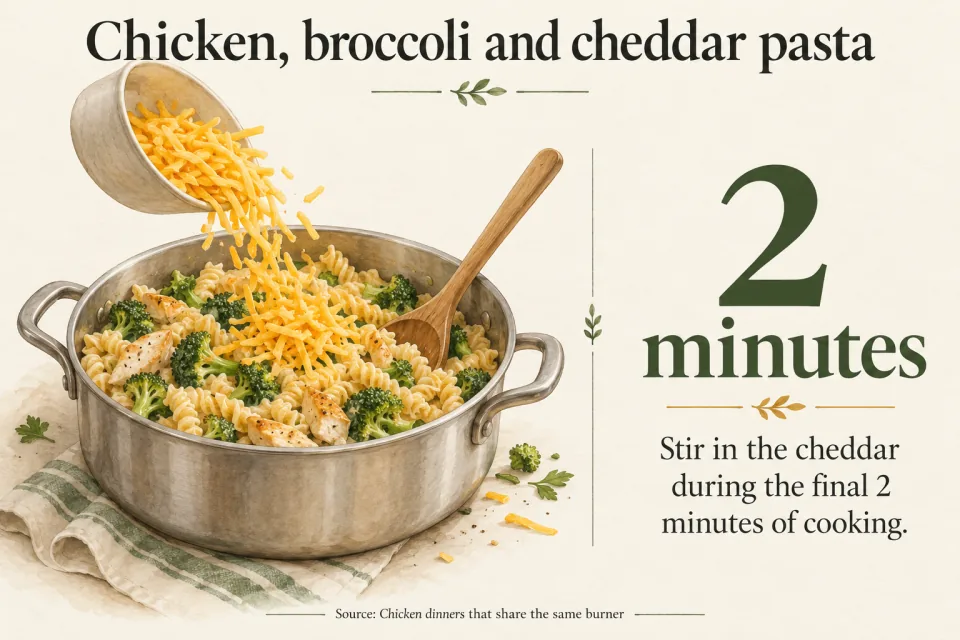
Chicken, broccoli and cheddar pasta
Shell pasta cooks directly in the broth and soup mixture in this chicken-and-broccoli skillet. Food Hero, from Oregon State University Extension Service in the United States, adds cheddar near the end of cooking.
The recipe yields 7 cups and uses 1 pound bite-sized boneless chicken breast, 2 teaspoons oil, 2 cups uncooked shell pasta and 2½ cups chopped fresh or frozen broccoli. For the sauce, measure 1¼ cups broth, a 10.5-ounce can condensed cream of chicken soup, 1 teaspoon pepper, either 2 minced garlic cloves or ½ teaspoon garlic powder, and 4 ounces shredded cheddar. Set the cheddar aside from the sauce ingredients because it joins at the end.
Lightly brown the chicken in the oil for 2–3 minutes, then stir in the broth, condensed soup, pepper and garlic until smooth. Add the uncooked pasta and chopped broccoli to this mixture. The pasta goes straight into the skillet, with no separate boiling stage.
Bring the mixture to a boil, cover it and simmer on low for 15–20 minutes, until the pasta is tender. If the mixture starts sticking, the recipe directs cooks to add a little water or broth. Make that adjustment directly in the skillet while the pasta cooks, following this recipe's method.
Stir in the cheddar during the final 2 minutes of cooking. Check the pasta for tenderness as the recipe directs, then finish the cheese stage. The chicken, broccoli and shells are served together with the sauce they cooked in.
Food Hero also allows spiral or elbow pasta, along with additions such as peas, grated carrots or chopped peppers. Use those as the recipe's stated variations. The base version already includes chicken, pasta and broccoli, so choosing an extra vegetable does not add a separate cooking task.
Part 04
of 09
04 / Field note
Creamy chicken pasta with broccoli
This creamy chicken pasta uses milk, broth and flour, with broccoli added when the penne is nearly tender. Its sequence differs from the cheddar skillet, where the broccoli enters with the uncooked pasta.
Food Hero's recipe yields 7 cups and calls for 1 large cubed chicken breast, 2 tablespoons each of oil and flour, 8 ounces dry penne, 2 cups chopped broccoli and 1 cup grated Parmesan. Measure 1¾ cups each of chicken broth and milk; the recipe offers nonfat milk as an option. Arrange the flour, liquids and seasonings together, with the broccoli and Parmesan ready for their later stages.
The seasoning is 1 teaspoon garlic powder or 2 minced garlic cloves, plus ½ teaspoon onion powder and ½ teaspoon basil. Brown the cubed chicken in the oil, then stir in the flour, broth, milk, seasonings and dry pasta. Bring the mixture to a boil before covering it for the simmer.
Stir occasionally while the pasta cooks, and use nearly tender pasta as the cue to add the broccoli. Cover again and continue cooking until the broccoli is tender. Adding the vegetables later gives them a separate cooking stage within the same skillet, without needing another pan.
Remove the skillet from the heat before stirring in the Parmesan. The burner is no longer needed for the recipe's final mixing step. Have the grated cheese ready so that finishing follows directly after the broccoli reaches the stated texture.
Food Hero lists 30 minutes each for preparation and cooking. Include the cutting and measuring in the dinner plan, especially if the chicken still needs cubing and the broccoli needs chopping. The published method gives texture cues for the pasta and broccoli, so follow those cues through the covered stages.
Part 05
of 09
05 / Field note
Chicken and squash finished with couscous
Chicken, squash and tomatoes simmer together before couscous joins the covered pan with the heat switched off. The Good Food Middle East recipe gives the squash its cooking stage before adding the couscous.
For 4 servings, the recipe uses 2 skinless chicken breasts, 1 small butternut squash cut into 1-centimetre pieces, 2 red onions, two 400 g cans of tomatoes, 200 g cherry tomatoes and 140 g couscous. Its seasonings are 2 tablespoons harissa, 1 teaspoon each of ground cumin and ground coriander, the zest and juice of 2 lemons, and fresh coriander. Prepare the squash pieces before starting the onions, and measure the couscous for the finishing stage.
In a large nonstick pan, cook the harissa, spices and onions gently for 10 minutes. Add the chicken and brown it for 5–10 minutes, then add the squash and cook for another 5 minutes. These additions happen in sequence in the same pan, with the chicken entering after the onion and spice mixture.
Add a splash of water if the mixture sticks. Pour in the canned tomatoes with half a can of water, cover and simmer for 20–30 minutes. Set the cherry tomatoes aside for now; they enter with the couscous after the covered simmer.
Stir in the lemon zest and juice, cherry tomatoes and couscous, then cover and switch off the heat. Leave the covered dish for 10 minutes before adding the fresh coriander. The final couscous stage therefore needs the pan and lid, but no continuing burner heat.
Use this sequence when you want the starch to join at the finish. It differs from the rice-and-leek dish, where the rice simmers with the chicken. Here, the squash and canned tomatoes cook first, and the couscous is added to the assembled chicken-and-vegetable mixture.
Part 06
of 09
06 / Field note
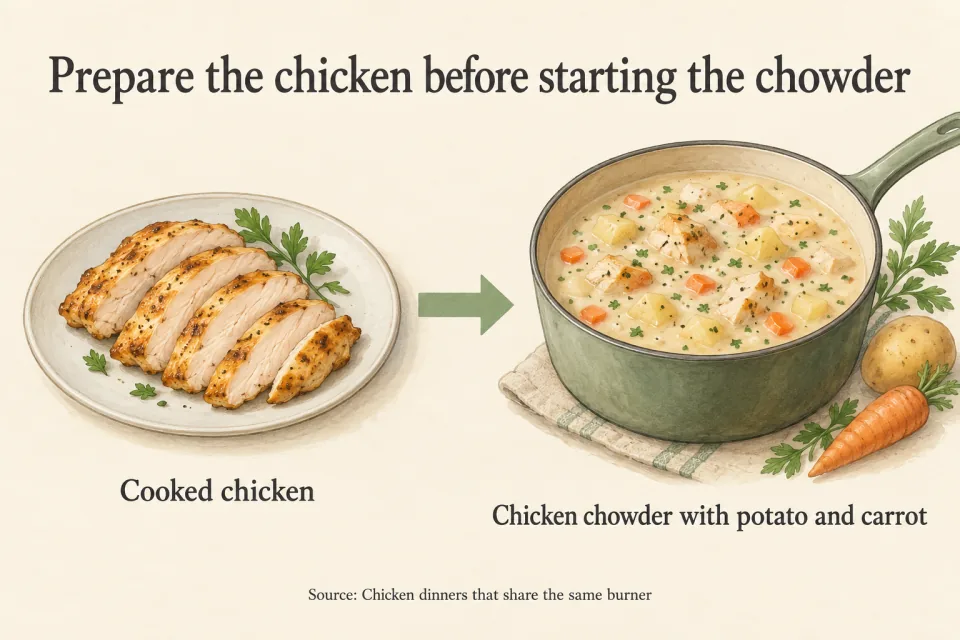
Chicken chowder with potato and carrot
Chicken chowder begins with cooked chicken, so its saucepan sequence starts after that ingredient is ready. Food Hero combines it with potato, onion and carrot, then finishes the broth with a milk-and-flour mixture.
For 2 servings, measure 2 teaspoons oil, ½ cup each of onion and carrot, 1 cup diced potato, 2½ cups broth and 4 ounces cooked diced chicken. The remaining ingredients are ½ cup milk, 1 tablespoon flour, ½ teaspoon each of thyme and garlic powder, and ¼ teaspoon salt. Measure the chicken in its cooked form, as the chowder recipe specifies.
Soften the onion and carrot in the oil over medium heat for about 3 minutes. Add the broth, potato, thyme, garlic powder and salt, then simmer gently for 15–20 minutes, until the potato softens. The potato's texture is the cue to move from the vegetable stage to the chicken and milk mixture.
While the potato cooks, combine the milk and flour in a separate small dish without heating them. This preparation uses a bowl and spoon while the saucepan occupies the burner. Have the mixture ready before adding the cooked chicken so the final additions can follow each other.
Warm the cooked chicken in the soup for 1–2 minutes. Gradually stir in the milk-and-flour mixture, then boil gently for another 2–3 minutes to thicken. At this point, the chicken has already joined the cooked vegetables and broth, ready for the milk mixture.
Food Hero permits celery, pepper or leek in the carrot mixture. Corn or broccoli may replace half the potato. Follow the same ingredient stages when using the stated variations, with the cooked chicken joining near the end. If starting with uncooked chicken, use the skillet method below before beginning the chowder.
Part 07
of 09
07 / Field note
Prepare the chicken before starting the chowder
A covered skillet method supplies cooked chicken for the chowder before its saucepan takes over the burner. This is an editorial pairing of Food Hero's skillet chicken and chowder recipes, with each method followed in sequence.
The skillet recipe starts with 1 chicken breast about 1 inch thick and lists 1 tablespoon vegetable oil. Its seasoning options include salt, pepper, onion powder and garlic powder. Season the breast before it enters the oiled skillet.
Over medium-high heat, lightly brown the chicken for 1 minute on each side. Cover tightly and cook on low for 10 minutes without opening the lid, then switch off the heat and leave it covered for another 10 minutes. The covered rest is part of the chicken method, so finish that stage before moving on to the chowder preparation.
After the rest, check the thickest part with a food thermometer; if the chicken is insufficiently cooked, cover and return it to low heat for 3–5 minutes before checking again. Once the chicken is cooked, dice and measure it for the chowder. Then begin the onion-and-carrot stage in the saucepan.
This paired sequence makes the preparation behind the chowder's ingredient list explicit. The chicken cooks first, and the potato mixture follows on the same burner. While the potato simmers, mix the milk and flour without heat, completing that preparation without another demand on the burner.
Part 08
of 09
08 / Field note
Cook the brown rice before the chicken skillet
The chicken rice skillet begins with cooked brown rice, so rice preparation comes first when starting from dry grain. This sequence pairs Food Hero's brown-rice method with the University of Tennessee Extension skillet recipe, both from the United States.
Food Hero combines 1 cup dry brown rice with 2¼ cups water for approximately 3 cups cooked rice. Bring the water to a boil, add the rice, reduce the heat, cover and simmer for 35–40 minutes. Switch off the heat and let the rice stand for 5–10 minutes before serving. Complete that method before moving the chicken skillet onto the burner.
The skillet calls for 2 tablespoons oil, ¾ cup chopped celery, 1 pound sliced boneless skinless chicken breast and 2 cups cooked brown rice. It also uses a drained 10-ounce can of tomatoes with green chilies, ¼ cup chopped olives and 1 cup shredded mozzarella. Measure the cooked rice for the skillet after the rice method is complete.
Cook the celery in the oil until tender before adding the chicken. Stir the sliced chicken as it cooks for about 15 minutes, until done. Give the celery its initial cooking stage, then cook the chicken before bringing in the rice.
Add the cooked rice and drained tomatoes and heat the mixture through. Finish with the chopped olives and shredded mozzarella. The skillet's final assembly brings the cooked rice into the chicken and tomato mixture without a separate side dish.
This is a different cooking arrangement from the chicken-and-leek rice dish. There, easy-cook brown rice enters the main pan uncooked and simmers with bouillon. Here, ordinary brown rice follows the separate saucepan method before joining the skillet. Choose between them by the sequence you want to follow, and use the quantities belonging to that recipe.
Part 09
of 09
09 / Field note
Check the chicken before serving
Check chicken with a food thermometer before serving it. The United States government's food safety chart specifies an internal temperature of 165°F or 74°C for all chicken parts, measured with a food thermometer. Food Hero's skillet method places the thermometer in the thickest part of the chicken.
Food Hero advises against rinsing uncooked chicken and calls for washing hands, utensils and surfaces after contact with it. Build that washing step into preparation before handling the ingredients that follow the chicken. The cooking sequence can then continue through the rice, pasta or vegetable stages and the recipe's stated finish.
Sources / 09
Continue reading
Return to the card board