Field note
Ful medames with tahini, bread and optional eggs
Make a measured fava bean breakfast with lemon, a separate tahini sauce, bread and optional eggs. Compare canned and dried bean methods, and learn how to adjust the texture for a bowl or flatbread.
Part 01
of 10
01 / Field note
Start with fava beans and choose the texture
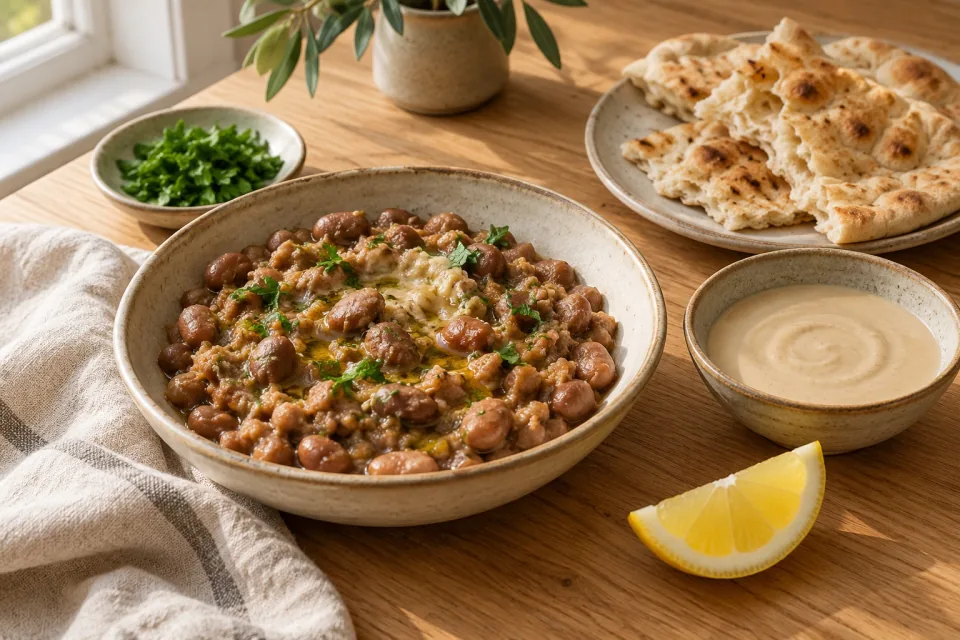
Ful medames is a fava bean stew served for breakfast in Egypt and elsewhere in the Middle East, as Saveur describes it. Its version combines the beans with lemon, garlic, cumin and olive oil, then adds hard-boiled egg wedges and parsley. The beans are lightly broken, leaving a textured dish.
Fava beans are also called broad beans. Great British Chefs explains that broad beans generally refers to the fresh green form, while fava beans can refer to fresh or dried beans. For the preparations here, follow the form named in the recipe: canned fava beans for the shorter methods, or dried fava beans for the soaking and simmering methods.
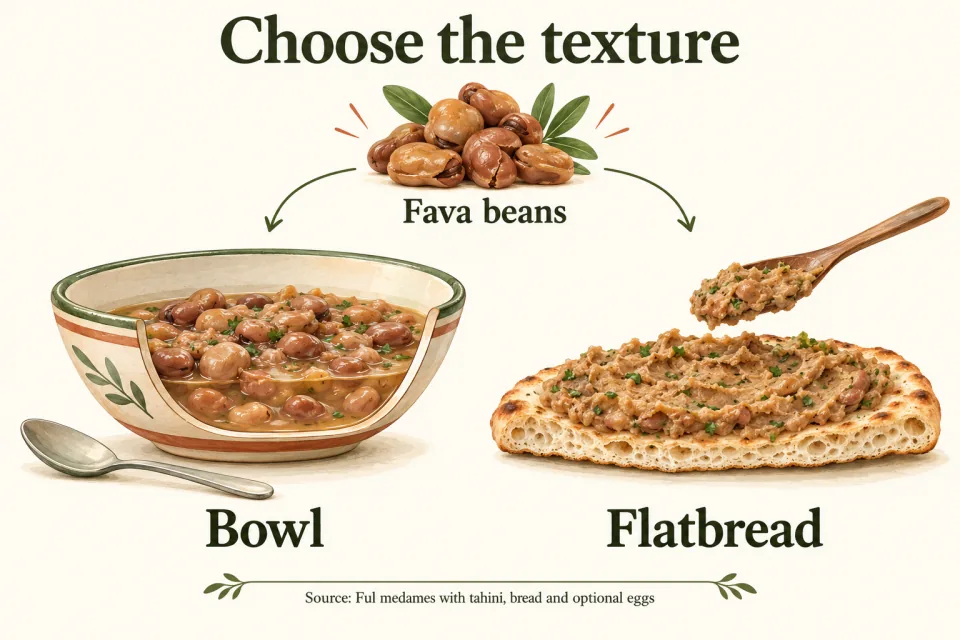
Choose the method partly by the texture you want at breakfast. Saveur leaves the beans lightly broken; Good Food Middle East makes a soft, chunky purée with tahini mixed through it. Food – a fact of life roughly mashes its beans and serves a separate tahini sauce, which gives a clear starting point for preparing the bean base and its accompaniments independently.
The measured base below follows that separate-sauce approach. Bread and optional boiled eggs can accompany it, while cucumber, tomato and parsley provide the recipe's optional garnish.
Part 02
of 10
02 / Field note
Make the measured bean base
Food – a fact of life's bean base combines canned beans with onion, garlic, tomato, cumin, lemon juice and water. Its recipe specifies a 300-gram can of beans, 30 millilitres of lemon juice and 100 millilitres of water. The bean quantity describes the can size named in the recipe, rather than a separate measurement of drained beans.
Set out the bean ingredients separately from the sauce ingredients. The base has its own lemon juice and water, and the sauce uses additional amounts of both. Some of the recipe's garlic goes into the sauce, so divide the garlic between those preparations instead of putting it all into the beans.
Simmer the bean mixture for 10–15 minutes, then take it off the heat and roughly mash it, following Food – a fact of life's method. Rough mashing is the intended finish here. Work through the beans without trying to turn the entire mixture into a smooth paste.
This method finishes the beans before adding the separate sauce. Once the base has been mashed, arrange the optional cucumber, tomato and parsley garnish alongside the other accompaniments. Serve it with hot pitta or flatbread, as the recipe suggests, and add boiled eggs if using them. That sequence gives the beans, sauce and bread distinct places in the meal.
Part 03
of 10
03 / Field note
Whisk the tahini sauce separately
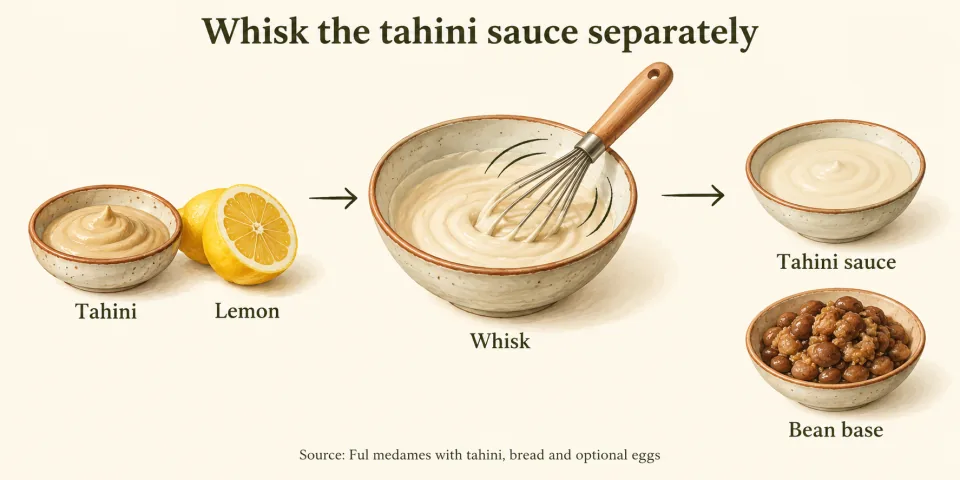
The tahini sauce is a separate mixture of tahini, water, lemon juice and garlic. Food – a fact of life combines 50 grams of tahini with 35 millilitres of water, 10 millilitres of lemon juice and some of the recipe's garlic. Measure the tahini itself before combining it with the liquids.
Whisk the sauce ingredients together. Food – a fact of life explains that the mixture can separate at first and then become smooth as whisking continues. If it looks uneven during mixing, continue whisking through that stage rather than judging the finished texture immediately.
Pure tahini and the prepared sauce describe different stages of the recipe. Tahini is the ingredient measured before mixing; the sauce includes the added water, lemon juice and garlic. Use those names consistently when setting out the breakfast, particularly if you are comparing this preparation with a version that folds tahini directly into the beans.
The separate sauce also calls for different handling from the bean purée. Whisk this sauce on its own, then serve it with the ful. Good Food Middle East's method, described below, mashes tahini and lemon juice into the beans themselves. Follow the mixing instructions for the preparation you have chosen, because a whisked sauce and a chunky bean purée have different intended finishes.
Part 04
of 10
04 / Field note
Give bread, tahini and eggs distinct roles
Bread, tahini sauce and optional eggs accompany the bean base in different ways. Food – a fact of life includes wholemeal pitta and serves its ful with hot pitta or flatbread. Its tahini sauce is prepared separately, while Saveur finishes the beans with wedges of hard-boiled egg.
For a breakfast built around the measured base, prepare the beans first and whisk the sauce separately. Serve the bread alongside, then add the egg wedges if wanted. This follows the separate-sauce arrangement while using the egg presentation described by Saveur; chopped parsley is also part of Saveur's finish.
The distinction between an ingredient and an accompaniment matters when reading these recipes. A quantity of tahini refers to the tahini before dilution, while a quantity of sauce includes its other ingredients. Bread accompanies the beans rather than becoming part of the saucepan mixture, and the boiled eggs are added at serving. Describe each component separately when comparing breakfast preparations.
The sources also offer different bread and egg presentations. Lizzy Kuoth's Sudanese preparation on SBS serves sliced boiled eggs, rocket, Turkish bread and lemon wedges with the beans. Choose that arrangement when following her method, or use the wholemeal pitta and cucumber, tomato and parsley garnish from Food – a fact of life. Each is a documented way to assemble the breakfast.
Part 05
of 10
05 / Field note
Use a shorter canned-bean method
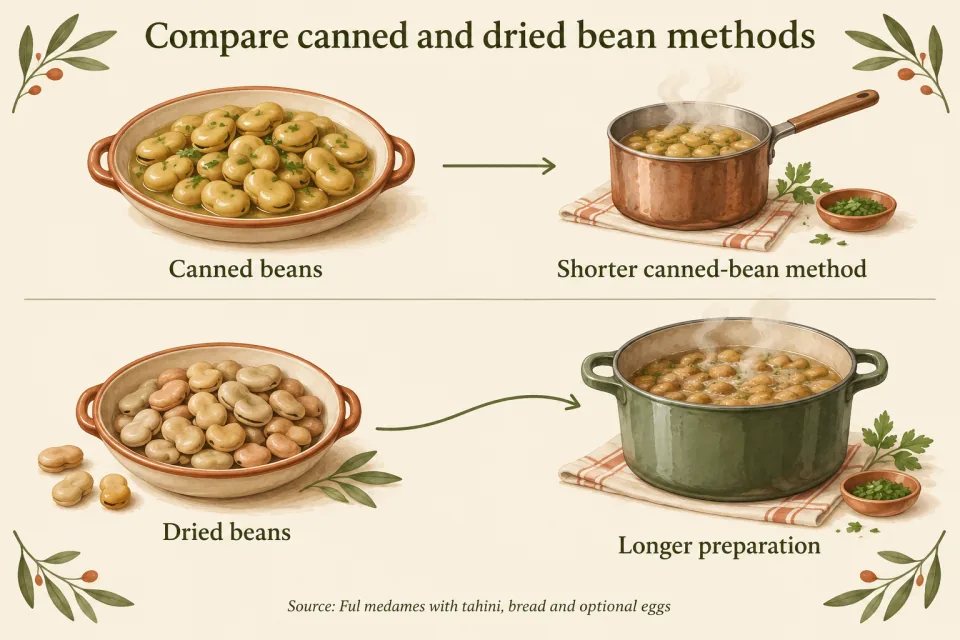
Saveur's canned-bean method warms the beans before adding the lemon, oil, garlic and spices. It starts with two drained and rinsed 15-ounce cans of fava beans. Cover the beans with an inch of water and cook until tender, which Saveur gives as about eight minutes.
Drain the warmed beans, then stir in lemon juice, olive oil, cumin, cayenne and mashed garlic. Break the beans lightly as you combine them with the seasonings. Finish with chopped parsley and hard-boiled egg wedges. This preparation puts the lemon and spices directly into the beans and does not use the separate tahini sauce described above.
Kuoth uses a different liquid method in her SBS recipe. She reserves liquid from the cans and adds a little to the drained beans while warming them over medium-low heat. Her beans warm for about five minutes, until they are soft enough to crush easily.
After lightly mashing the beans, Kuoth folds in finely chopped red onion, cumin, black pepper and ground coriander. The onion enters at the finishing stage, unlike the cooked onion in the tomato method below. Follow the liquid sequence belonging to the version you choose: Saveur warms in water and drains, whereas Kuoth uses a little reserved can liquid with the beans.
Part 06
of 10
06 / Field note
Cook tomatoes into the beans for a chunky purée
Good Food Middle East's version cooks tomatoes with onion, garlic and spices, then works tahini into the beans. It allows either two fresh tomatoes or 200 grams of canned chopped tomatoes. This gives you a documented choice of tomato form within the same preparation.
Gently fry the onion and garlic for five minutes before adding cumin, chilli flakes and tomatoes, following Good Food Middle East. Add the beans to this onion mixture and cook over low heat for 30 minutes, stirring frequently. The onion and spices therefore cook with the beans, unlike Kuoth's method of folding chopped onion and seasonings into the mashed beans near the end.
Watch the mixture as it cooks. Good Food Middle East adds reserved bean-cooking liquid when the beans begin to look dry. Add that liquid as part of the cooking stage, then mash tahini and lemon juice into the beans to finish with a soft, chunky purée.
The source gives a separate adjustment for a purée that separates: mix in a little cold water. That instruction applies to the finished bean mixture. For the standalone tahini sauce, Food – a fact of life instead describes continued whisking as the way to bring the initially separated ingredients together. Identify which mixture you are working with before choosing the adjustment.
Part 07
of 10
07 / Field note
Start with dried beans for a longer preparation
Sarah Newman's recipe starts with dried fava beans and uses their cooking water in the finished stew. Soak the beans overnight, then drain and rinse them, following her method. Bring the soaked beans to a boil, then simmer them covered for approximately two to three hours, until soft.
The softness of the beans marks the end of this cooking stage. Newman's sequence cooks the dried beans before combining them with the garlic, tahini and lemon. Set aside some bean-cooking water for the finish, since it is an ingredient in the next stage rather than something added only if the dish looks dry.
Gently cook minced garlic in olive oil, then add the cooked beans, tahini and lemon. Newman adds three to six tablespoons of the bean-cooking water to this mixture. Briefly heat the combined ingredients until thick and stew-like, then mash while leaving some beans intact.
The final mashing is deliberately incomplete. Work the softened beans into the surrounding mixture while leaving visible whole beans, following Newman's finish. This differs from the separate-sauce breakfast in both sequence and presentation: tahini becomes part of the stew, and the cooking water joins the garlic, lemon and beans before the final mash. Use this complete sequence when starting from dried beans.
Part 08
of 10
08 / Field note
Combine dried fava beans with red lentils
Alice Ibrahim's SBS preparation combines dried fava beans with dried red lentils. Her recipe uses two cups of dried fava beans and one cup of dried red lentils for six servings. Soak the beans and lentils overnight, then drain and rinse them before cooking.
Bring the mixture to a boil and skim off the froth that gathers on the surface. Cover the saucepan and simmer over the lowest heat for up to five hours, until the beans are very soft, following Ibrahim's method. This is a separate dried-bean preparation, with lentils cooked alongside the fava beans throughout the simmer.
Ibrahim cautions against cooking away too much liquid because the ful thickens as it cools. Use that observation when judging the texture at the end of cooking. A mixture that has already been cooked very thick will still undergo the thickening described in the recipe as it moves away from the heat.
SBS also suggests serving this ful inside flatbread with fresh salad, tahini, pickles and banana chillies. In that arrangement, the bread holds the beans and accompaniments together as a sandwich. It offers a different breakfast format from a bowl with bread alongside, using the same bean-and-lentil preparation and the accompaniments named in the source.
Part 09
of 10
09 / Field note
Add chickpeas and a citrus tahini sauce
Tom Sarafian's SBS version combines fava beans and chickpeas, then serves them with a citrus tahini sauce and chopped salad. His recipe uses two 400-gram cans of fava beans and one 400-gram can of chickpeas, all drained, for four servings. The chickpeas join the fava beans in the saucepan.
Cover the beans with water and simmer for 15 minutes, until a spoon can easily crush them, following Sarafian's method. Crush half the beans against the saucepan wall and leave the rest whole. This gives a specific guide to the balance between mashed and intact beans, rather than asking for an entirely smooth purée.
The separate sauce, called taratoor in the recipe, combines 150 grams of tahini with 50 millilitres each of orange juice and lemon juice. Whisk the ingredients, then add water until the sauce has a consistency similar to thickened cream. The orange juice is part of this sauce's composition, distinguishing it from the lemon-and-water sauce used with the measured base earlier.
Serve the hot beans with Sarafian's chopped salad of onions, tomatoes, cucumber, pickles, coriander and parsley. Prepare the salad separately from the simmered beans, just as the sauce is mixed separately. This version brings together a mixed-bean saucepan, a whisked citrus sauce and a fresh chopped accompaniment, with each prepared by its own method.
Part 10
of 10
10 / Field note
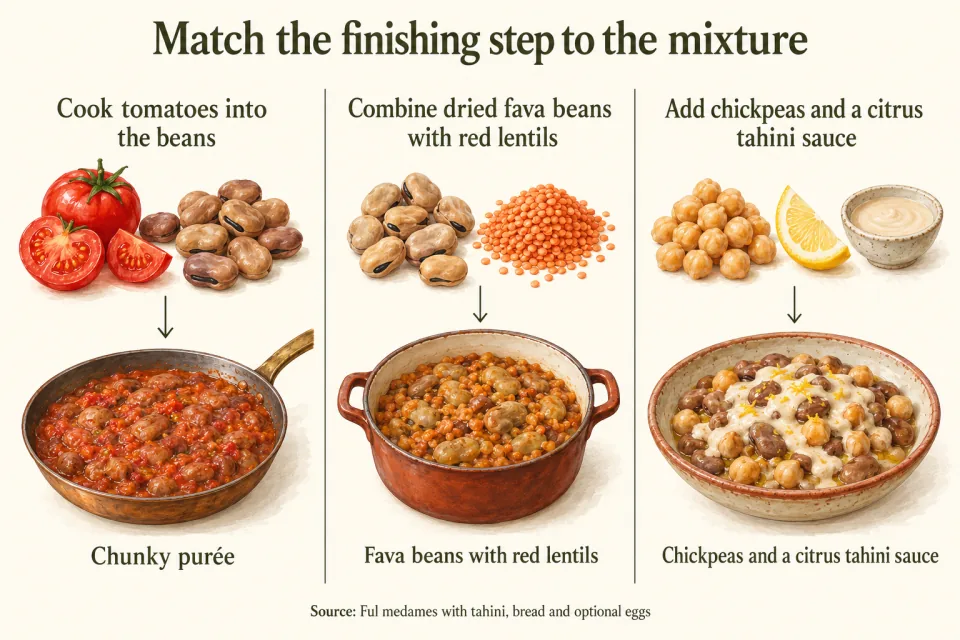
Match the finishing step to the mixture
The finishing step depends on whether the dish is a lightly mashed stew, a chunky purée or beans with a separate sauce. Saveur adds its lemon and seasonings after draining the warmed beans. Newman combines cooked beans with garlic, tahini, lemon and cooking water before briefly heating and mashing them.
Use the liquid instruction that belongs to the mixture in front of you. In Good Food Middle East's tomato preparation, bean-cooking liquid goes in when the saucepan mixture looks dry. In its finished purée, a little cold water addresses separation. Neither instruction replaces the continued whisking that Food – a fact of life describes for its separate tahini sauce.
The serving format then determines where the accompaniments go. For the measured base, serve hot pitta or flatbread with the roughly mashed beans and separate sauce. For Ibrahim's sandwich variation, put the ful inside flatbread with the named salad, tahini, pickles and banana chillies.
Add eggs in the form used by the recipe you are following: Saveur uses hard-boiled wedges, while Kuoth serves boiled slices. Finish the chosen preparation with its own garnish, such as Saveur's parsley or Kuoth's rocket and lemon wedges. This carries the recipe's sequence through to the plate without combining every variation into the same saucepan.
Sources / 08
Continue reading
Return to the card board