Field note
Handvo for tiffins: lentil balance, vegetables and clean slices
Compare rice-and-lentil bases, prepare vegetables and manage batter consistency for sliceable handvo. Follow the differences between oven and pan methods, with a worksheet approach to recording a finished batch.
Part 01
of 08
01 / Field note
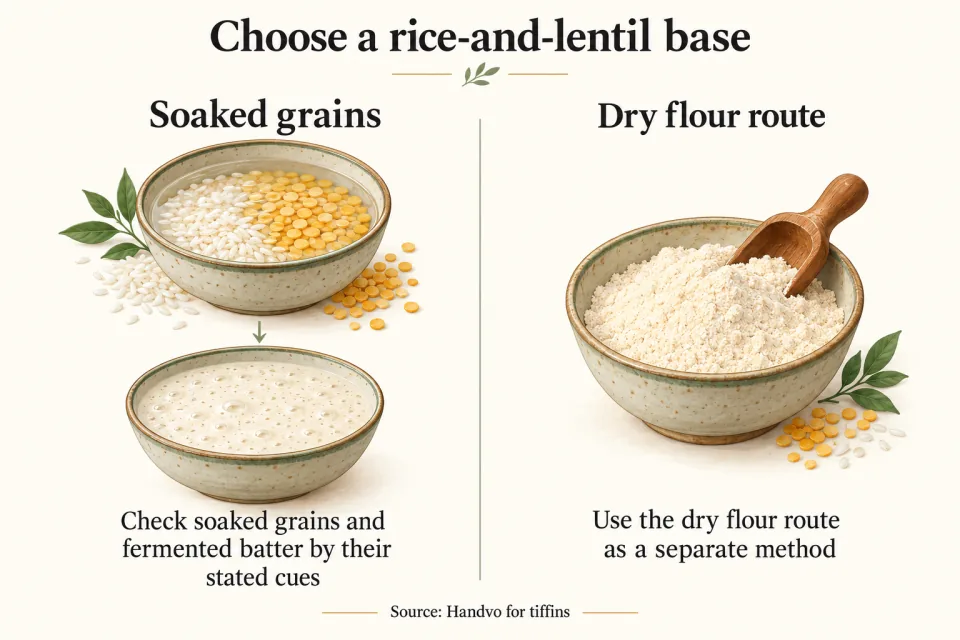
Choose a rice-and-lentil base before changing the vegetables
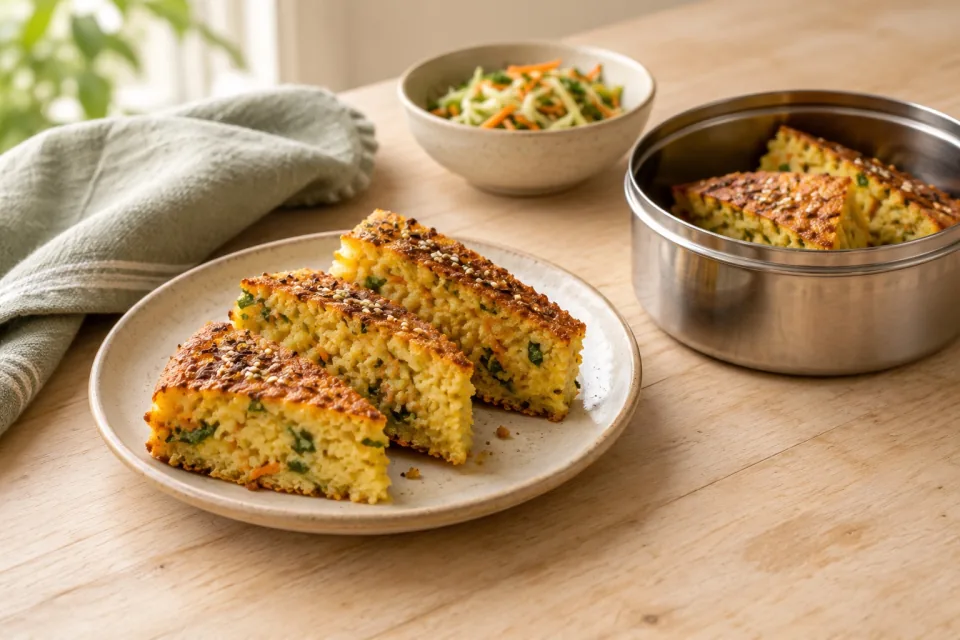
For sliceable handvo, start with a published rice-and-lentil formula and follow its vegetable preparation, cooking method and cooling instructions together. Handvo is a Gujarati fermented rice-and-lentil cake with vegetables. Indian Cooking Manual describes the finished dish as crisp outside and soft inside, a useful description of the texture to look for.
Sanjana Feasts provides a weighed base of 200 g rice, 100 g chana dal, 100 g toor dal and 200 g plain yogurt. The rice and combined dals have equal weights in this formula. That makes it a straightforward starting point for a batch record: write down the rice, each dal and yogurt separately, then add the vegetables specified by the recipe.
A dal-heavy alternative comes from Indian Cooking Manual, whose formula contains 1 cup rice, 1 cup toor dal, ½ cup chana dal and ¼ cup each of moong dal and urad dal. This is a different published formulation, with its own vegetable additions and pan instructions. Choose it as a recipe in its own right rather than borrowing only its extra dal for another batter.
For a tiffin, decide whether the finished handvo will be cut from a larger cake or cooked as small portions. The sources offer both approaches. Start the cooking notes with that choice and the recipe name, so the flour mixture, vegetable preparation and cooking directions remain connected throughout the batch.
Part 02
of 08
02 / Field note
Use the dry flour route as a separate method
Handvo can begin with dry-ground rice and dals instead of soaked grains. Nehas Cook Book describes this flour-based route, grinding the dry ingredients in batches until they have a coarse texture resembling semolina. This gives a distinct preparation sequence: make the flour, mix the batter, ferment it and then add the grated vegetable.
Nehas Cook Book uses 2 cups rice, 1 cup chana dal, ½ cup toor dal and ½ cup urad dal for its flour mixture. The rice and combined dals are equal by volume. Although this resembles the balance in Sanjana Feasts' weighed base, the measurements describe different things: Neha measures cups, while Sanjana measures grams.
For the batter, Nehas Cook Book combines 4 cups handvo flour with 1 cup curd and adds water gradually until the mixture is thick but pourable. Follow that texture instruction while adding the water, instead of pouring in an arbitrary amount at the start. The vegetable enters later in this method, after fermentation.
Mamta's Kitchen offers another homemade flour formula, using 200 g rice, 100 g pigeon-pea dal and 30 g urad dal. Its instructions assess the batter after adding bottle gourd, with more water added only if needed. These flour recipes give useful alternatives, but their ingredient quantities and water-adjustment stages belong to their respective methods. Write the chosen formula at the top of the cooking notes before grinding.
Part 03
of 08
03 / Field note
Check soaked grains and fermented batter by their stated cues
For a soaked-grain method, check the grains before grinding and the batter after fermentation. Sanjana Feasts describes soaked rice and dals that break when pressed between the fingers. That is a concrete preparation cue to use alongside the recipe's soaking instructions, rather than judging the grains only by how they look in the bowl.
Foodviva allows the rice and dals to soak together for four hours. Its fermentation guidance then looks for tiny bubbles when the batter is stirred, even if the mixture has not risen like idli batter. When using Foodviva's method, inspect the stirred batter as well as its height in the bowl. The visible cue described by that recipe is bubbling, so a dramatic rise is not its sole test.
Yogurt enters at different stages in the published methods. Nehas Cook Book mixes curd into the flour batter before fermentation, while Nams Corner adds curd after fermenting the ground rice-and-dal batter. Follow the sequence attached to the chosen recipe. Moving an ingredient between stages would be a change to that sequence, so record the method as well as the ingredient list.
Niru Gupta's method has a separate finishing step: after fermentation, she adds baking soda, mixes lightly and transfers the batter straight into a greased tin. If following this version, prepare the tin before that final addition. The instruction is to move directly from the lightly mixed batter to the tin, rather than leave the final preparation step unfinished.
Part 04
of 08
04 / Field note
Prepare the vegetables before judging the batter
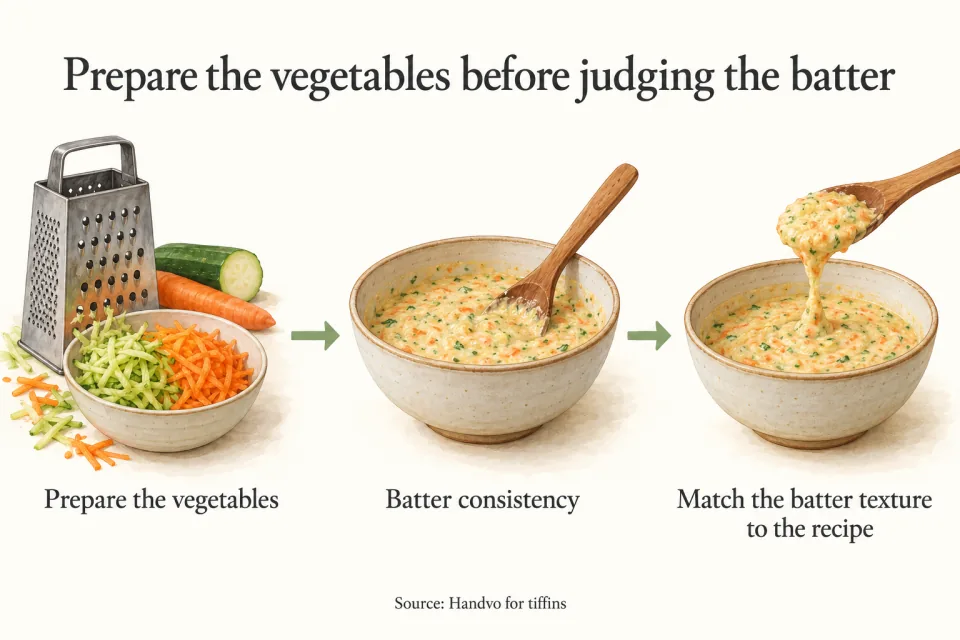
Vegetable quantity and moisture deserve as much attention as the rice-and-dal mixture. Sanjana Feasts specifies 400–450 g vegetables for her recipe. She also advises making the pieces similar in size for even cooking and squeezing moisture from watery grated vegetables. Use those preparation instructions together with her stated vegetable quantity.
For an oven batch based on Sanjana's formula, prepare the vegetables before making the final judgment about the mixture. Look at the cut pieces together and correct any conspicuously large ones. For watery grated vegetables, carry out the squeezing step described in her method. Record the preparation alongside the vegetable name, so the notes distinguish grated and squeezed vegetables from vegetables simply added as cut.
The other recipes show how different vegetable preparations fit different methods. Nehas Cook Book adds 2 cups grated lauki after the batter has fermented. Indian Cooking Manual uses one cup peeled, grated bottle gourd and one small grated carrot. Niru Gupta instead chops and blanches the vegetables before adding them to fermented batter. These are separate recipe choices, not a shared instruction to prepare every vegetable in the same way.
Mamta's Kitchen permits courgette, also called zucchini, in place of bottle gourd. Its method checks the consistency after the vegetable has been added and introduces more water only when necessary. If using that substitution, follow the accompanying consistency check too. The replacement ingredient and the batter instruction belong together; noting only the vegetable name would miss part of the method.
This is a useful place to make the batch notes specific. Record the vegetable, its quantity in the recipe's units and whether it was grated, squeezed, chopped or blanched. Each description corresponds to a preparation used in the published recipes.
Part 05
of 08
05 / Field note
Match the batter texture to the recipe
Judge handvo batter at the stage named by the recipe, particularly after the vegetable addition when the method calls for it. Nehas Cook Book describes a thick, pouring batter, while Niru Gupta adjusts her ground mixture with yogurt and water to a thick dropping consistency. Use the description from the method being followed rather than switching between them.
For Neha's flour route, add water gradually as instructed and watch how the mixture pours. For Mamta's Kitchen's route, assess the batter with the bottle gourd already mixed in. These instructions put the consistency check at different points. A useful cooking note therefore says when the texture was assessed, not merely that the batter was thick.
Foodviva suggests 1–2 tablespoons semolina when its vegetable-enriched batter becomes watery. This is a correction attached to Foodviva's recipe. If following that method, record the addition with the other ingredients rather than treating it as an invisible adjustment. The corrected batter then has a different ingredient record from the batter before the semolina was added.
For a future batch, describe the actual preparation in ordinary words: the chosen flour or soaked-grain route, the vegetable preparation and the stage at which water was added. Pair those notes with the source's texture language. That gives the cook a sequence to follow without claiming that every published handvo batter should pour or drop in exactly the same way.
Part 06
of 08
06 / Field note
Bake and cool according to the chosen oven method
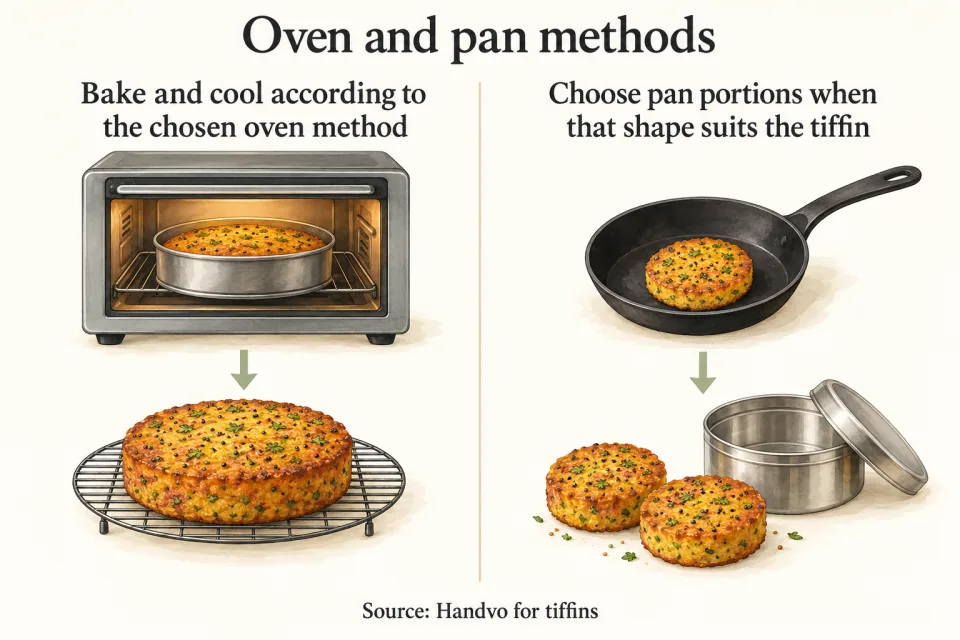
For a larger handvo to cut into tiffin pieces, Sanjana Feasts provides a weighed recipe with a specified tin and cooling stage. Her oven method begins in a greased 20 cm square tin at 160°C for approximately 90 minutes. Use the tin measurement as part of that method, alongside the ingredient weights and vegetable preparation.
Sanjana Feasts recommends covering the tin with foil if the top browns excessively. This gives a response to the surface colour during baking. It is a separate observation from the condition of the centre, so the cooking notes can distinguish the top's appearance from the check used to judge the middle.
Foodviva's oven method checks the centre with a knife and looks for the blade to emerge clean. That check belongs to Foodviva's oven directions. When comparing the recipes, write down which method supplied the baking instructions and which checks it asks the cook to make. Avoid describing a batch as following a published recipe if its cooking stages have been assembled from several different versions.
Sanjana Feasts leaves the handvo in its tin for one hour before turning it out. For a batch intended for slices, include that stage in the preparation sequence rather than ending the notes when the tin leaves the oven. Her method separates baking, cooling in the tin and turning out; the cutting stage comes after that sequence.
Nehas Cook Book rests its cooker-baked handvo for 15–20 minutes before cutting. That shorter instruction is attached to a different cooking method. Mamta's Kitchen also notes that a cake tin can replace a traditional handvo pot, but a vessel substitution and a cooling instruction are different decisions. Follow the directions for the version being made.
Part 07
of 08
07 / Field note
Choose pan portions when that shape suits the tiffin
A pan method offers a different way to make tiffin portions, with batter depth and turning cues specified by the recipe. Foodviva spreads its pan batter approximately one inch thick. Foodviva also states that cooking time depends on handvo thickness. Record the depth as part of the method instead of noting only the pan and cooking time.
Indian Cooking Manual describes turning a larger pan-cooked handvo when the top has partly dried and the base has browned. The cake is inverted onto a plate and then slid back into the pan. Read that movement as part of the cooking sequence: check the stated surface cues, use the plate and return the cake to the pan as directed.
For smaller pan portions, Nams Corner uses 2–3 spoonfuls of batter and cooks them covered before flipping. Its recipe is identified as an adaptation of Foodviva's handvo. Follow the small-portion method as written rather than assuming that the instructions for turning a large cake apply unchanged to each small handvo.
Foodviva also suggests muffin trays for individual portions. This gives another shape to consider when selecting a recipe and vessel. Decide between a large cake for cutting, small pan portions and muffin-tray portions before beginning, then use the relevant preparation and cooking directions.
Finish with the accompaniments from the chosen recipe if desired. Nams Corner serves handvo with green chutney, while Indian Cooking Manual's tempering includes mustard seeds, sesame seeds, peanuts, curry leaves and asafoetida. Mamta's Kitchen sprinkles sesame seeds over the batter before baking. These details belong to different versions and can be recorded with the rest of their ingredients.
Part 08
of 08
08 / Field note
Record the finished batch for a nutrition calculation
A finished-batch nutrition calculation begins with the ingredients and uses the cooked dish's measured weight. The Food and Agriculture Organization of the United Nations describes estimating recipe composition from ingredient composition when representative measurements of the prepared dish are unavailable. Its method calculates ingredient contributions, adds them together and relates the result to the cooked dish weight.
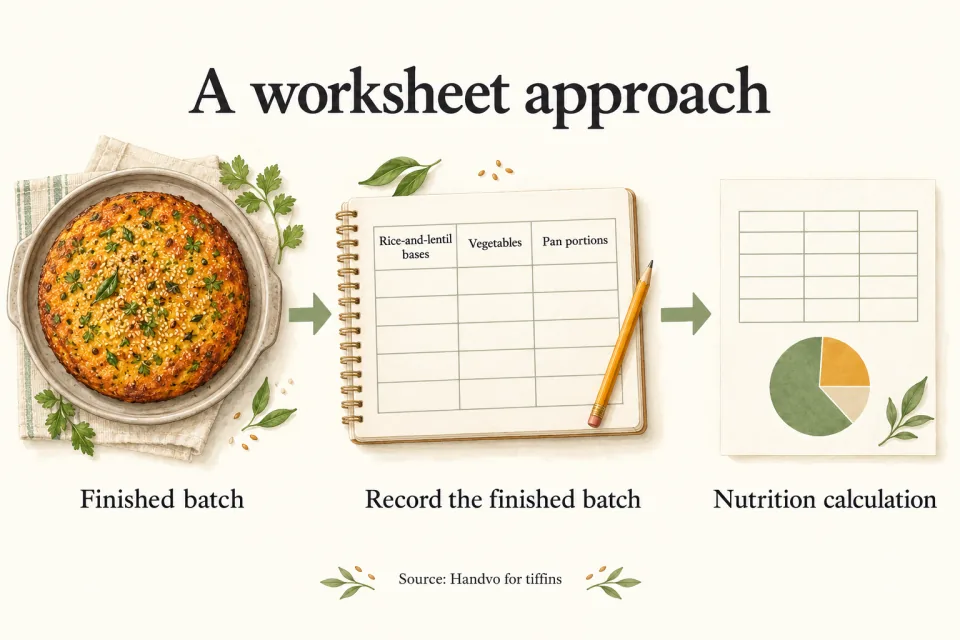
For handvo, set up the ingredient record before mixing. Give the rice, each dal, yogurt, vegetables and any other additions separate entries. Record their edible weights and preparation states, following the FAO requirement to identify the food's state, preparation method and edible portion. Include a batter correction such as semolina in the record if it was part of the batch.
Next, attach the exact food-composition record used for each ingredient. The ingredient identity and preparation state should remain visible beside its weight. This makes the calculation traceable to the foods entered, rather than to a recipe name alone. A record labelled only as handvo would not show which of the published rice-and-dal formulations had been used.
After cooking, record the finished dish weight separately from the ingredient weights. FAO's method requires the change between the uncooked and cooked dish weights to be known. The cooked weight is therefore a measurement to enter at the end of the preparation sequence, not another ingredient quantity to copy from the beginning.
FAO cautions that its simplest calculation assumes cooking-weight changes represent water changes and does not account for fat gained or lost. Describe a calculation made this way as a recipe estimate. Keep the ingredient record, preparation details and measured finished weight together so the basis of that estimate remains clear.
For tiffin cooking, the same record can include the chosen vessel, the recipe's batter description and its cooling step. These details connect the ingredient worksheet to the handvo that was cooked. They also preserve the distinction between a published formula and the measurements taken from a particular finished batch.
Sources / 08
- Handvo recipe (stovetop and baked) | mixed dal-rice handvo | Gujarati handvo recipe
- Perfect Handvo (Gujarati Lentil Cake)
- Gujarati Handvo Recipe with Step By Step Photos - With and Without Oven
- Handvo/Handwa (Gujarati Recipe)
- Handvo
- Handvo (Handwa or Ondhvo), a Gujrati Savoury Cake
- Handvo Recipe | Gujarati Handvo Recipe | How to make handvo
- Food Composition Data
Continue reading
Return to the card board