Field note
How to add protein to vegetable upma
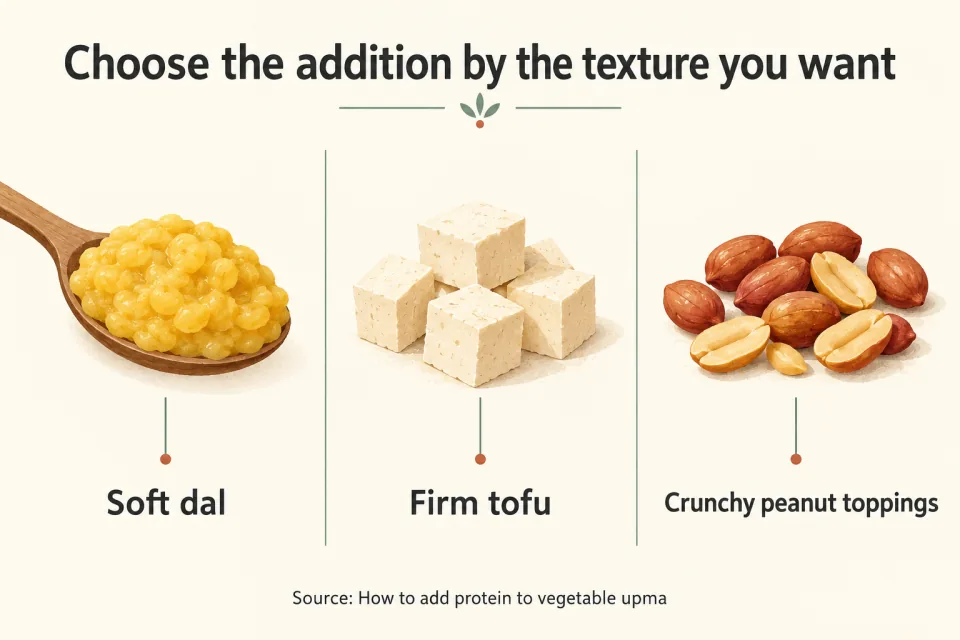
Use cooked pulses, tofu or peanuts in vegetable upma with methods drawn from published recipes. Compare ingredient measures, water handling and textures, from soft dal to firm tofu and crunchy peanut toppings.
Part 01
of 08
01 / Field note
Choose the addition by the texture you want
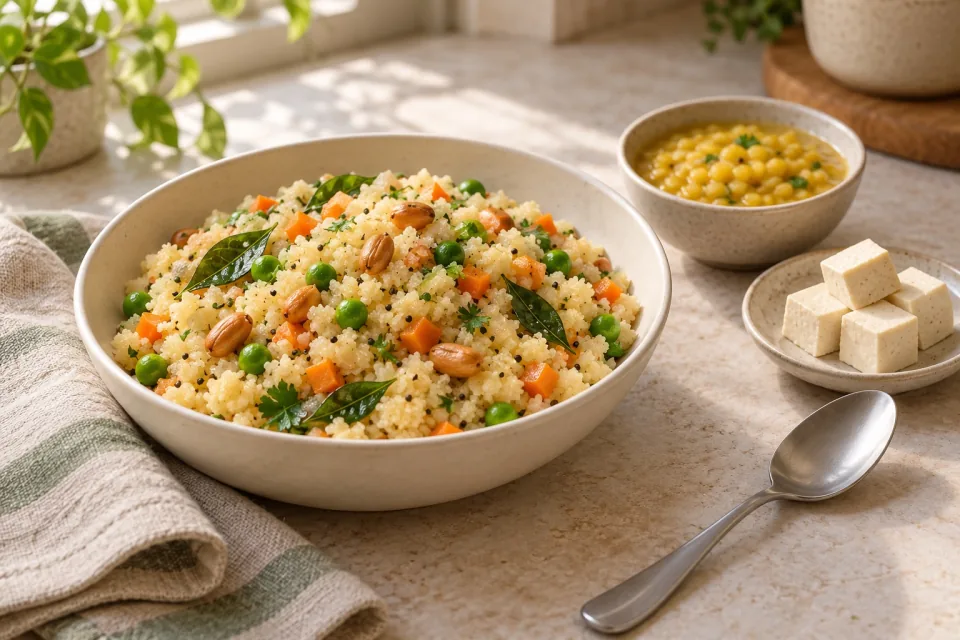
Add cooked pulses, firm tofu or peanuts to vegetable upma, and choose a method that suits the texture you want. Published recipes use these ingredients differently: dal cooks alongside the semolina after separate preparation, tofu can be crumbled into the pan, and peanuts can go into the mixture or onto the finished dish.
Rava upma is made with semolina. Vegetable versions in the research include peas and carrots, or cooked mixed vegetables. The addition belongs within that cooking method: the moong dal upma recipe combines rava and moong dal, Mayuri's Jikoni includes cooked chickpeas and suggests tofu as an alternative, and Nisha Madhulika incorporates peanuts into vegetable upma.
For pulses, identify the ingredient before choosing a method. The moong dal upma recipe uses moong dal, meaning split green gram. The Nutrition Source at Harvard discusses lentils separately, including the difference between whole lentils that retain their shape and split, huskless lentils that can become a purée.
Tofu offers a different choice of form. The Economic Times suggests crumbling firm tofu into upma during cooking, while Mayuri's recipe lists roasted tofu as an alternative addition. With peanuts, the main decision is where to put them: within the moist semolina mixture, as in Nisha Madhulika's recipe, or at serving for the crunch described by Swasthi's Recipes.
Part 02
of 08
02 / Field note
Prepare the semolina base before changing the additions
Start with the semolina and water method of the recipe you are following. Swasthi's Recipes specifies fine Bombay rava and distinguishes it from semolina flour, bansi rava and broken wheat. That ingredient detail belongs with the recipe's cooking instructions, alongside its water measure and finishing rest.
Swasthi roasts the rava until it smells aromatic and feels crunchy, stopping before it browns, then sets it aside to cool. This is the base preparation to follow before considering the pulse or nut addition. Adding dal or peanuts does not replace the recipe's instruction to prepare the semolina.
In Swasthi's recipe, the water measure is 3 cups per cup of rava, with 2¾ cups offered for a drier finish. Choose the version of that recipe that matches the consistency you want. Those measures describe Swasthi's base; the dal and vegetable recipes discussed below have their own instructions for including cooking liquid.
Swasthi advises adding the roasted rava gradually to boiling water while stirring throughout to avoid lumps. The useful action is the combination of a slow addition and continuous stirring. Follow it as a single stage of the method, rather than pouring in the rava and beginning to stir afterward.
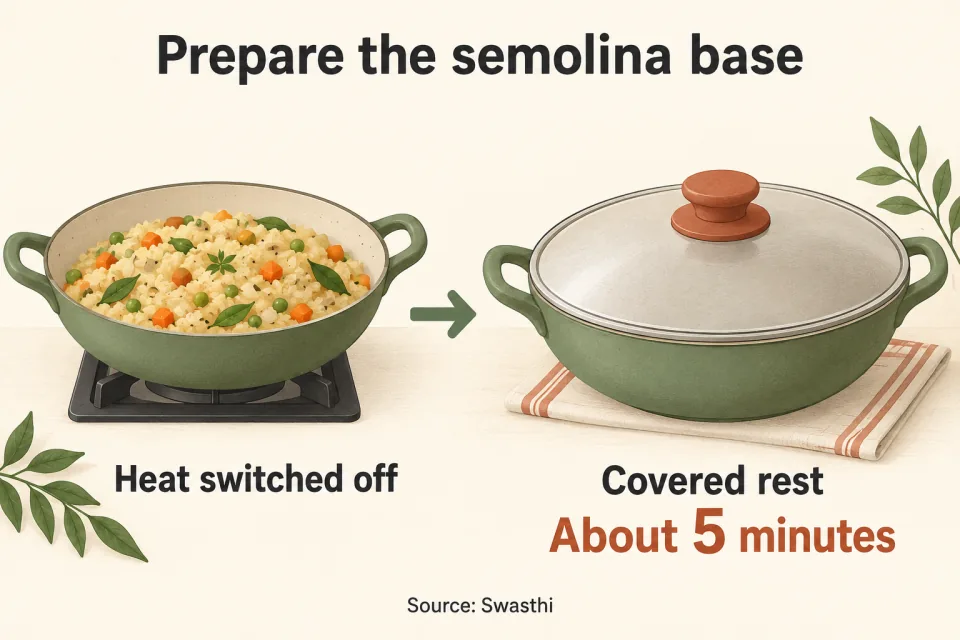
After the heat is switched off, Swasthi gives the upma a covered rest of about 5 minutes. That rest is part of the finish in this particular recipe. Its crunchy peanut garnish is prepared separately, so the base and the topping have distinct preparation steps.
Part 03
of 08
03 / Field note
Use the moong dal recipe for a substantial pulse addition
The published moong dal upma recipe gives a measured method for combining split green gram with rava. It is a useful starting point when the pulse is intended to be part of the main mixture. The small amounts of urad dal and chana dal in Swasthi's tempering have a different place in that recipe.
The moong dal upma recipe measures ½ cup of dry rava and ½ cup of dry moong dal. These are the dry ingredients at the beginning of the recipe. Read the dal measure at that stage, before washing and cooking it, rather than interpreting it as a measure of cooked dal ready to stir into the pan.
The recipe cooks the washed moong dal separately in 2 cups of water until it is approximately three-quarters done. This partial cooking stage is deliberate: the dal will continue through the final cooking stage with the rava. Follow the specified degree of cooking instead of using the whole-lentil timings discussed below.
The dal liquid also has a place in the method. The moong dal upma recipe combines it with the remaining water before introducing the seasoned rava. The recipe lets the rava cook for a minute before the partially cooked moong dal goes in. This sequence distinguishes the method from simply adding dry dal to a pan of cooking upma.
Once the rava and dal are combined, the moong dal upma recipe calls for covering the pan and cooking it over low heat for 2–3 minutes. Coriander, coconut and lemon juice are mixed in after the heat is turned off. Follow that finishing sequence with this recipe, so the dal preparation, liquid handling and final additions remain part of the same method.
Part 04
of 08
04 / Field note
Distinguish whole lentils from soft split lentils
Whole lentils suit a mixture in which the pulses retain their shape, while split lentils without husks can break down into a purée. Harvard's Nutrition Source describes this difference and explains that lentils can add both thickness and bulk to a recipe. Texture therefore starts with the kind of lentil, before it reaches the upma pan.
Harvard advises sorting lentils for stones or debris and rinsing them before cooking. Its guidance says that lentils do not need a preliminary soak. These preparation instructions concern lentils; the measured moong dal upma method above concerns split green gram and should be read as its own recipe.
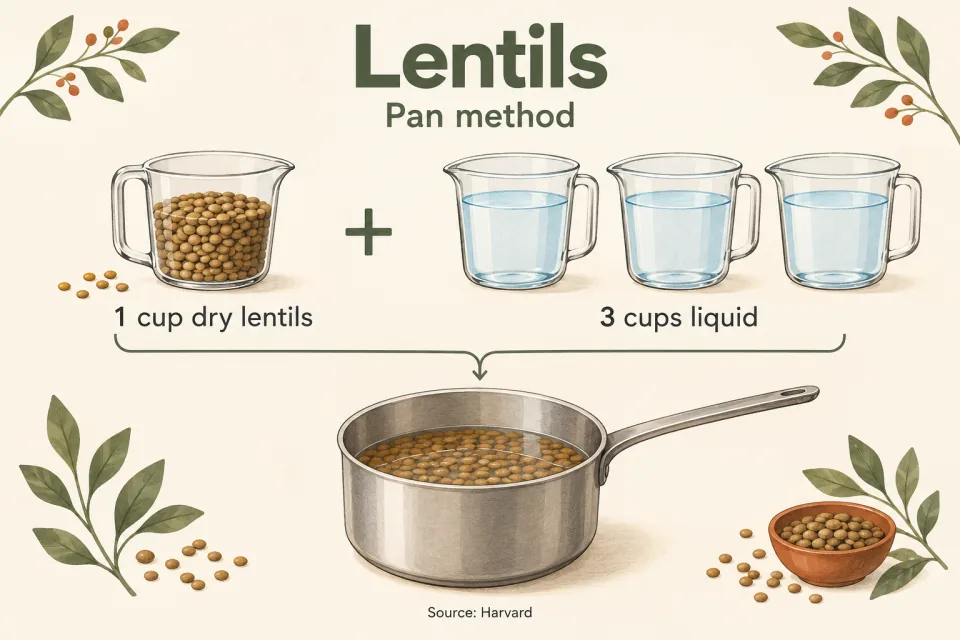
Harvard's pan method uses 1 cup of dry lentils with 3 cups of liquid. It gives approximate cooking times of 20–30 minutes for whole lentils and 10–15 minutes for split lentils. The distinction provides a practical reason to identify the lentil rather than use a general instruction to cook some dal.
Yield changes during this separate cooking stage. Colorado State University Extension reports approximately 2.5–3 cups of cooked lentils from a cup of dry lentils in its pressure-cooking guide. That figure describes the lentils after cooking, rather than a finished batch of vegetable upma. A dry measure and a cooked measure refer to different stages of preparation.
Colorado State advises against cooking delicate red lentils alone with its pressure-cooker method because they become mushy. For the upma comparison, this reinforces the distinction between a pulse that holds its shape and one that breaks down. Harvard also identifies canned and vacuum-packed lentils as precooked ingredients that can be added to recipes.
Part 05
of 08
05 / Field note
Choose tofu according to its firmness and form
Firm tofu can be crumbled into vegetable upma during cooking, following the suggestion in The Economic Times. This gives a clear preparation choice for tofu within the semolina mixture. Mayuri's Jikoni offers another route by listing roasted tofu among the alternatives to cooked chickpeas in its vegetable upma.
University of Illinois Extension describes tofu as a solid block made by pressing soymilk. Its flavour is mild and it takes up seasonings, which fits the Economic Times suggestion to incorporate it while the upma cooks. The tofu's form is part of the decision: crumbling it and preparing pieces are different instructions, so choose the approach before starting the dish.
Firmness also relates to water. Illinois Extension explains that firmer tofu contains less water than softer tofu and that pressing helps tofu hold its shape when cut into cubes. When preparing pieces, the pressing guidance addresses that shape directly. It is a different consideration from the crumbled-tofu method.
For extra-firm tofu, Illinois Extension suggests wiping it with a paper towel and checking how wet the towel becomes before deciding whether to press it. Its pressing method places the tofu in a clean towel between plates or trays, with a weight on top. The towel is replaced if it becomes saturated.
Illinois Extension recommends pressing tofu for at least 30 minutes. It then suggests seasoning pressed tofu and baking or sautéing it. These are tofu preparation instructions, while the upma sources supply the ways tofu can be included in the dish.
Illinois Extension advises against pressing silken or soft tofu because these types are delicate and creamy. For the firm-tofu method described here, choose the tofu form named by the source and follow its preparation instructions.
Part 06
of 08
06 / Field note
Cook peanuts in the mixture or add them for crunch
Peanuts can be incorporated into the cooking upma or prepared separately for a crunchy finish. Nisha Madhulika and Swasthi give examples of these different methods. The timing of the addition is therefore part of the choice, alongside the amount of peanuts used.
Nisha Madhulika's recipe specifies 100 g of semolina, 50 g of peanuts and 2 tablespoons of oil or ghee. These are ingredient measures for that recipe, with the peanuts forming part of its main mixture. The vegetables include peas and carrots, and the dish is finished with coriander and grated coconut.
The peanuts are roasted and skinned before they enter Nisha Madhulika's tempering. They go in ahead of the vegetables and water, so they pass through the moist cooking stage with the other ingredients. This sequence is useful when following that recipe because it identifies both the peanut preparation and the point at which they join the dish.
Nisha Madhulika specifies 400 g of water and describes the finished upma as having a halwa-like consistency. Read that texture description together with the recipe's ingredient measures. It describes the intended finish of this peanut-and-vegetable version, rather than the drier option in Swasthi's recipe.
For a crunchy topping, Swasthi fries peanuts separately and adds them as a garnish to the finished upma. Follow that sequence when crunch is the reason for choosing peanuts. Moving the peanuts into the water stage would instead follow the incorporated-peanut approach.
Mayuri's Jikoni also suggests boiled peanuts as an optional addition. When comparing these recipes, name the preparation along with the ingredient: roasted and skinned peanuts cooked within the mixture, separately fried peanuts used as a topping, or boiled peanuts added according to Mayuri's notes.
Part 07
of 08
07 / Field note
Include vegetable cooking liquid in the recipe's water measure
Mayuri's vegetable upma includes the drained vegetable cooking liquid within its measured water. The vegetables are cooked separately before being combined with the semolina. This provides a source-based method for handling cooked vegetables and their liquid in the same recipe.
Mayuri's recipe, described as serving four, uses 1 cup each of semolina, cooked mixed vegetables and cooked chickpeas. The vegetables and chickpeas are measured after cooking, whereas the semolina is measured before it cooks. That difference matters when reading the ingredient quantities and comparing them with the dry moong dal measures in the moong dal upma recipe.
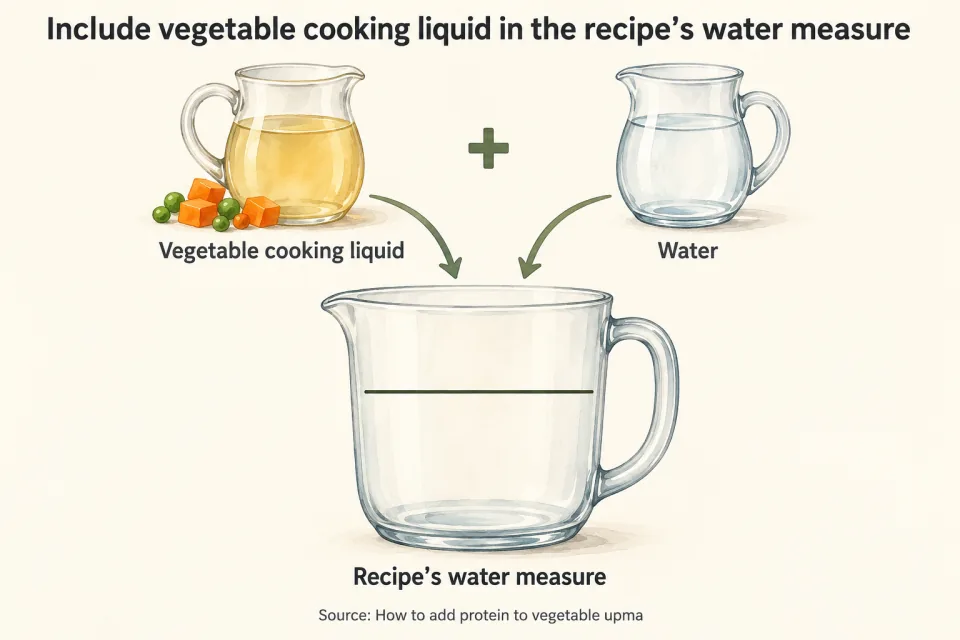
Mayuri counts the drained vegetable cooking water toward the recipe's 3 cups of water. Set that liquid within the stated measure when following the recipe. The moong dal upma recipe also incorporates cooking liquid, but it uses the liquid from partially cooked dal as part of its own sequence.
The order of assembly differs from Swasthi's base method. Mayuri mixes the cooked vegetables and chickpeas with roasted semolina before adding the cooking water. Lightly whisked plain yogurt goes in when the upma starts to thicken. Those steps belong together in Mayuri's version.
Swasthi instead specifies finely chopped vegetables so they can cook during the short upma cooking process. This gives a separate approach for a recipe in which the vegetables cook in the pan. Choose the vegetable preparation described by the recipe, whether that means fine chopping or separate cooking.
Mayuri lists cooked beans, roasted paneer or tofu as alternatives to the chickpeas. This makes that recipe a useful starting point for a vegetable upma with a cooked addition, while retaining its stated sequence for the semolina, vegetables, liquid and yogurt.
Part 08
of 08
08 / Field note
Compare ingredient amounts at the same stage of preparation
Compare the recipes by identifying what is measured dry, what is already cooked and where each addition enters the pan. The moong dal upma recipe measures dry moong dal before separate cooking. Mayuri measures cooked chickpeas and vegetables, while Nisha Madhulika gives gram measures for semolina and peanuts.
These recipes offer different ways to build the dish. In the moong dal version, the dal is partially cooked, its liquid is incorporated, and it finishes with the rava. In Mayuri's version, the cooked vegetables and chickpeas join the roasted semolina before the water. Nisha Madhulika's peanuts enter early enough to cook within the finished mixture.
Use those sequences to choose a recipe, then follow its measures together. For example, a cook choosing the moong dal version should use its instructions for dry dal, partial cooking and dal liquid as a connected method. Someone choosing the incorporated-peanut version should use its semolina, peanut, fat and water measures together with its stated consistency.
For yield, distinguish the amount of a prepared ingredient from the amount of the finished dish. Colorado State's lentil yield concerns the pulse after cooking. Mayuri's serving count concerns the completed recipe. Neither figure describes the other stage, and adding cooked lentils to a recipe is a different operation from measuring lentils before cooking.
Texture comparisons are most useful when they are equally specific. Whole lentils retain their shape, whereas split huskless lentils can break down. Firm tofu can be crumbled during cooking, or prepared in pieces using the Extension guidance. Peanuts cooked within upma and peanuts added as a crunchy garnish follow different methods. Choose the preparation that matches the dish you want, then use the corresponding published recipe as the basis for the pan.
Sources / 08
Continue reading
Return to the card board