Field note
How to add tofu to savoury oatmeal
Choose between finely chopped tofu, browned cubes and a silken tofu substitution. Compare oat textures, pressing methods and vegetable cooking sequences using published recipes.
Part 01
of 11
01 / Field note
Choose how the tofu will enter the bowl
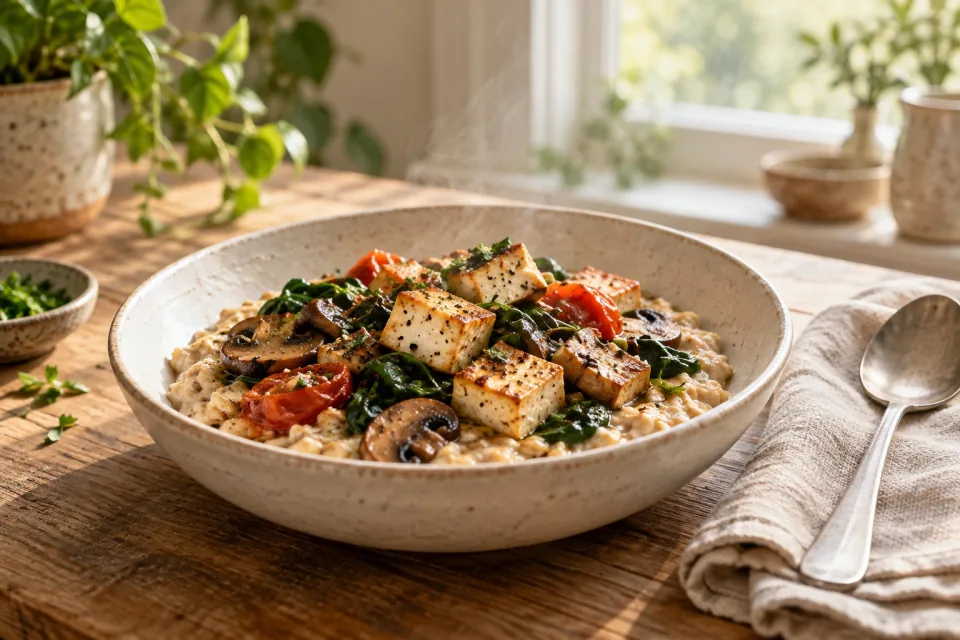
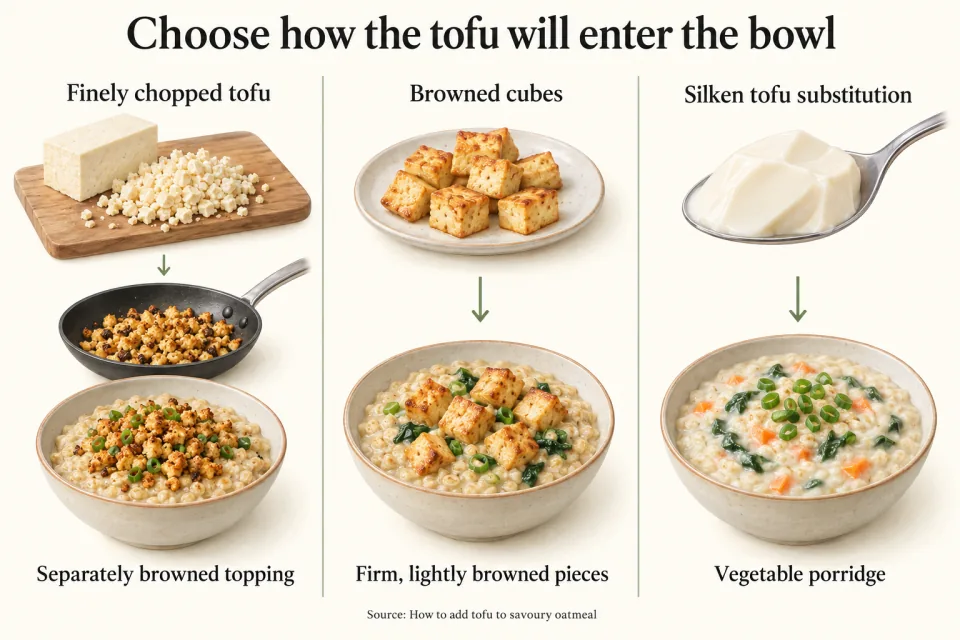
Add tofu to savoury oatmeal by following a recipe that cooks it separately as a topping or includes it as a porridge ingredient. The choice starts with the tofu type and cut, then moves to the oats and vegetables.
The Reducetarian Foundation's oatmeal uses finely chopped extra-firm tofu, browned separately and added to the finished oats. Food Empowerment Project takes a different approach: its vegetable porridge explicitly allows silken tofu in place of tempeh. These give you distinct starting points for a bowl with a cooked tofu topping or a porridge recipe that accommodates silken tofu.
Choose the recipe path before preparing the tofu. A finely chopped topping calls for different handling from delicate silken tofu, while a cube method has its own pressing and cooking steps. Then choose the oat texture: the Whole Grains Council describes softer preparations as well as chewier steel-cut oats. Thinking through those decisions separately makes the published methods easier to follow without turning every variation into the same bowl.
Part 02
of 11
02 / Field note
Match pressing to the tofu type
Pressing is useful for some block tofu, but silken tofu needs different handling. Illinois Extension explains that firmer tofu contains less water than softer tofu, so firmness is a useful starting point when deciding how to prepare it.
For cubes, pressing helps the tofu hold its shape. Illinois Extension also gives a practical check for extra-firm or super-firm tofu: pressing may be useful if wiping the tofu leaves a paper towel very wet. The firmness label therefore belongs alongside the tofu's moisture when you assess the preparation step.
Illinois Extension describes wrapping the tofu in a clean towel, placing it between plates or pans with weight above, and pressing it for at least 30 minutes. This preparation belongs before cutting and cooking in the methods that call for pressed tofu. MedlinePlus follows that order in its scramble, draining and pressing extra-firm tofu before crumbling it.
Do not press soft or silken tofu, because pressure can damage its delicate structure. Serious Eats also distinguishes firm silken tofu from firm block tofu; the shared word firm does not make them interchangeable. For the oatmeal methods here, read the full tofu description before deciding on a cut. The separately browned topping specifies extra-firm tofu, whereas the porridge substitution specifically names silken tofu.
Part 03
of 11
03 / Field note
Choose the oats and the porridge consistency separately
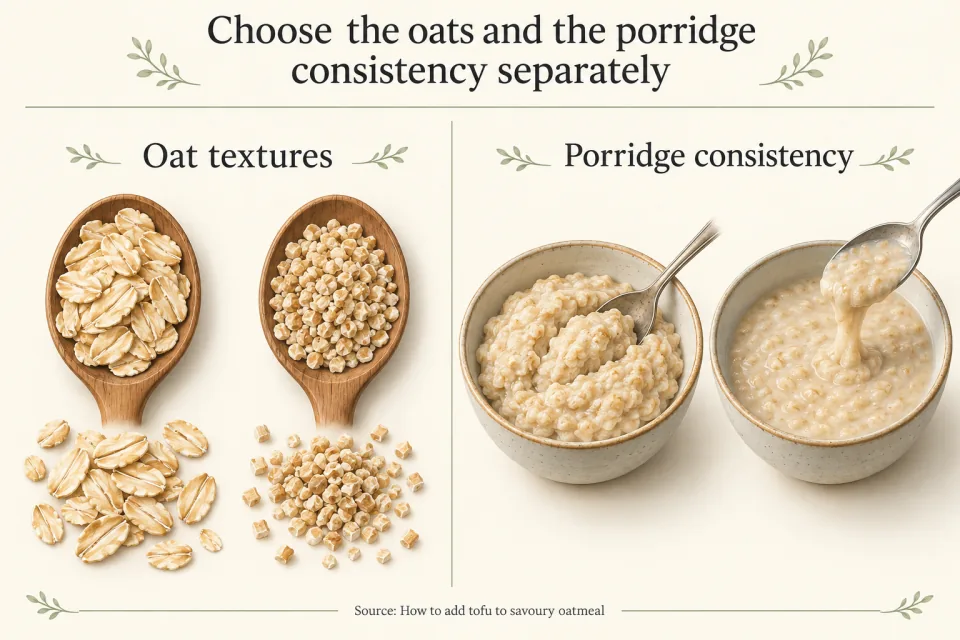
Oat type affects cooking speed and texture, while the cooking liquid helps determine the porridge's consistency. The Whole Grains Council explains that more steaming and flattening produce oats that cook faster and become softer.
Steel-cut oats are kernels cut into smaller pieces, allowing water to enter during cooking. The council describes them as chewier and nuttier than its softer oat preparations. Illinois Extension describes old-fashioned rolled oats as steamed kernels that are flattened into flakes, then dried and roasted. Quick and instant forms undergo longer steaming and may also be precooked.
The Whole Grains Council gives rolled oats a starting ratio of two cups of water per cup of oats, with about 10 minutes of cooking. Its starting point for steel-cut oats is four cups of water per cup of oats, with about 30 minutes of cooking. These are starting guidelines for the oats, rather than a single liquid formula for every vegetable porridge.
For a creamier result, the Whole Grains Council suggests putting oats into cold water and bringing the mixture to a boil. It also describes wetter, softer porridge and drier, firmer porridge as choices that cooks can adjust. Stir occasionally during simmering to help prevent the oats from sticking.
Choose the grain form and the final consistency as separate decisions. Steel-cut oats provide the chewy option described by the council; rolled and quick-cooking forms offer other textures and cooking schedules. After selecting the form, follow the liquid and sequence of the particular savoury recipe, especially when it includes tomatoes, broth or vegetables.
Part 04
of 11
04 / Field note
Use finely chopped tofu for a separately browned topping
Finely chopped extra-firm tofu is the directly documented topping method in the Reducetarian Foundation's savoury oatmeal. The tofu cooks apart from the oats and goes onto the bowl at the end.
The recipe begins by frying the chopped tofu until it browns. Soy sauce and liquid smoke enter after that browning step, followed by a brief period of cooking until the added liquid dissipates. That sequence gives useful cooking cues: first watch the tofu's colour, then watch the liquid after seasoning.
The finished oatmeal receives the cooked tofu along with halved grape tomatoes and chopped scallions or chives. This is a topping arrangement, with the tofu preparation completed separately from the porridge. Follow that assembly if you want to reproduce the published method rather than stirring the chopped tofu into the oat pot during simmering.
The cut is part of the recipe's identity. It calls for finely chopped extra-firm tofu rather than large pieces, so cutting large cubes would move you to a different preparation method. If cubes are the aim, use a cube recipe for their cooking instructions. The chopped method is particularly useful as a sequence to follow: prepare the tofu, brown it, add its seasonings, finish the liquid step, and assemble the oatmeal.
Part 05
of 11
05 / Field note
Follow a cube method for firm, lightly browned pieces
Illinois Extension's Crispy Soy Tofu provides a separate method for small cubes that become firm and lightly browned. Its starting ingredient is drained, water-packed firm or extra-firm tofu.
The recipe combines the small cubes with vegetable oil, soy sauce and cornstarch, then allows at least 10 minutes for marinating. It bakes them at 350°F for about 30 minutes, turning them halfway through, until they are firm and lightly browned. Follow the texture and colour cues along with the stated cooking time.
This method differs from the finely chopped oatmeal topping in its cut, coating and cooking sequence. The cube recipe applies its mixture before baking; the Reducetarian Foundation's chopped tofu browns before the soy sauce and liquid smoke are added. Those instructions belong to their respective recipes, so choose the full method that matches the tofu shape you want to prepare.
For oatmeal, the cube recipe supplies the preparation instructions for the tofu component. It is separate from the published oatmeal recipe that uses finely chopped tofu. Decide whether your task is to follow that oatmeal recipe or to prepare cubes using the Extension method, then organize the oat cooking around the method you have selected.
Part 06
of 11
06 / Field note
Use the silken substitution in a vegetable porridge
Food Empowerment Project's savoury breakfast porridge explicitly offers silken tofu as a substitute for tempeh. Its oat and vegetable instructions provide a published starting point for this approach.
The recipe lists 50 grams of dry rolled oats, 50 grams of sliced mushrooms, 40 grams of shredded carrots and 80 grams of uncooked spinach. The preparation descriptions matter alongside the weights: the oats are dry, the mushrooms are sliced, and the carrots are shredded. Follow those forms when using the recipe, rather than reading the ingredient names alone.
The liquid begins with water, crushed tomatoes and vegetable bouillon brought to a boil. Mushrooms go in before the shredded carrots, spinach and rolled oats. After the oats and leafy vegetables enter, the recipe calls for five minutes of covered simmering over low heat, with occasional stirring. Its order is specific to this rolled-oat vegetable porridge.
That sequence differs from the Whole Grains Council's general cold-water start for creamier oats. Here, the vegetables and tomato-based liquid are already part of the pot before the rolled oats enter. Follow the porridge recipe's sequence when making this dish rather than replacing individual steps with instructions from a different oat preparation.
The recipe also offers kale instead of spinach and miso instead of crushed tomatoes as alternative flavour combinations. Those substitutions belong to this source, as does the silken tofu option. Use the named substitutions within the published recipe while preserving the distinction between delicate silken tofu and the extra-firm tofu used for a browned topping.
Part 07
of 11
07 / Field note
Prepare crumbled tofu with vegetables using the scramble method
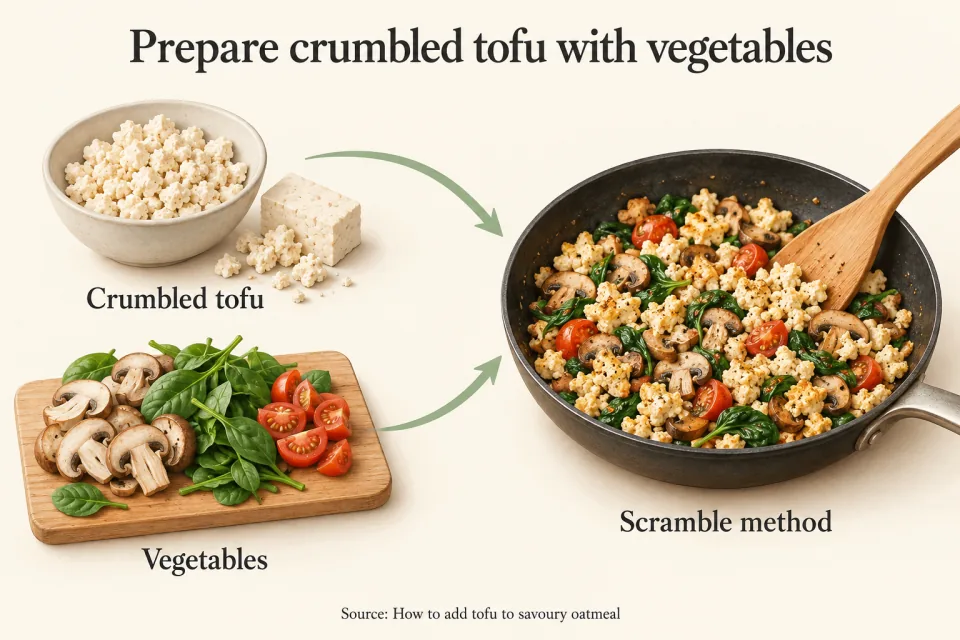
MedlinePlus's tofu scramble documents how to cook crumbled extra-firm tofu with onion, bell pepper and drained chopped spinach. It is a useful reference for preparing crumbles, distinct from the finely chopped topping used in the oatmeal recipe.
The scramble starts by draining and pressing the tofu, then crumbling it. The onion and bell pepper cook over medium heat for five to seven minutes before the remaining ingredients are added. Crumbled tofu follows the vegetables and is stirred until heated through.
That order puts the vegetable cooking ahead of the tofu's final warming step. It also gives a different completion cue from the browned topping: the scramble instructions call for the tofu to be heated through, while the chopped topping specifically calls for browning before seasoning. Use the cue that belongs to the preparation you are following.
Cumin or chilli powder are optional seasonings in the scramble notes. These are source-supported choices for that tofu-and-vegetable preparation, alongside its onion, pepper and spinach. The recipe is a scramble rather than an oatmeal formula, so it supplies a method for cooking crumbled tofu without establishing the liquid balance of an oat dish. For a directly documented tofu oatmeal topping, the finely chopped method remains the relevant recipe.
Part 08
of 11
08 / Field note
Follow the spinach timing of the chosen recipe
Spinach enters at different stages in the published oat recipes. Those stages are part of each recipe's cooking sequence, so use the timing that belongs to the bowl you are making.
The University of Connecticut's quick-oat recipe cooks garlic with half the spinach before adding the oats and water. After the mixture reaches a gentle boil, the heat is lowered and stirring continues until the oats are creamy. The remaining spinach is added during final assembly.
This gives the recipe a cooked spinach component and a separate addition at the finish. The distinction is easy to miss if spinach is read only as an ingredient name. Read through to the assembly instructions before starting, so the spinach intended for that stage is not all added with the garlic.
Food Empowerment Project uses a different sequence, adding spinach with the shredded carrots and rolled oats after the mushrooms. MedlinePlus's scramble uses drained chopped spinach in its vegetable-and-tofu preparation. These examples make vegetable preparation and timing useful details to compare alongside the tofu cut. Choose among the documented sequences rather than assuming every spinach instruction belongs at the beginning of the oat cooking.
Part 09
of 11
09 / Field note
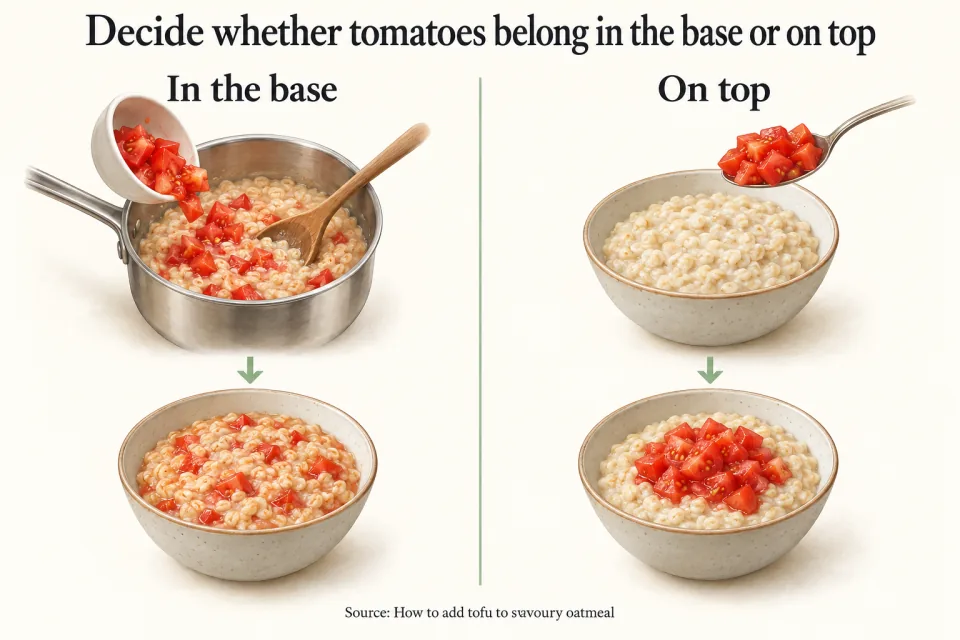
Decide whether tomatoes belong in the base or on top
The supplied recipes use tomatoes either in the porridge liquid or as a finishing topping. That decision changes the cooking sequence and belongs in the recipe choice before you begin.
Food Empowerment Project boils crushed tomatoes with water and vegetable bouillon before adding the other porridge ingredients. In the Reducetarian Foundation's oatmeal, halved grape tomatoes arrive at assembly with the cooked tofu and herbs. These are different preparations of the same ingredient, with different roles in the dish.
The US Department of Agriculture's savoury oatmeal recipe provides another topping example, adding diced tomatoes after its steel-cut oats have cooked. Its base combines milk and vegetable broth. The recipe gives a simmering time of 25 to 30 minutes and checks for tender oats and absorbed liquid. Those completion cues apply before the tomato topping is added.
When choosing between these approaches, identify the oat cooking liquid first. A tomato-and-bouillon porridge follows a different recipe from oats cooked in milk and broth with tomatoes added afterward. This is also why the final bowl's ingredients should be read across the full recipe: the base, cooked tofu and finishing vegetables may each have their own preparation stage.
Part 10
of 11
10 / Field note
Use the mushroom and cabbage sequence for a steel-cut base
Foodwise's savoury oatmeal porridge uses dried shiitake stock, steel-cut oats and cabbage. Its method offers a mushroom-based oat preparation with cabbage added after the oats have become tender and plump.
For the stock, Foodwise brings dried shiitakes and water to a boil, removes the pot from the heat, and lets it stand for 30 minutes. The soaking liquid becomes the cooking stock. The mushroom stems are removed and the caps are sliced, so the mushrooms and their liquid enter the next stage in different forms.
The recipe softens diced onion before adding the mushroom stock, sliced mushrooms, steel-cut oats, soy sauce and sesame oil. The oats cook in that mixture until tender and plump. Chopped Savoy cabbage then enters for another 10 minutes of cooking. Cabbage therefore belongs after the oat texture check in this particular recipe.
Compare that sequence with the rolled-oat vegetable porridge, where shredded carrots and spinach enter with the oats. The difference is concrete: the Foodwise method prepares a stock, cooks the steel-cut oats in it, and adds cabbage later. Use its sequence when choosing this mushroom-and-cabbage base. For tofu preparation, consult the separately documented chopped, cubed or crumbled methods according to the cut you intend to cook, while preserving the oat recipe's own vegetable order.
Part 11
of 11
11 / Field note
Where this field note came from
AI tools did the research for this field note and wrote it up, and its facts were checked against the sources listed with it.
Noted on 23 October 2026.
Sources / 12
Continue reading
Return to the card board