Field note
How to make paneer bhurji with vegetables
A measured paneer bhurji with peas and capsicum, including the vegetable cooking order, a brief paneer finish and separate corrections for a wet base or a dry scramble.
Part 01
of 09
01 / Field note
Cook the vegetables before adding paneer
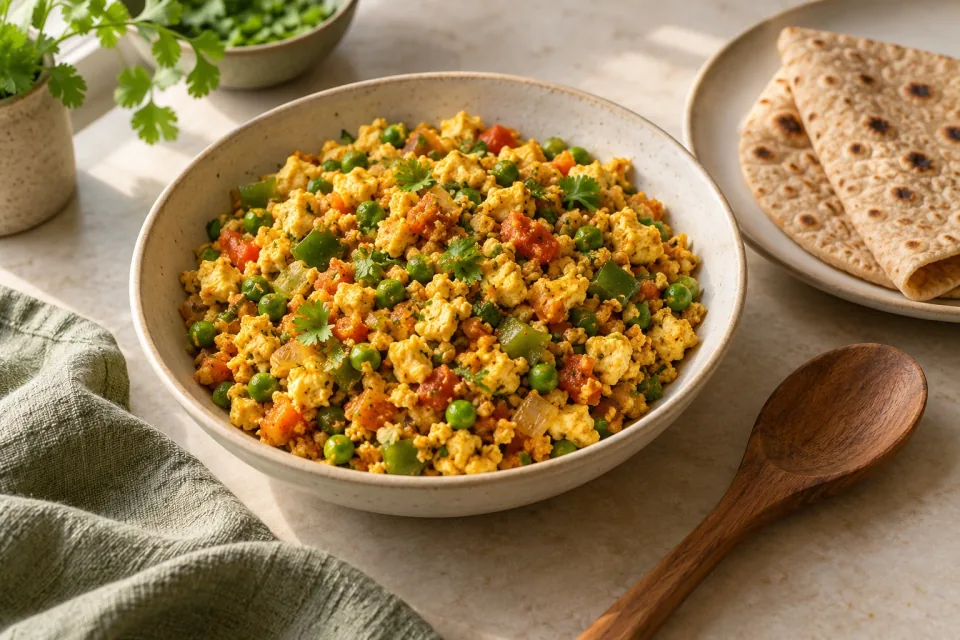
For vegetable paneer bhurji, cook the onion, tomato, peas and capsicum before adding the grated paneer. NDTV India's recipe follows that order, with a covered stage for the peas and capsicum. The finished dish is a scramble of paneer and vegetables seasoned with cumin, ginger, chilli and ground spices.
The condition of the tomato base also matters. In NDTV Food's kitchen comparison, paneer became firmer and drier when cooking continued after it had been added to a wet masala. The author preferred adding paneer after most visible tomato liquid had evaporated, then mixing gently and heating briefly.
Use the pea-and-capsicum batch below as the main recipe. The other methods provide specific comparisons: a timed vegetable stage, a brief paneer finish and a tomato-free capsicum version with an optional milk addition.
Part 02
of 09
02 / Field note
Measure the pea and capsicum batch
The main batch uses paneer, onion, peas, tomato and capsicum, with the quantities from NDTV India. Measure the vegetables in the form specified: the tomatoes and capsicum are chopped, while the onions are counted separately.
NDTV India's recipe uses 250 g of paneer and two onions. It also calls for half a cup each of peas, chopped tomatoes and chopped capsicum. Measure each vegetable separately; the cup amount applies to each ingredient, rather than to a combined bowl of vegetables.
NDTV India's batch starts with a quarter teaspoon of cumin seeds and uses 1–2 tablespoons of oil. Chop one green chilli and a half-inch piece of ginger for the NDTV India recipe. Set the cumin apart from the chopped aromatics, since the seeds enter the hot oil first and the ginger and chilli follow with the onion.
For the NDTV India batch, measure one teaspoon of coriander powder and a quarter teaspoon apiece of red chilli powder and turmeric. Chop fresh coriander and measure 2–3 tablespoons for the NDTV India batch. Distinguish the ground coriander from the fresh leaves when measuring: they are separate ingredients in the recipe.
Prepare the ground spices before starting the cooking sequence. They enter before the tomatoes in this version, so have them ready when the onion mixture reaches that stage.
Part 03
of 09
03 / Field note
Prepare the paneer and vegetables
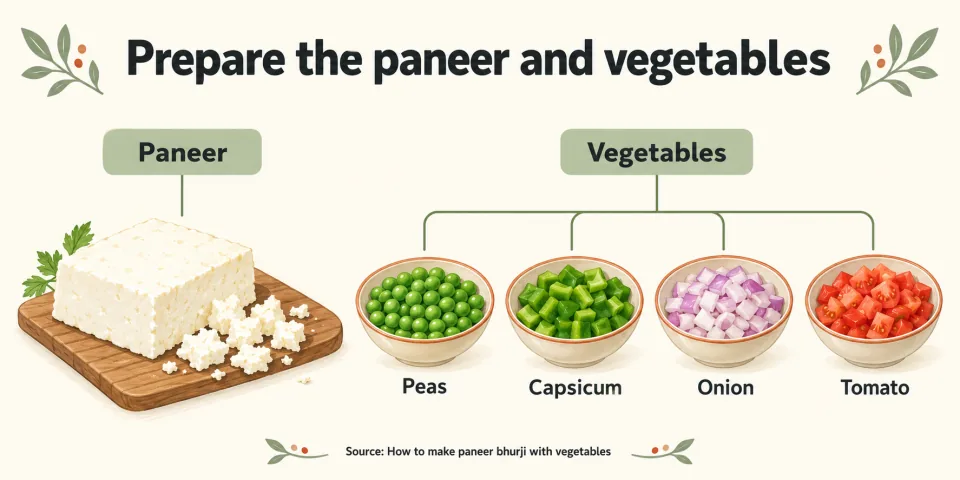
Grate the paneer for the main batch and prepare the vegetables before starting the pan. NDTV India specifies grated paneer, while the Times of India method describes finely chopped onion and small cubes of tomato and capsicum. Have the paneer ready separately from the vegetables because it enters later.
Raks Kitchen describes crumbling fresh paneer by hand or using a grater, rather than putting it in a mixer. Cook With Manali also uses crumbled paneer. These are documented preparation choices if you prefer to follow a crumbled-paneer version; the main measured vegetable recipe uses the grater.
For purchased paneer, Cook With Manali recommends a warm-water soak lasting 20 minutes before use. If following that preparation, begin it ahead of the pan work. Starting the soak only when the vegetables are cooked would leave that preparation unfinished at the point where the paneer is meant to enter.
Cook With Manali gives a cooking time of 15 minutes and a preparation time of 10 minutes. Those timings describe her recipe, with its own aromatic mixture and onion-and-tomato stages. Read the soak instruction separately when organizing the work, and follow the preparation and cooking sequence of the version you choose.
Part 04
of 09
04 / Field note
Build the onion and tomato base
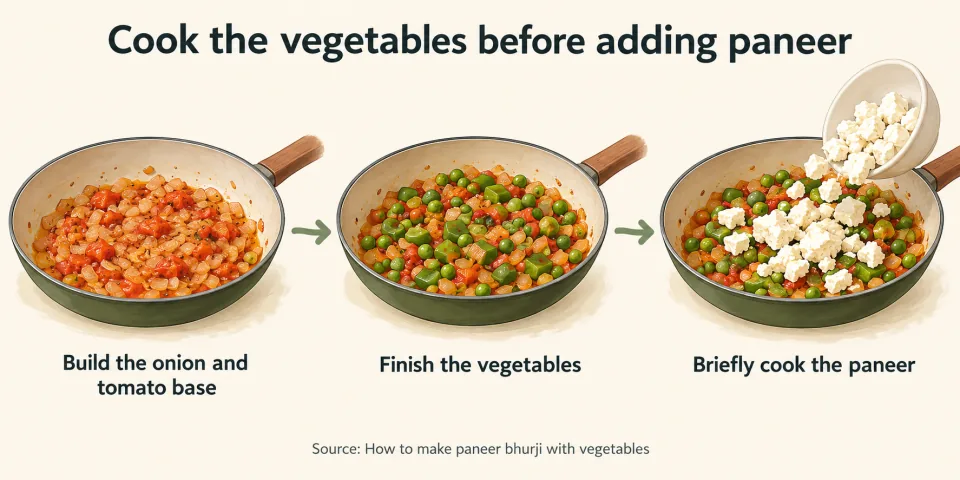
Begin the main recipe by letting cumin crackle in hot oil, then sauté the green chilli, ginger and onion. NDTV India adds the ground spices next, followed by the tomatoes. The peas and capsicum come later, so work through the onion and tomato stages before adding them.
The spice order differs across the recipes. In Cook With Manali's recipe, lightly browning the onion mixture takes about five minutes. The tomatoes soften during the next stage, which lasts about three minutes in her method. She adds crumbled paneer after cooking the ground spices for 30 seconds.
That comparison gives useful detail about what a cooking instruction can specify: an onion colour, softened tomatoes and a timed spice stage. Those cues belong to Cook With Manali's method. In the main NDTV India batch, follow its stated order of ground spices before tomatoes rather than moving the spice addition to the end.
Once the tomatoes have had their stage, add the peas and capsicum and cook them covered, as NDTV India directs. The paneer remains separate while the vegetables cook. This covered vegetable stage is part of the main method, rather than a step performed after the paneer has already been mixed through.
Part 05
of 09
05 / Field note
Finish the vegetables, then briefly cook the paneer
Add the paneer once the vegetables have cooked. NDTV India's sequence places grated paneer after the covered peas-and-capsicum stage, so complete that vegetable work before making the final scramble.
In the Times of India method, paneer goes in after the peas and capsicum have cooked for five minutes. The heat goes off after the paneer has cooked for one further minute in that recipe. The timing separates the vegetable stage from the paneer stage; the longer part happens while the paneer is still outside the pan.
The NDTV Food author favoured a finish lasting another couple of minutes, with paneer gently folded into masala that was thick and nearly dry. That is a reported preference from a kitchen comparison, distinct from the Times of India recipe's timed finish. The accompanying instruction about the base matters alongside the duration: it was already thick and nearly dry when the paneer entered.
To follow the Times of India sequence, start with its cooked peas and capsicum, add the paneer, carry out the brief final cook, then switch off. For the NDTV Food comparison, the decision point is the moisture in the masala before adding paneer. Read the condition of the base and the finishing instruction together when following either account.
Part 06
of 09
06 / Field note
Correct excess liquid and dryness at different stages
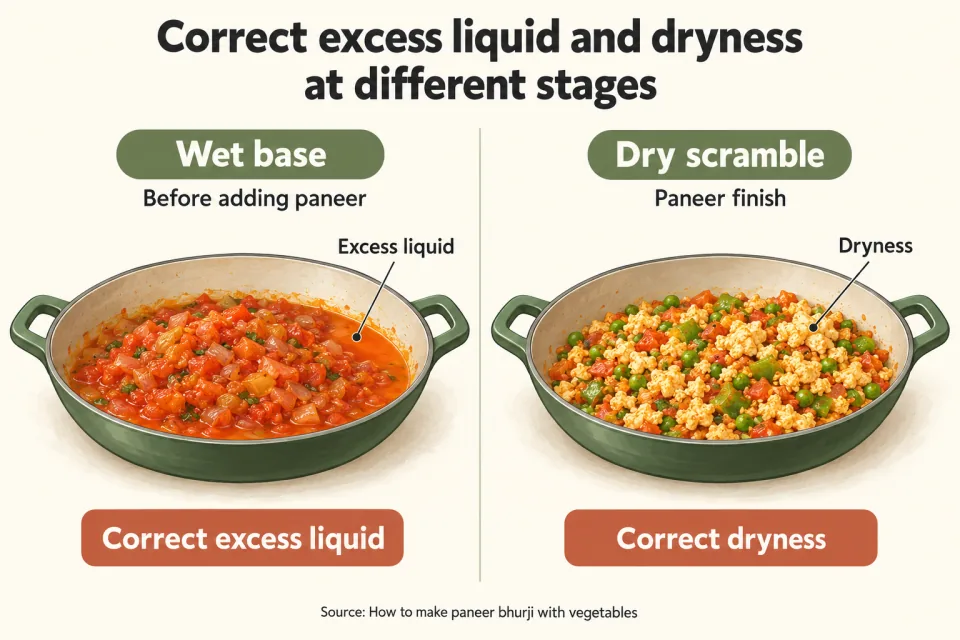
Resolve visible tomato liquid before adding paneer, using the moisture cue from NDTV Food's comparison. NDTV Food's comparison produced a less watery result when the tomato base lost most of its visible moisture before the paneer was added. This observation concerns the tomato base at the end of its cooking, before the final scramble.
The same comparison explains why adding paneer early did not solve the wet mixture: continued cooking made the paneer progressively firmer and drier. For a pan with visible tomato liquid, the documented correction is to let most of that liquid evaporate while the paneer is still separate. Adding paneer and then extending the cooking was the approach associated with the unwanted texture in that account.
Salt timing made a modest difference in the comparison. With salt added later, the NDTV Food author observed less liquid while the vegetables cooked and slightly better browning. That finding offers a salt-timing option, but the reported difference was modest.
A dry scramble calls for a different decision. Raks Kitchen recommends milk when its tomato-free bhurji feels too dry. That is an addition to a dry mixture, whereas the tomato advice concerns allowing visible liquid to evaporate before the paneer goes in.
For example, a tomato base with liquid still visible belongs at the vegetable-cooking stage, with paneer waiting to be added. A dry result in Raks Kitchen's tomato-free version points to that recipe's optional milk adjustment. Identify which situation is in front of you before choosing the correction; the sources describe different problems at different points in the method.
Part 07
of 09
07 / Field note
Follow the tomato-free capsicum version
Raks Kitchen's tomato-free bhurji uses paneer, onion and capsicum. Choose it as a separate version, with its own vegetable amounts and finishing instructions. Its onion cue is translucence, rather than the lightly browned onion described in Cook With Manali's recipe.
For Raks Kitchen's tomato-free version, measure one tablespoon of oil and use one capsicum, two onions and 200–250 g of paneer. This recipe measures capsicum as a whole ingredient, unlike the chopped cup measure in the main batch. Use the amount attached to the version being cooked instead of translating between those measurement forms.
In Raks Kitchen's method, add capsicum to the translucent onions and give it one minute of cooking. To avoid burning the ground spices, Raks Kitchen says to stir them as soon as they enter the pan. Have the spices ready for that step and stir as they enter, following that handling cue.
For a bhurji that feels too dry, Raks Kitchen lists two tablespoons of milk as an optional addition. The milk is an adjustment offered by this recipe, rather than a required ingredient in the pea-and-tomato batch. Use that instruction with the dry-texture situation it describes.
After the heat is off, Raks Kitchen finishes with one teaspoon of lemon juice. The source also offers black pepper as an alternative to red chilli powder. These instructions provide a finishing point and a seasoning choice within the tomato-free version; the lemon comes after cooking has stopped.
Part 08
of 09
08 / Field note
Choose a documented seasoning combination
Choose the aromatic mixture along with the recipe, since the sources use different seasonings. The main vegetable batch starts with cumin and chopped ginger and chilli. Cook With Manali describes a crushed aromatic mixture and a tempering that also includes fennel.
The crushed mixture in Cook With Manali's version contains one or two green chillies, four or five garlic cloves and an inch of ginger. For tempering, Cook With Manali uses a quarter teaspoon of fennel seeds and half a teaspoon of cumin seeds with one tablespoon each of ghee and oil. These amounts belong to her version, alongside its onion, tomato and ground-spice sequence.
Cook With Manali permits garam masala to replace pav bhaji masala. This is a stated substitution within her recipe. It does not change the turmeric, red chilli and coriander powder quantities in the main NDTV India batch.
A quarter teaspoon of asafoetida and half a teaspoon each of mustard seeds and amchoor appear in the Times of India version. Those are further choices from a published recipe, rather than extra seasonings to add automatically to the main batch. Decide which version to follow before measuring the spices, so the quantities and cooking order remain connected.
Part 09
of 09
09 / Field note
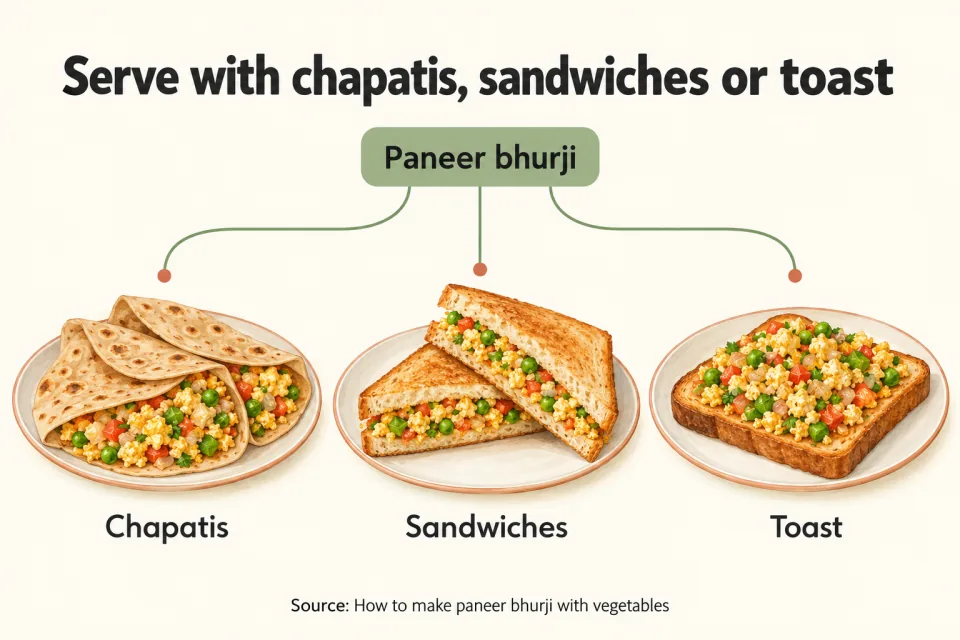
Serve with chapatis, sandwiches or toast
Serve the bhurji beside chapatis or use it as a sandwich filling, as the Times of India suggests. The paneer, peas and capsicum remain together as the filling when following its vegetable version. For the chapati option, serve the prepared scramble alongside the bread.
Cook With Manali also suggests serving bhurji on toast. That puts the scramble on the bread instead of enclosing it as a sandwich. Choose the serving format while preparing the ingredients, then complete the vegetable and paneer stages of the recipe before assembling the bread and bhurji.
Sources / 05
Continue reading
Return to the card board