Field note
How to plan a high-protein dinner with a starter, main and dessert
Build dinner around a main dish, choose a supporting starter and dessert, and organise an ingredient worksheet for protein and calorie calculations. Includes menus built from published recipes.
Part 01
of 10
01 / Field note
Choose the main dish before filling out the menu
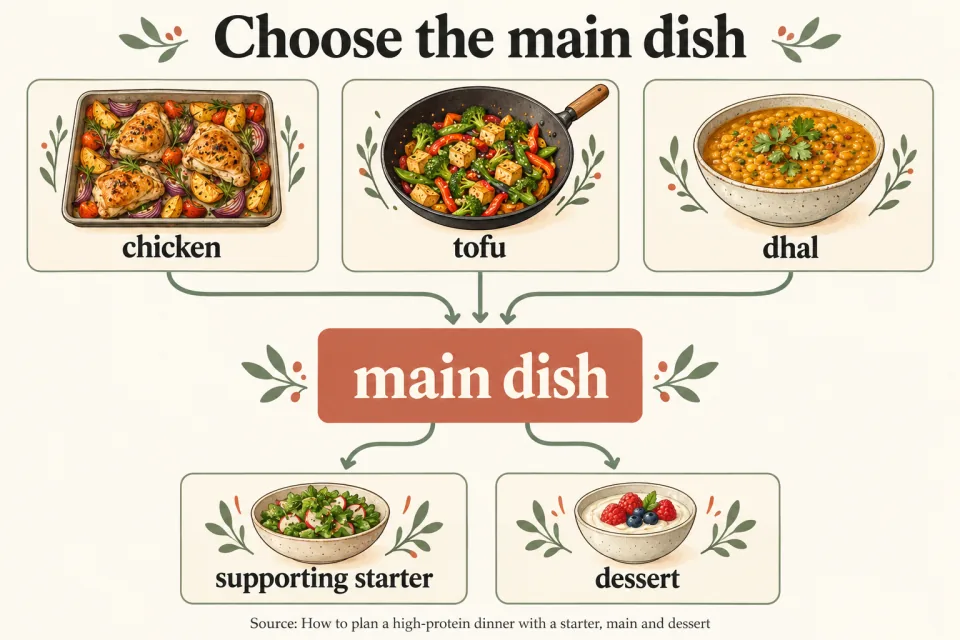
Build the menu around its main dish, then choose a starter and dessert that give the meal variety. Allocate the central protein ingredients there: chicken in a traybake, tofu in a stir-fry, pulses in dhal, or eggs and chickpeas in shakshuka.
Good Food recommends choosing a cuisine or a casual or elegant style before selecting the dishes. That decision gives the menu a direction. A shared traybake suggests a different dinner from individually served soup followed by a main, even when some ingredients overlap.
Good Food also recommends checking guests' dietary restrictions before planning the menu. Settle those requirements before choosing between chicken, tofu, pulses and eggs. Then consider the starter and dessert as parts of the same meal, including any yogurt toppings or accompaniments.
Give each course a clear job. The starter might introduce vegetables or pulses, the main can hold the central ingredients, and dessert can finish with yogurt and fruit. There is no need to build a separate substantial protein dish for every place on the menu.
Good Food advises combining complementary flavours with varied colours and textures while avoiding ingredient overload. Apply that advice by reading the proposed menu from beginning to end. Notice repeated chickpeas, repeated yogurt toppings or several soft dishes, and choose deliberately where each belongs.
Part 02
of 10
02 / Field note
Choose between a vegetable starter and a pulse starter
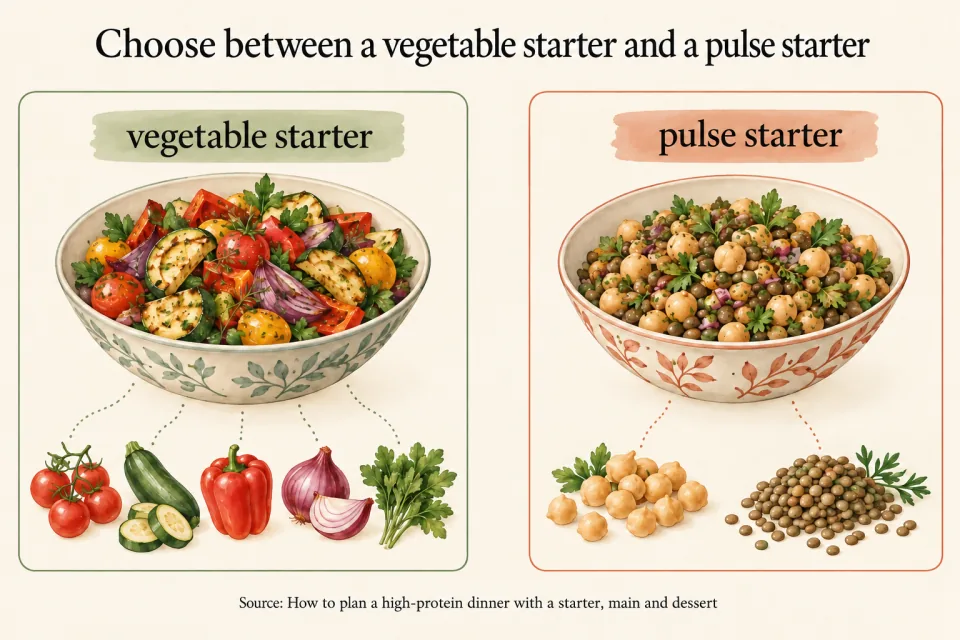
Vegetable soup and lentil soup give the starter different roles. Choose the vegetable version when you want the pulses or other central ingredients concentrated in the main; choose the lentil version when you want pulses to appear at the start of dinner.
The vegetable soup published by the NHS, the United Kingdom's National Health Service, combines vegetables, tomatoes, stock and pasta. Onion, carrots, leek and celery begin in the pan with gentle frying. The recipe also includes green beans or sugar snap peas, along with peas.
Pasta cooks in the soup itself. This detail belongs on the menu worksheet because the starter includes a grain ingredient as well as vegetables and liquid. Describe it as vegetable and pasta soup so the dish is clear before anyone sits down.
Good Food's red lentil and chickpea soup takes a different approach. Cumin seeds and chilli flakes are dry-fried until fragrant, and red split lentils simmer with tomatoes and vegetable stock or water. The lentil mixture is blended to a coarse purée before drained, rinsed chickpeas go in.
That sequence gives the soup a blended base with whole chickpeas. Chopped coriander and yogurt finish the published recipe. When pairing it with a main that also contains chickpeas or a yogurt accompaniment, decide whether that repetition belongs in your menu; the vegetable soup offers another route without changing the main recipe.
Part 03
of 10
03 / Field note
Build a chicken menu around the whole traybake
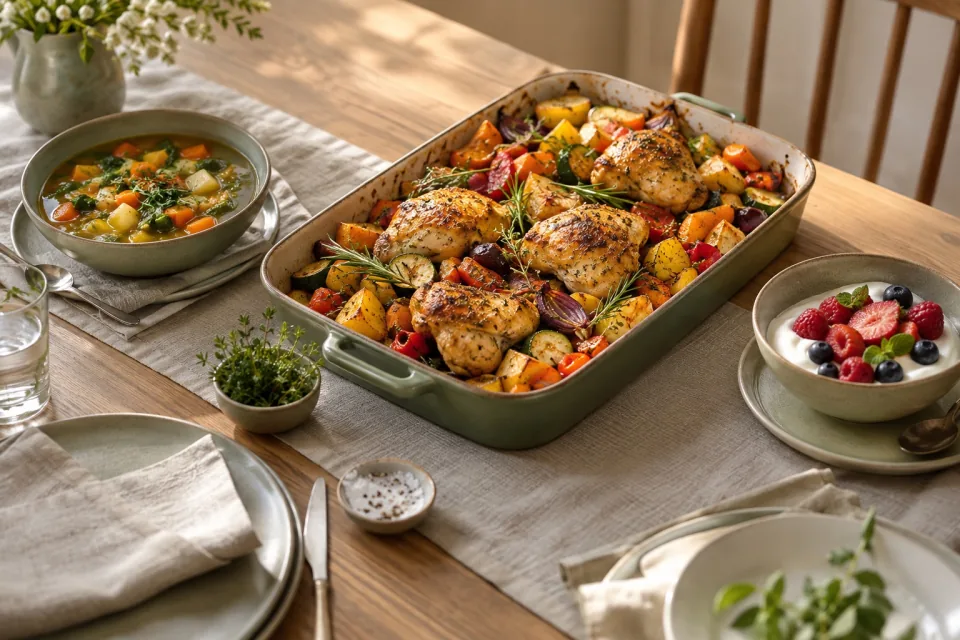
A chicken traybake can provide the main dish and its vegetable and potato accompaniments together. A suggested menu is vegetable and pasta soup, the published chicken traybake, then yogurt with raspberries and toasted oats.
Good Food's traybake uses chicken thighs on the bone, with the skin and visible fat removed. Potatoes, onions and pepper share the roasting tin, while broccoli joins later. Write the full dish on the menu rather than recording only chicken and treating everything around it as an unspecified side.
The recipe starts the onions, pepper and potatoes before adding the chicken. Lime zest, garlic, smoked paprika and thyme season the chicken. Broccoli, hot stock and lime juice belong to the final covered stage, so the tin is assembled in stages rather than filled with every ingredient at the outset.
For menu planning, this means the main already has several components. Look at those before adding a separate potato dish or another vegetable accompaniment. The starter can remain a soup, and dessert can bring fruit and yogurt without becoming another elaborate cooked dish.
For the ingredient worksheet, distinguish the thighs used in the recipe from the edible chicken being measured. USDA FoodData Central bases composition values on edible food, excluding parts such as chicken bones. Record the potatoes and vegetables separately so the worksheet describes the complete traybake.
Part 04
of 10
04 / Field note
Give tofu a clear place in a stir-fry menu
A tofu stir-fry gives the main a clear structure: tofu, vegetables, sauce, and noodles or rice. Good Food's stir-fry guide uses this structure, which makes it possible to plan the main as a complete dish rather than as tofu with unspecified extras.
Good Food recommends extra-firm tofu for a stir-fry with a crisp exterior. Its pressing guide explains that pressing suitable firm tofu removes moisture and helps pieces retain their shape during pan-frying or baking. The described method wraps the tofu in a clean tea towel and places it on a lipped plate beneath a weight.
Silken tofu should not be pressed because its delicate structure breaks under pressure. Choose the tofu type as part of the cooking method, before planning the rest of the main. The pressing instructions apply to suitable firm tofu.
For this menu, vegetable and pasta soup could precede the tofu main, with the yogurt and raspberry dessert afterwards. This is a suggested pairing of published dishes. If the starter's pasta repeats a grain component you would prefer to reserve for the main, consider the lentil and chickpea soup instead.
Good Food recommends having noodles nearly ready before stir-frying begins. Prepare the vegetable pieces to a similar size, as the guide describes, and account for the sauce alongside the tofu and noodles in the ingredient worksheet. Rice is another accompaniment offered by the guide.
Part 05
of 10
05 / Field note
Use dhal as the main when pulses lead the meal
Dhal can take the main position instead of appearing as an extra alongside another substantial dish. The NHS presents its Panjabi dhal as a main, part of a larger meal, or a soup accompanied by bread.
The recipe combines washed red split lentils with split mung dhal. Its separate tempering method fries cumin seeds, onion, garlic and green chillies, then adds that mixture to the simmering pulses. An alternative method brings the ingredients to the boil together before simmering.
Choose the method when planning the cooking sequence. With separate tempering, the seasoning mixture has its own preparation step before it joins the pulses. With the combined method, the ingredients share the pan from the beginning; the menu remains the same, but the order of work changes.
The NHS suggests rice or chapatis and plain yogurt alongside this dhal. Make that accompaniment choice explicit. A menu entry that names dhal, rice and yogurt tells you more than a main described simply as lentils, and it gives the ingredient worksheet a defined boundary.
Vegetable and pasta soup could open this dinner. For dessert, the yogurt and raspberry recipe repeats yogurt from the main's suggested accompaniment, so consider that repetition while selecting the menu. If you use dhal as the starter instead, assign the main position to a different published dish rather than leaving the dhal's role undecided.
Part 06
of 10
06 / Field note
Let eggs and chickpeas share the main dish
Shakshuka offers a main in which eggs and chickpeas already appear together. The NHS version cooks them with tomatoes, peppers, aubergine and spinach, so the dish should be described and counted as that complete mixture.
The vegetable sauce simmers until it thickens before the chickpeas and spinach are added. Wells are then made in the vegetable mixture for the eggs. The NHS recipe cooks the eggs under a lid until the whites are set.
For a suggested menu, pair this main with vegetable and pasta soup and finish with yogurt, raspberries and toasted oats. The vegetable starter leaves chickpeas assigned to the main. Choosing lentil and chickpea soup instead would deliberately put chickpeas in successive savoury courses.
The recipe names mushrooms, courgettes and green beans as possible vegetable substitutions. If you choose an offered substitution, write that choice into the menu and ingredient worksheet. The description, preparation notes and calculation should all refer to the version you intend to cook.
Plan the egg stage as part of finishing the main. The sauce has its own cooking sequence before the eggs enter it, so separate those tasks in your notes. This gives the menu a clearer order than an instruction to cook the entire main just before serving.
Part 07
of 10
07 / Field note
Finish with a yogurt and fruit dessert
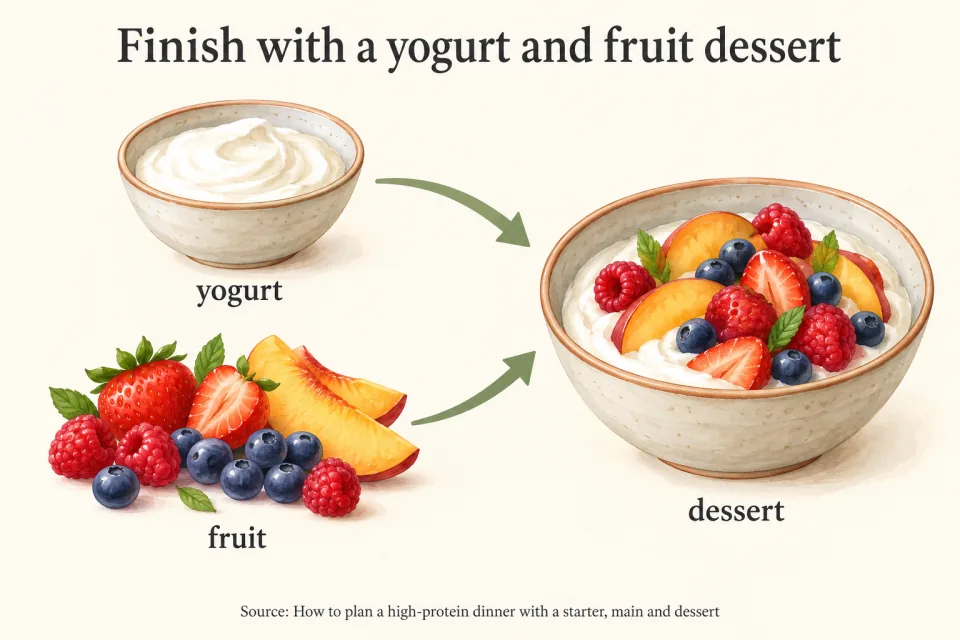
Yogurt with raspberries and toasted oats gives dessert a defined place without requiring another large savoury protein dish. The NHS recipe layers these ingredients in serving glasses, making the fruit and oats visible parts of the dessert.
The oats are grilled until lightly browned and then allowed to cool. Some raspberries are crushed and mixed with the yogurt and cooled oats. Whole berries form another layer in the glasses, so the recipe uses the fruit both within the yogurt mixture and as a separate element.
This is a useful distinction when writing the menu: call it yogurt with raspberries and toasted oats rather than simply yogurt. The fuller name tells the cook what to prepare and gives the ingredient worksheet its scope. Count the oats and berries as ingredients of the dessert alongside the yogurt.
The NHS recipe also permits strawberries, forest fruits or mixed summer berries in place of raspberries. Choose the fruit before completing the worksheet, then describe that version consistently. A raspberry entry and a mixed-berry dessert would refer to different ingredient choices.
Look back at the savoury courses before settling on this dessert. The lentil soup has a yogurt topping, and the dhal has a suggested yogurt accompaniment. You can choose a menu with yogurt in several places, but make each appearance deliberate and record it under the dish where it is used.
Part 08
of 10
08 / Field note
Write an ingredient record before doing the arithmetic
Build the calculation from the ingredients in the chosen recipes, including accompaniments and finishing touches. Give each dish its own record, then place those dish records under starter, main or dessert.
For vegetable soup, the record includes the vegetables, tomatoes, stock and pasta. For lentil and chickpea soup, distinguish the red split lentils from the drained chickpeas, then include the remaining ingredients and yogurt topping. These are different soups, so a comparison should use the recipe you actually select.
The main needs the same detail. A chicken entry does not describe the potatoes and vegetables in a traybake; a tofu entry does not describe the sauce and noodles in a stir-fry. Write each component on its own line in your working notes, even though the finished article menu describes a single dish.
Attach the food's measured state to its name. The researched recipes distinguish chicken on the bone, drained canned chickpeas and dried pasta, for example. For the edible-weight calculation, the chicken bones sit outside the measured food described by USDA FoodData Central.
USDA FoodData Central supplies household portion information for some foods, including cups, tablespoons and individual pieces. Its documentation also explains that portion weights depend on the database's data type. Use the portion information attached to the relevant food entry when translating a household measure into an ingredient weight.
Part 09
of 10
09 / Field note
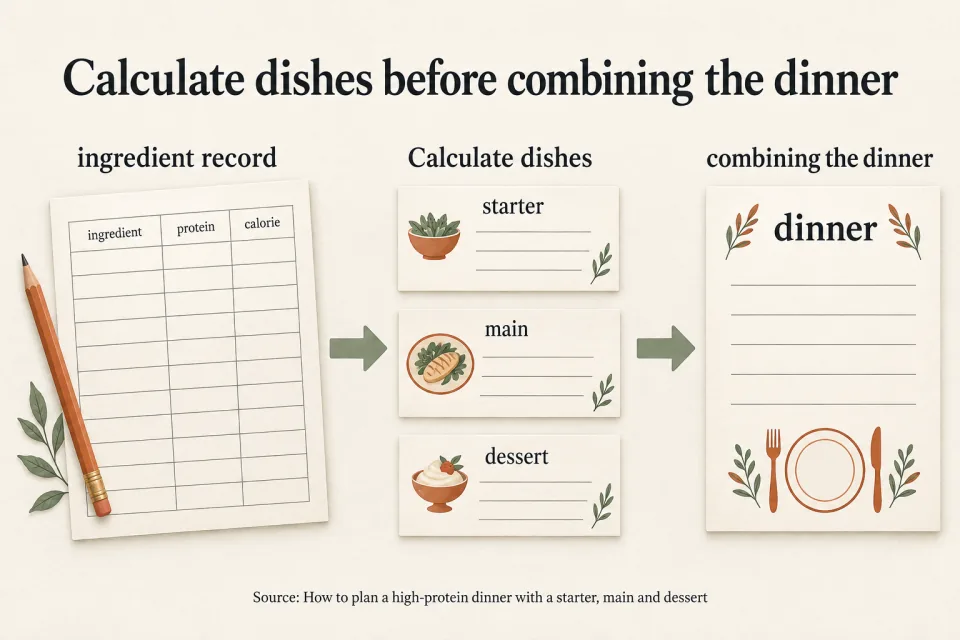
Calculate dishes before combining the dinner
Work from ingredient amounts to dish totals, then from the amount served to course totals. This gives the whole dinner a traceable calculation, with each contribution attached to a named ingredient and dish.
USDA FoodData Central calculates a portion's nutrient content by multiplying the value per 100 g by the edible portion weight in grams and dividing by 100. Apply that conversion separately to each ingredient using the corresponding food entry. Add the converted ingredient values to form the recipe total, with protein and calories in separate columns.
Next, distinguish the recipe you cooked from the amount included in the planned dinner. For a dish divided equally, divide its calculated total across those equal portions. For an individually assembled dish such as the yogurt dessert, the ingredient amounts assigned to each glass can form its own record.
Bring the dish records together under their courses. The dhal's chosen rice or chapatis belong with the main, while its yogurt accompaniment also needs a place there. The yogurt used in dessert belongs to the dessert record, even if it is the same ingredient used elsewhere.
The final addition combines the starter, main with accompaniments, and dessert. If you change the starter from vegetable soup to lentil and chickpea soup, replace that dish's record and calculate again. This method lets the menu change without rebuilding every dish calculation or assuming that differently composed starters are equivalent.
Part 10
of 10
10 / Field note
Arrange the cooking around the chosen main
Write the preparation order around the main dish's actual cooking stages. The traybake, tofu stir-fry, dhal and shakshuka have different sequences, so choose the main before assigning the final cooking tasks.
For the chicken menu, mark the vegetable roasting stage, the addition of chicken, and the final covered stage with broccoli, stock and lime juice. For the tofu menu, put tofu preparation and vegetable cutting ahead of stir-frying, with the noodles nearly ready when that rapid cooking stage begins.
For dhal, decide between the separate tempering method and the combined method before starting. For shakshuka, distinguish making the vegetable sauce from adding chickpeas and spinach, then finishing the eggs. Each note should describe an action in the published recipe rather than a vague instruction to prepare the main.
Add the starter's sequence alongside it. Vegetable soup cooks its pasta in the liquid, while lentil soup is blended before the chickpeas are incorporated. For dessert, the toasted oats cool before they join the yogurt mixture, so that step also belongs in the preparation order.
Finish the plan by reading the dish names, ingredient records and cooking sequence together. A change from rice to chapatis, raspberries to another permitted fruit, or vegetable soup to lentil soup should appear throughout those notes. The result is a menu whose ingredients, calculations and preparation all describe the same dinner.
Sources / 10
Continue reading
Return to the card board