Field note
Protein foods for small lunch boxes, with room for grains and vegetables
Compare chicken pots, tofu bowls, paneer rolls and chickpea wraps by their packing shape. Published container examples show how to arrange the main foods while leaving room for grains and vegetables.
Part 01
of 10
01 / Field note
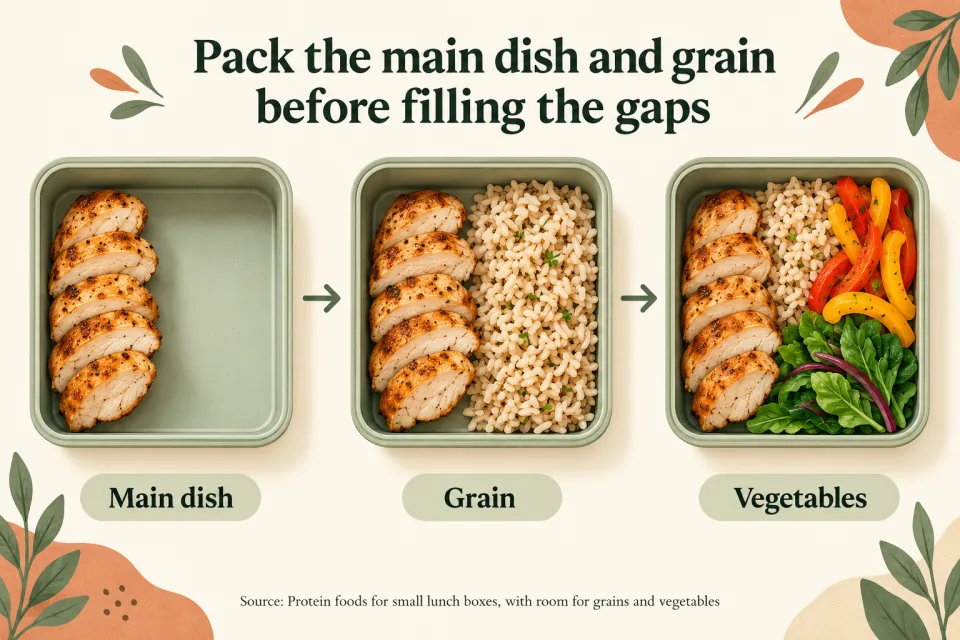
Pack the main dish and grain before filling the gaps
Start with the grain and the main dish, then arrange vegetables around them. Lunch in a Box uses this packing order: position bulky foods first, follow with flexible side dishes, and finish with small foods that fit the remaining spaces.
For a small lunch box, use that sequence to plan the whole meal before filling the container. Identify where the rice, wrap or other grain component will go, then place the chicken, tofu, paneer or egg dish. Add the vegetables around those established shapes. This gives each part of the meal a place in the layout from the beginning.
Choose the format alongside the ingredients. The published recipes below offer layered chicken and lentils, a tofu bowl with rice, filled wraps and shaped tofu patties. Use their existing combinations as the starting point, then apply the packing sequence to the container in front of you.
Food cups and dividers have a specific role in the Lunch in a Box method: separating foods whose flavours would otherwise mingle. Place them where that separation is useful. For the remaining spaces, follow the guide's approach of arranging small vegetable pieces around the main dish.
Part 02
of 10
02 / Field note
A worked example with rice, salmon and egg
JustBento demonstrates how rice, salmon, rolled egg and vegetables can share a compact container. Its examples provide a useful layout to study before choosing a recipe for a small box.
JustBento packs rice, salmon, a rolled omelette made with one egg, pepper-and-onion confit, broccoli and snow peas into a 580 ml lunch box with two tiers. The demonstration cuts the salmon and omelette to suit their compartment. Vegetables occupy spaces around the larger pieces, so the layout includes several distinct foods without requiring a separate section for every ingredient.
Its 670 ml example uses a single tier and adds more salmon and pepper-and-onion confit alongside the same types of food. Read the capacity together with the arrangement: the examples show different layouts as well as different amounts of some components. The larger box does not introduce a different set of meal components.
Apply the cutting and arranging method when packing a similar meal. Position the rice, fit the salmon and egg into their assigned area, then work the vegetables around them. Follow the container's compartments when deciding how to cut the main foods, as the demonstration does.
These published examples make a practical comparison possible: a divided layout and an undivided layout can both accommodate rice, main dishes and vegetables. Use them as arrangement examples, and judge the fit of your own meal as you pack it.
Part 03
of 10
03 / Field note
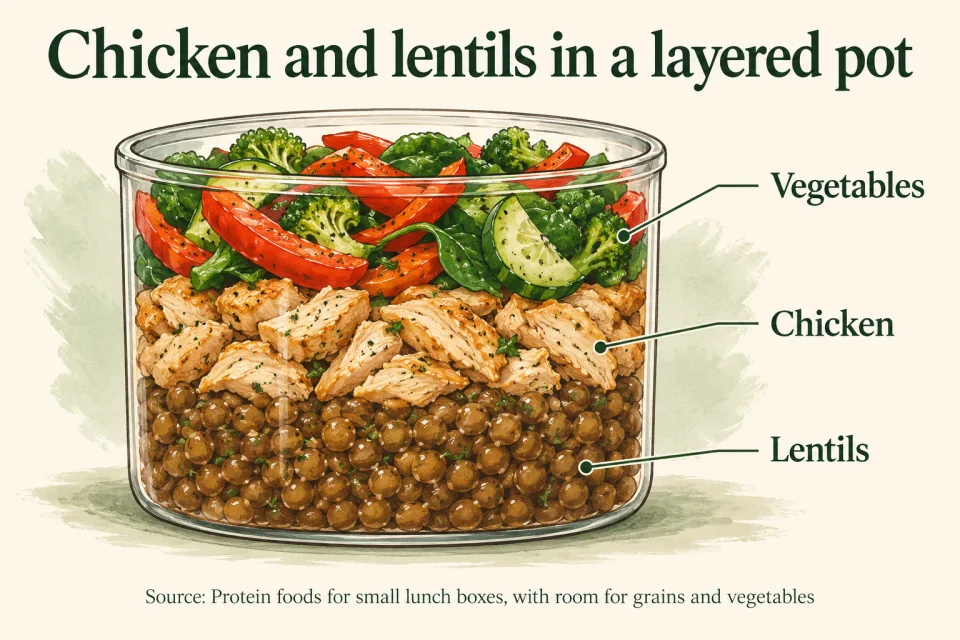
Chicken and lentils in a layered pot
Chicken and lentils offer a layered format for a small container. Good Food Middle East's chicken pots combine chopped cooked chicken breast with prepared spiced lentils, cherry tomatoes, coriander and tzatziki.
The recipe makes two portions from 150 g of chopped cooked skinless chicken breast, 90 g of prepared spiced lentils and 160 g of quartered cherry tomatoes. These are ingredient quantities for the recipe. Use the published proportions when preparing the dish, then arrange the components in the order the recipe gives.
Lentils form the bottom layer, followed by tomatoes and chicken, with coriander and tzatziki added afterwards. This is a useful alternative to laying every ingredient beside its neighbour. Follow the layers through the container instead of assigning a separate compartment to the lentils, chicken and tomatoes.
The tomatoes belong to the main assembly, so include them as you build the pot. Do not postpone their place in the layout until the chicken has filled the available space. If a grain component is part of the wider lunch, plan its position before assembling the pot, using the same grain-first approach as the packing guide.
Choose this format when you want to pack a spoonable combination. For a lunch with rice and vegetables arranged side by side, the tofu bowl offers a different starting layout.
Part 04
of 10
04 / Field note
Tofu and edamame beside rice and sliced vegetables
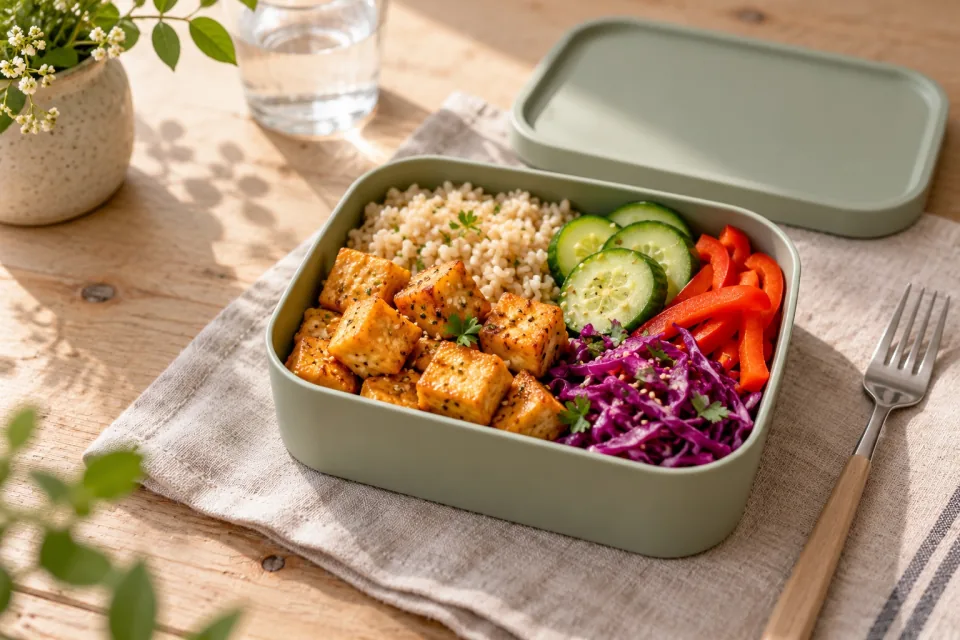
The honey and soy tofu bowl combines firm tofu and edamame with cooked rice, cabbage and radishes. It provides a recipe-based starting point for arranging soy foods, grain and vegetables in the same container.
Good Food Middle East's recipe lists 450 g of firm tofu, 150 g of frozen edamame and 300 g of cooked sticky rice for four servings. The vegetables include finely sliced red cabbage and sliced radishes. Use those components together when following this bowl, rather than treating the tofu as the complete meal.
The method coats tofu cubes in cornflour and fries them until golden. Garlic, soy sauce and honey follow, and the glaze is stirred as it cooks until it clings to the cubes. This gives the recipe a different form from the crumbled tofu mixture used for patties later in this article.
For packing, apply the bulky-foods-first sequence to the rice and tofu cubes. Arrange the sliced cabbage and radishes in the spaces around them, and include the edamame as part of the bowl. Work with the shapes specified by the recipe rather than adding a new set of ingredients to fill the box.
Compare this layout with the chicken pot by assembly method. The chicken recipe specifies layers; the tofu recipe brings rice, soy foods and sliced vegetables together as a bowl. Choose the arrangement you want to eat, then fit its components to the container.
Part 05
of 10
05 / Field note
Sesame paneer wraps with vegetables inside
Sesame paneer wraps put paneer and vegetables inside a tortilla. Good Food Middle East combines the paneer with yogurt, grated carrot, deseeded cucumber batons and shredded lettuce.
The paneer cubes are brushed with chilli sauce before being rolled in sesame seeds. The recipe then fries them in batches and drains them before assembly. Turn the paneer frequently during frying because the sesame seeds can burn easily. Follow that method before arranging the paneer with the yogurt and vegetables in the wrap.
This recipe gives the vegetables defined forms: grated carrot, cucumber batons and shredded lettuce. Prepare them as specified when assembling the filling. Their place is inside the wrap with the paneer, so plan the filled tortilla as a complete component when deciding where it will sit in the lunch box.
For a small container, place the assembled wrap before any separate side dishes, following the packing guide's order for bulky foods. If vegetables are also being packed alongside it, arrange those after the wrap is in position. Use a divider where you want the neighbouring flavours to remain separate.
This is a different use of space from a rice bowl. The tortilla encloses the main filling and vegetables, while the bowl arranges its components together without a wrapper. Compare those formats by the meal you want to assemble, using the published recipe for each.
Part 06
of 10
06 / Field note
Paneer rolls with an egg-coated chapati
Kathi paneer rolls enclose marinated paneer and vegetable salad in an egg-coated chapati. The Good Food Middle East recipe adds coriander relish between the egg layer and the filling.
The paneer marinade combines yogurt with ginger, garlic, spices, mango powder and lime juice. The salad uses onion, grated carrot, chilli, lime and mint. These ingredients distinguish the roll from the sesame paneer wrap, whose filling includes cucumber and lettuce and whose paneer has a sesame coating.
For the wrapper, the recipe coats chapatis with beaten egg and flips them so the egg cooks against the pan. Coriander relish is spread over the egg layer before the paneer and salad are added. Follow that assembly order when making the rolls; the relish is part of the filling arrangement.
When deciding between the paneer recipes, compare their preparation as well as their shape. The sesame version calls for coating and frying paneer cubes. The kathi version calls for marinating the paneer and preparing the egg-coated chapati. Both recipes place vegetables within the wrap, but they use different fillings and methods.
Pack the finished roll as the main bulky component, then arrange any separate sides around it. Account for the chapati when planning the grain component of the lunch. If you prefer rice as the grain, choose a bowl format at the planning stage rather than trying to fit an additional dish around a completed roll.
Part 07
of 10
07 / Field note
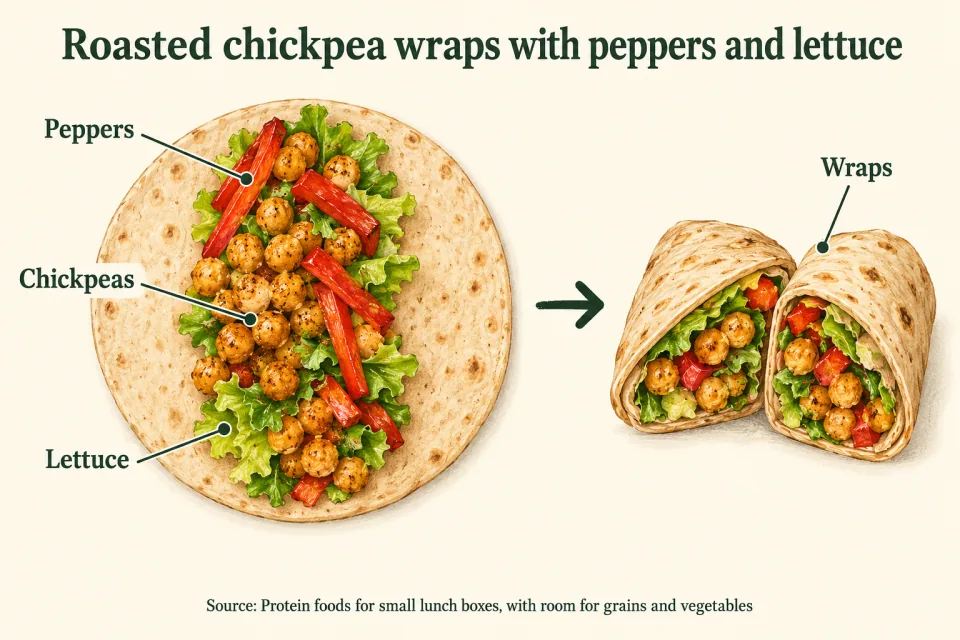
Roasted chickpea wraps with peppers and lettuce
Roasted chickpea wraps combine spiced chickpeas with corn tortillas, vegetables, avocado and yogurt. The Good Food Middle East recipe gives a pulse-based alternative to the paneer wraps.
The method begins with drained chickpeas, which are coated in olive oil, cumin and smoked paprika. Roast them for 20–25 minutes at 220°C or 200°C fan, shaking the tray halfway through for more even cooking. The finished chickpeas are served in corn tortillas with avocado, lettuce, yogurt and chopped roasted red peppers.
Assemble the wrap using that complete combination. Include the lettuce and peppers while arranging the chickpeas, rather than assigning the vegetables only whatever space happens to remain after the main filling is in place. The recipe puts these ingredients together inside the tortilla.
For container planning, compare this with the layered chicken pot. The chickpea meal has a corn tortilla around its filling, while the pot layers lentils, tomatoes and chicken. Decide which format suits the lunch you want, then position the assembled main dish before arranging separate sides.
The chickpea and sesame paneer wraps also offer different cooking tasks. The chickpeas go onto a roasting tray with oil and spices; the paneer cubes receive chilli sauce and sesame seeds before frying. Choose between the published methods without assuming that similarly shaped wraps require the same preparation.
Part 08
of 10
08 / Field note
Tofu patties for a shaped main dish
Tofu and vegetable patties offer a shaped main dish made from crumbled firm tofu, eggs and vegetables. Good Food Middle East's mixture includes drained tofu, beaten eggs, grated carrot, spring onions, garlic and ginger.
The published method shapes five tablespoons of mixture inside a greased 8 cm metal ring in the frying pan. The recipe also offers bite-size patties or a large frittata-like round. Choose among those published formats when deciding how the dish will sit in the lunch box.
The vegetables are mixed into the patties during preparation. If the meal also includes separate vegetables and a grain, plan their positions alongside the shaped main dish before packing. Set the patties in place first, following the guide's approach to foods whose shape is already established, then arrange the flexible sides around them.
This is another way to use tofu besides the glazed cubes in the rice bowl. The patty method crumbles tofu and combines it with egg and grated vegetables; the bowl method coats and fries cubes before adding a sticky glaze. The difference begins during cooking, so choose the recipe before deciding on the final box layout.
Use the patty recipe's own size options to guide the arrangement. A bite-size version and a large round are both published variations, giving you a choice of form without inventing a different mixture.
Part 09
of 10
09 / Field note
Grain bowls with chicken or beans
A grain bowl is another way to arrange a main ingredient, vegetables and grain together. Good Food's work-lunch suggestions combine rice, quinoa or bulgur with chicken or beans and greens such as spinach, kale or broccoli.
Choose a combination from that bowl pattern before packing. Place the grain and the main ingredient first, then arrange the greens around them using the packing guide's sequence. This brings the recipe choice and the container layout into the same task: decide what belongs in the meal, then give those foods space.
Good Food also suggests a lentil-and-tuna salad made with cooked puy lentils, canned tuna, cherry tomatoes, parsley and mustard dressing. That provides a different assembly from a grain bowl, with lentils forming part of the salad itself. Use the named ingredients together when following that suggestion.
Compare these dishes by their structure. A grain bowl starts with rice, quinoa or bulgur alongside chicken or beans. The lentil-and-tuna salad combines pulses, tuna and vegetables, while the chicken pot specifies a layered arrangement. These are useful choices before you begin fitting food into compartments.
The same Good Food page suggests packing Caesar pitta filling separately and assembling it at lunchtime. That offers an assembly choice for readers who want a filled bread: decide whether to pack a completed wrap from the recipes above or follow a filling-and-bread format intended for assembly when eating.
Part 10
of 10
10 / Field note
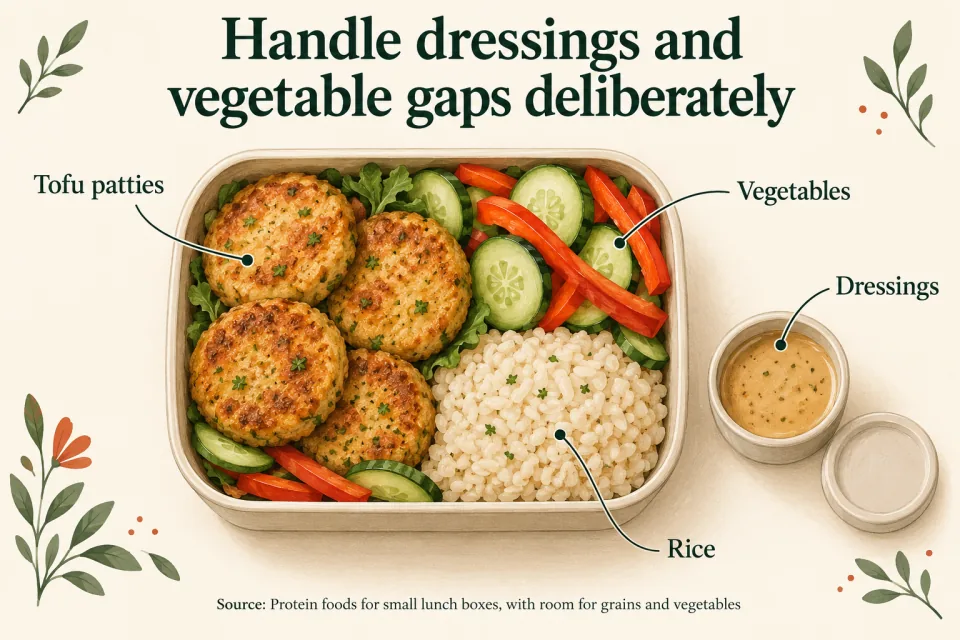
Handle dressings and vegetable gaps deliberately
Pack salad dressing separately when following the bowl and salad approach. JustBento recommends separating dressing from salad vegetables to avoid soggy greens. Good Food's work-lunch ideas also use separately packed dressings.
Use that advice according to the dish. A salad dressing has a different place in assembly from the coriander relish spread inside the kathi roll or the glaze cooked onto the tofu cubes. Follow each recipe's method for its sauce, then use the separate-dressing approach for the salads that call for it.
Finish the layout with vegetables suited to the spaces around the main components. Lunch in a Box describes arranging small vegetable pieces in those gaps, while JustBento demonstrates vegetables fitted around rice, salmon and rolled egg. Look for those spaces after the larger foods are in position, rather than rearranging the main dish around every small piece.
For the final packing pass, decide where flavour separation is useful and place a food cup or divider there. Arrange the remaining vegetables around the main foods using the demonstrated bento method. This gives the last stage of packing a clear purpose: fitting the planned vegetables into the layout and separating components where the dish calls for it.
Sources / 10
- Guide to bento packing and gap fillers
- Bento no. 39: The basics of how to fill a classic bento box
- Indian chicken protein pots
- Honey & soy tofu poke bowl
- Sesame paneer wraps
- Grilled paneer wraps (kathi paneer rolls)
- Roasted chickpea wraps
- Tofu & vegetable patties
- Here's what the experts from Good Food put in their healthy work lunchboxes
- Bento 101 (Getting into the Bento Making Habit) Part 3: Let's pack a bento
Continue reading
Return to the card board