Field note
Quiche or frittata for a protein focused brunch
Compare a spinach quiche with a vegetable frittata through their eggs, dairy, pastry and portions. Follow the cooking methods and see what a fair protein and calorie comparison must account for.
Part 01
of 09
01 / Field note
Choose by the recipe and the portion
For a protein focused brunch, compare the ingredients and the portion you plan to cut before choosing quiche or frittata. The James Beard Foundation’s Spinach Quiche combines a pastry shell with spinach, cheese and an egg-and-cream custard. Iowa State University Extension and Outreach’s Vegetable Frittata cooks eggs, vegetables, milk and cheese in an ovenproof skillet without pastry.
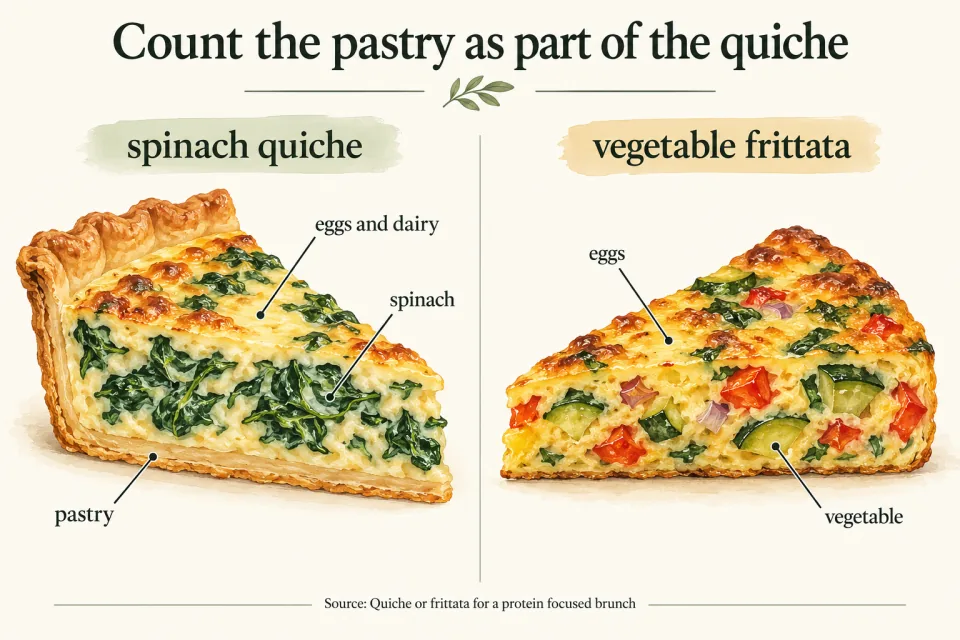
Those recipes give the comparison a useful boundary. The quiche includes a separate pastry recipe as well as its filling, while the frittata brings its ingredients together in the skillet. Read the complete recipes together, including the shell, rather than comparing only their egg mixtures. For protein and calories, the pastry belongs in the accounting just as much as the cream or cheese does.
The cooking choice is clearer when described through those structures. Choose the quiche when you want spinach and cheese enclosed by a pastry edge beneath a soft custard. Choose the frittata when you want vegetables covered with an egg mixture and finished under a broiler. These are specific dishes with different methods, so use their actual ingredient choices and cutting instructions throughout the comparison.
Start with the published versions. Changes to the dairy, cheese or vegetables should be recorded as changes to that version, rather than folded into a general claim about all quiches or all frittatas.
Part 02
of 09
02 / Field note
Read the whole eggs, yolks and dairy separately
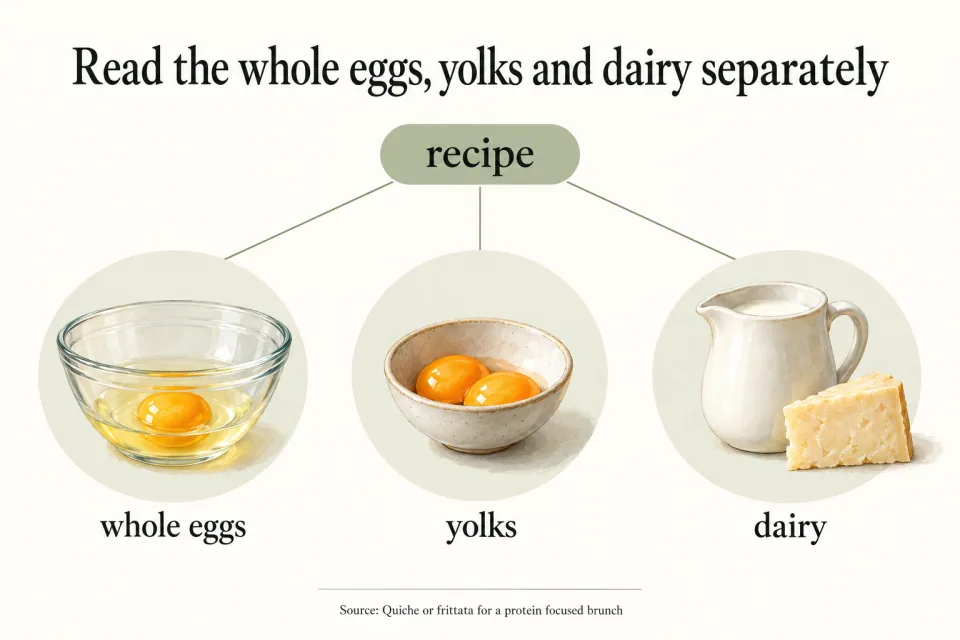
The egg mixtures differ in both the eggs used and the liquid added. The James Beard Foundation’s quiche filling combines two whole eggs with two egg yolks. Iowa State’s frittata uses six eggs. Describe whole eggs and additional yolks separately when comparing these recipes; calling everything simply an egg mixture hides part of the recipe.
The quiche calls for one cup of heavy cream, with an alternative made from half cream and half plain whole-milk yogurt. The frittata uses a quarter cup of nonfat milk. These are the recipes’ stated dairy choices, so a comparison should identify the cream version or the cream-and-yogurt version before discussing its ingredients.
The difference also affects how to read the cooking instructions. The quiche combines its eggs with cream for a custard that is poured into a filled pastry shell. In the frittata method, the eggs and milk are beaten together, then mixed with cheese before going over the vegetables. Follow those mixtures as written rather than moving the quiche’s dairy proportions into the skillet recipe.
For the nutrition comparison, give whole eggs, extra yolks and dairy their own entries. This preserves the distinction between changing the egg quantity and changing the liquid around the eggs. It also makes the cream-and-yogurt alternative visible as a separate recipe choice, rather than allowing it to disappear beneath the word quiche.
The pastry has its own egg ingredients too. Include those when describing the complete quiche, even though they never enter the custard.
Part 03
of 09
03 / Field note
Count the pastry as part of the quiche
The quiche’s pastry is a separate mixture with its own ingredients and baking stages. The accompanying James Beard Foundation tart-pastry recipe makes an eight-inch or nine-inch shell. Its dough contains 1⅓ cups of all-purpose flour, half a cup of butter, one whole egg, one tablespoon of lemon juice and a quarter teaspoon of salt.
The pastry instructions add water only if the mixture does not hold together. That condition is useful when reading the method: water is an adjustment to the dough, rather than an ingredient to add automatically. The foundation explicitly names its spinach quiche as a use for this shell, so the pastry and filling can be considered together as the specified quiche example.
For the initial bake, the shell is lined with foil and weighted with uncooked beans, rice or pie weights. The weighted shell bakes at 425°F for 18 minutes before the foil and weights are removed. The pastry method then brushes a little beaten egg yolk inside the shell and bakes it for another three minutes to form a glaze against sogginess.
This gives the pastry several roles in the comparison. It is an ingredient mixture, a shell with a stated size and a surface prepared before the filling is added. A record of the complete quiche should distinguish the egg mixed into the dough from the yolk brushed over its interior.
For ingredient accounting, record the flour used for dusting and the amount of glazing yolk applied alongside the dough ingredients. Use the amount involved in the dish, rather than treating every ingredient mentioned during preparation as though it all went into the finished shell.
Part 04
of 09
04 / Field note
Prepare the spinach and choose the cheese
The quiche method presses and squeezes the cooked spinach before it is chopped and added to the shell. This is a specific preparation step, not simply an instruction to add spinach. Work through the cooking, pressing and chopping in that order when following the recipe.
For fresh spinach, the recipe specifies 1½–2 pounds. It also calls for half a cup of feta, Gruyère, sharp cheddar or Parmesan. The cheese choices belong to the published recipe, but a comparison needs to say which choice was used. Record the selected cheese by name rather than leaving an unnamed cheese entry beside the cream and eggs.
The assembly begins with Dijon mustard spread inside the prebaked shell. Spinach and cheese go in before the custard. Keeping that order in the method helps distinguish the quiche from the frittata, where the cheese is mixed into the beaten eggs and milk before they are poured over the vegetables.
Add custard only until the quiche shell is filled without overflowing. For a recipe comparison, record the amount of filling that actually enters the shell. The shell size and the amount poured in belong together in the preparation record; the full bowl of mixed custard and the filled shell are different points in the method.
This is also where ingredient selection becomes concrete. Name the spinach preparation, cheese and dairy version together, so that the quiche being compared remains the same dish from the ingredient record through to the portion description.
Part 05
of 09
05 / Field note
Build the frittata in the skillet
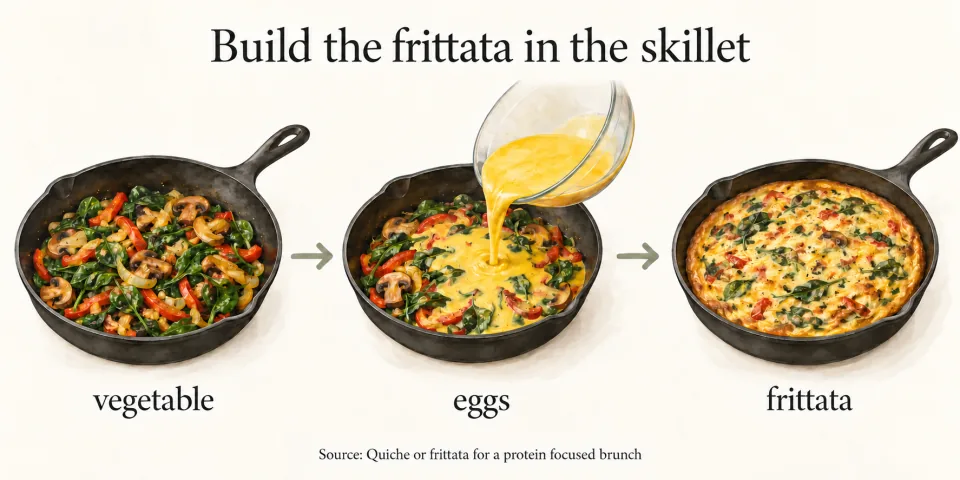
The frittata begins with vegetables cooked in an ovenproof skillet, followed by the egg mixture. Iowa State’s recipe calls for two cups of chopped vegetables and suggests mushrooms, onions, peppers or tomatoes. It includes half a cup of shredded cheese. Choose and name the vegetable mixture and cheese when describing the version being made.
The vegetables cook in a skillet coated with nonstick spray for three to five minutes before the heat is reduced. Beat the eggs and milk together, mix in the cheese, and pour that mixture over the vegetables. This sequence gives the vegetables a separate cooking stage before the eggs enter the pan.
The frittata then cooks covered for about six minutes without stirring or lifting the lid. After the lid is removed, the skillet goes under a high broiler for two to three minutes, until the eggs are set and lightly browned. The recipe therefore uses a covered stage followed by an uncovered finish under direct heat from above.
Follow those stages separately. Pouring in the eggs is the transition from cooking the vegetables to setting the frittata, and moving the uncovered skillet under the broiler is a further step. The finished appearance described by the recipe is set eggs with light browning.
For the comparison record, include the cooking spray along with the main ingredients. Name the vegetables as well, since a mixture of mushrooms and onions is a different ingredient entry from peppers and tomatoes. The recipe supplies choices; the record should identify the choices that went into the skillet.
Part 06
of 09
06 / Field note
Use texture cues alongside the cooking temperature
Eggs bind the ingredients and set the quiche custard, so the cooking endpoint deserves as much attention as the ingredient list. The Exploratorium explains that egg proteins unfold and join into a network that holds milk or cream in a soft gel. Its explanation of coagulation also describes how egg proteins help casseroles hold together when portioned.
That gives the quiche’s custard a useful description: the egg mixture sets around the dairy. The frittata recipe describes its endpoint through set eggs and light browning. These instructions refer to different preparations, so follow the cue attached to the dish being cooked.
The quiche recipe bakes the assembled dish at 350°F for 30–35 minutes, until the custard is barely set. The food safety chart specifies a minimum internal temperature of 160°F or 71°C for egg dishes, including quiche and frittata. Use the internal-temperature check alongside the recipe’s texture instructions.
The Exploratorium explains that prolonged heating can toughen coagulated egg proteins and force out liquid, leaving a rubbery custard. Extending the bake merely to make a soft custard look firmer can therefore work against the intended texture. The recipe’s barely-set cue and the internal-temperature check answer different questions: the former describes the intended custard, while the latter supplies the stated cooking minimum.
Read the oven setting, cooking time, appearance and internal temperature as separate pieces of information. An oven setting describes the cooking environment; the food safety chart’s figure applies to the egg dish itself.
Part 07
of 09
07 / Field note
Define a slice before comparing portions
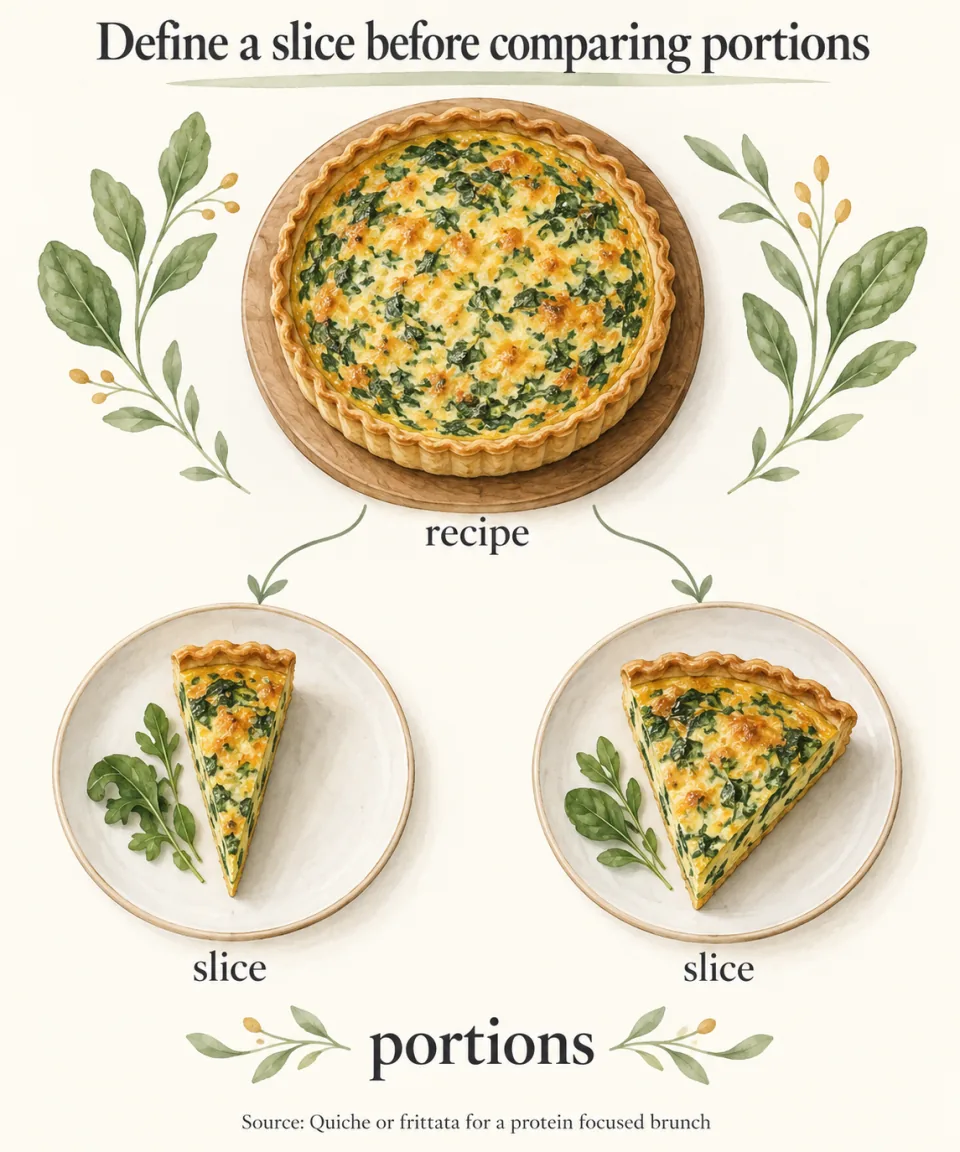
A slice needs a clear definition before it can be used in a recipe comparison. The James Beard Foundation’s quiche yields four to six servings. Iowa State’s frittata yields four servings, each described as one slice. Preserve those published yields when presenting the original recipes, rather than silently assigning the same serving description to both.
For a comparison using the published servings, identify where the quiche portion falls within its stated yield. That choice is part of the portion definition. Put it beside the frittata’s stated slice description so that the reader can see how each dish has been divided.
A different comparison can divide each complete dish into the same number of equal slices. Label that as a common cutting scheme, separate from the recipes’ published servings. It answers a practical brunch question about dividing the dishes, but it should remain distinct from a comparison based on the weight of food on the plate.
For an equal-weight comparison, weigh the finished dishes and use matching cooked weights. Record the pastry and filling together for the quiche, since the portion includes both. Use the finished frittata as the corresponding dish, including its vegetables and cheese.
These approaches answer different questions, so choose the question first. Published servings follow the recipe’s own division, a common cutting scheme follows an agreed way of slicing, and equal cooked weights follow a measured portion. Naming the approach is more useful than leaving the word slice to carry all of that meaning.
Part 08
of 09
08 / Field note
Make the protein and calorie comparison traceable
A useful comparison keeps ingredient choices, amounts used and portion definitions together. Start a quiche record with the shell size, then identify the cream option and cheese. Record the filling that enters the shell and the pastry ingredients involved in the finished dish, including the glaze and dusting flour.
For the frittata, record the chosen vegetables and shredded cheese alongside the eggs, milk and cooking spray. Use edible ingredient weights for the food-composition comparison. Keep those ingredient weights distinct from the finished cooked weight used to define an equal-weight portion.
Organize the accounting by pastry, eggs, dairy, cheese and vegetables. For the quiche, place the dough and glaze ingredients in the pastry entry while retaining their individual identities. Put the custard’s whole eggs and extra yolks in the filling entries. This makes it possible to see which part of the recipe a proposed change affects.
USDA FoodData Central contains datasets with different methods and purposes. Its Foundation Foods values come from analyses accompanied by information about samples and analytical methods. USDA also explains that food-composition values represent particular foods sampled at particular times and locations.
Match a food entry to the ingredient named in the recipe record. A comparison of the cream version with the cream-and-yogurt version should identify that dairy change explicitly. A comparison involving a different cheese should identify the cheese change separately, rather than bundling it with changes to the eggs or portion.
Describe any resulting totals as recipe calculations rather than laboratory measurements of the finished dishes. Present the ingredient choices and the portion basis beside the calculation, so the comparison remains tied to the quiche and frittata actually described.
Part 09
of 09
09 / Field note
Match the brunch choice to the dish you want
Choose the spinach quiche for its pastry, spinach-and-cheese filling and soft custard, or the vegetable frittata for its skillet method and broiler finish. That cooking decision can be made directly from the recipes. The protein and calorie comparison should then follow the chosen ingredients and a clearly defined portion.
For the quiche, read the pastry method before beginning the filling. The shell is baked and glazed before mustard, spinach, cheese and custard are added. Think of it as a pastry preparation followed by a filled-custard bake, with the amount poured into the shell recorded at assembly.
For the frittata, organize the vegetables and egg mixture around the skillet sequence. Cook the vegetables, add the beaten mixture, follow the covered stage and finish under the broiler. The cheese belongs in the egg mixture in this recipe, which is a useful detail to retain when moving from ingredients to cooking.
At the table, use the portion description chosen for the comparison. Keep the dish name attached to its specific version: the selected quiche dairy and cheese, or the selected frittata vegetables and cheese. That gives a protein focused brunch a clear recipe basis without asking the words quiche, frittata or slice to stand in for the ingredients and amounts involved.
Sources / 07
Continue reading
Return to the card board