Field note
Savory egg breakfasts with vegetables, grains and beans
Measured recipes for egg breakfasts with mushrooms, spinach, beans, rice and bread, with practical cooking steps for bowls, burritos, omelets and vegetable skillets.
Part 01
of 10
01 / Field note
An egg and mushroom grain bowl
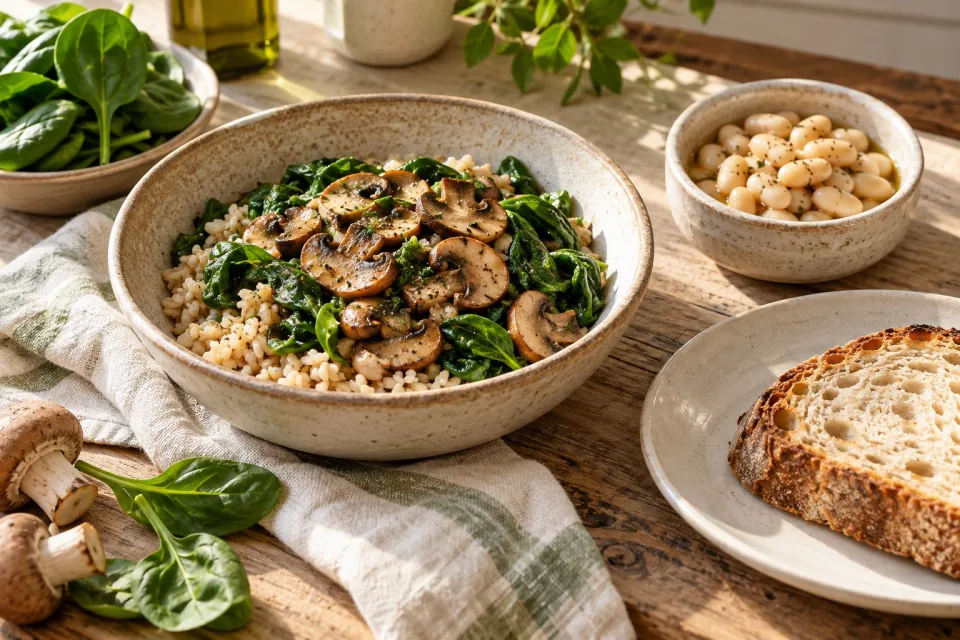
A savory grain bowl puts an egg over a cooked grain, with mushrooms, spinach and Parmesan. The Celebrate Your Plate recipe offers grits, steel-cut oats, quinoa or barley as the base. Choose this format when you want the vegetables and egg arranged over the grain; the egg rice further below mixes them through it.
For the grain base, measure ¼ cup uncooked grits, steel-cut oats, quinoa or barley, plus 2 tablespoons grated Parmesan and a pinch each of salt and black pepper. The topping calls for 1 tablespoon oil divided between cooking stages, an optional ¼ cup chopped green onion, 1 garlic clove or 1 teaspoon garlic powder, 4 ounces mushrooms, 3 cups fresh spinach and 1 large egg. Cook your chosen grain according to its package directions, then stir in the Parmesan. This gives the bowl its cheese component before the vegetables go on top.
For the vegetable topping, cook the green onion until softened, about 2 minutes, then brown the garlic and mushrooms for about 5 minutes and wilt the spinach for about 1 minute. Follow that order so the mushrooms have their browning stage before the spinach enters the pan. Spoon the vegetables over the prepared grain.
Finish with the fried egg specified in the recipe, using oil from the measured amount. Sliced hard-boiled egg is also an option in the source recipe. That changes the egg preparation while leaving the grain, cheese and vegetable base the same.
Part 02
of 10
02 / Field note
Vegetable scramble for toast or tortillas
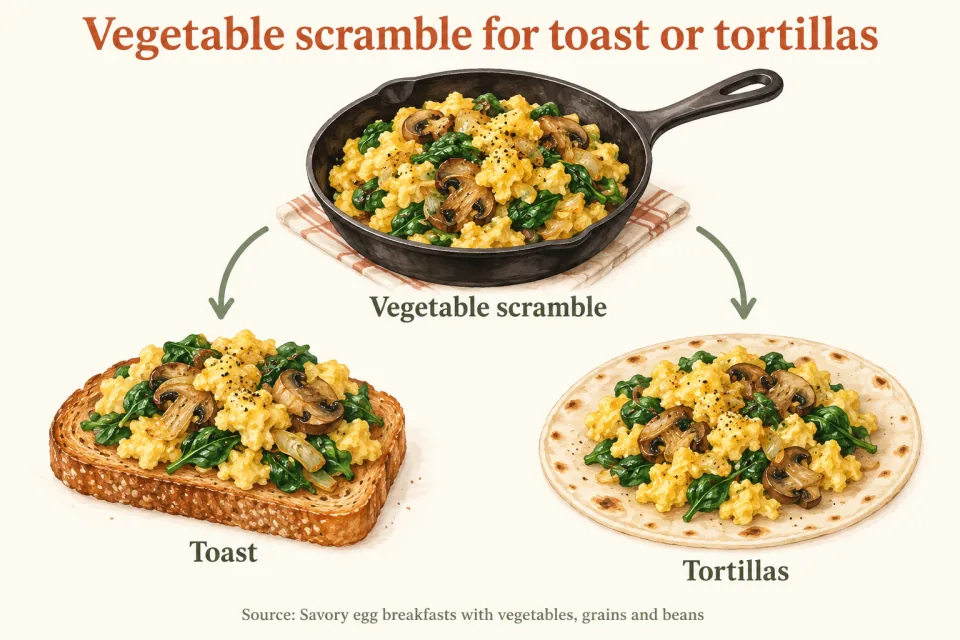
A vegetable scramble gives you eggs and chopped vegetables that can go onto toast or into a tortilla. Health Canada’s version uses fresh or frozen vegetables and deals with their excess liquid before the eggs enter the pan. Onion, bell pepper and mushrooms are among its suggested vegetables.
For its four-serving recipe, Health Canada specifies 6 eggs, 60 mL skim milk, 1 mL ground black pepper, 5 mL vegetable oil and 375 mL mixed vegetables. Beat the eggs with the milk and pepper, and cook the vegetables in the oil separately from that mixture. The milk belongs in the eggs; any liquid released by the vegetables is handled in the pan before you combine them.
Cook the vegetables until tender for 2–3 minutes, raising the heat during the final minute if liquid needs to evaporate. Look at the pan at this stage, before pouring in the beaten eggs. The recipe gives the vegetables their own cooking step rather than asking them to cook within the scramble.
Once the eggs are added over medium-low heat, let them sit for about 3 minutes, then fold them gently into large pieces and cook through for another 3–5 minutes. The folding stage makes this a loose scramble, unlike the wedge-cut skillet eggs below. Serve it with whole-grain toast, or roll it into a small whole-grain tortilla as the recipe suggests.
Part 03
of 10
03 / Field note
Chickpea and spinach shakshuka
This shakshuka cooks eggs in a spiced tomato sauce with chickpeas, spinach and aubergine. In the NHS recipe, the vegetables cook first, followed by the chickpeas and spinach, with the eggs added last. Make wells in the sauce for the eggs, then cover the pan to cook them.
For four servings, the NHS recipe lists 6 medium eggs, 800 g tinned chopped tomatoes, 400 g tinned chickpeas listed as drained, and 200 g chopped spinach. It also calls for 1 tablespoon vegetable oil, 1 onion, half a red pepper, half a yellow pepper, 6 garlic cloves, 1 aubergine, 2 tablespoons tomato purée, 2 teaspoons cumin and ½ teaspoon cayenne, with optional additions of ½ teaspoon salt and 15 g coriander. Set out the sauce ingredients separately from the eggs so you can follow the cooking sequence.
Soften the onion, peppers and garlic for about 5 minutes, brown the aubergine for another 5 minutes, then simmer the tomato mixture for about 10 minutes until thickened. The aubergine has a browning stage before the sauce simmers. Tomato purée, chopped tomatoes and spices form the sauce around these vegetables.
Cook the chickpeas in the sauce for 5–8 minutes, add the spinach, then make six wells, add the eggs and cover the pan. The NHS recipe allows 6–8 minutes over low heat for set whites, or about 8–12 minutes for firmer yolks. Use the egg texture described in the recipe alongside its timing, and finish with the optional coriander if using it.
Part 04
of 10
04 / Field note
Egg and refried bean breakfast burritos
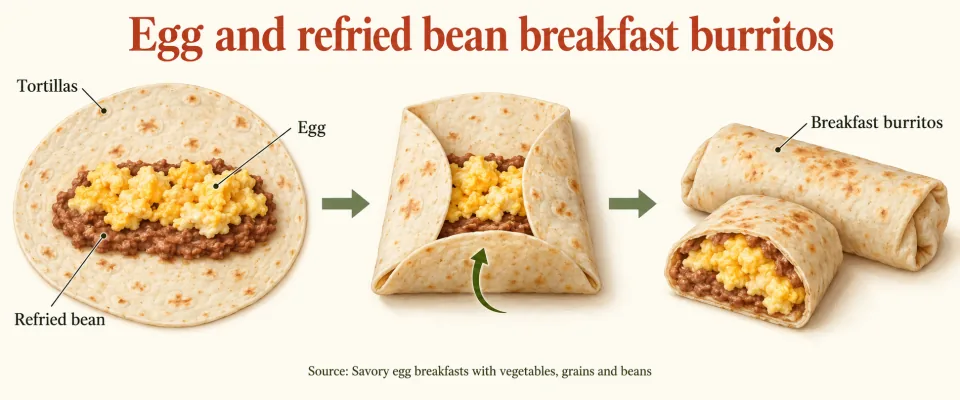
Breakfast burritos wrap scrambled eggs, refried beans, cheddar and tomato in flour tortillas. The Food Hero recipe prepares the eggs, beans and tortillas separately before assembly. That makes the filling stages easy to follow: scramble the eggs, warm the beans and tortillas, then bring everything together.
For four burritos, use 4 eggs, ¼ cup nonfat milk, 1 teaspoon vegetable oil and four 10-inch flour tortillas. The remaining filling is 1 cup fat-free refried beans, ½ cup grated cheddar weighing 2 ounces, and 1 chopped tomato. Beat the eggs with the milk, salt, black pepper and chili powder. These seasonings go into the eggs before cooking, while the tomato is added when the burritos are assembled.
Heat the oil and scramble the egg mixture until firm. Warm the refried beans and tortillas separately, then divide the beans, eggs, cheddar and tomato equally among the tortillas. Roll the tortillas around the filling. Unlike the grain bowl, where the egg remains on top, this breakfast combines the egg and bean components inside the bread.
For a different vegetable finish, the recipe allows salsa in place of the tomato. Bell peppers or corn are also suggested as alternative vegetables. Use those named alternatives to vary the filling while following the same egg-cooking and assembly method.
Part 05
of 10
05 / Field note
Eggplant omelet with onion and garlic
Tortang talong is a Filipino eggplant omelet made by coating softened, peeled eggplant in an egg mixture and cooking it in a skillet. The vegetable stays intact through the coating stage. Food Hero’s version includes onion and garlic in the egg mixture and gives the eggplant a separate draining step.
For two servings, use 2 medium thin eggplants or 1 medium globe eggplant, 2 eggs, ¼ cup diced onion, 2 minced garlic cloves, ¼ teaspoon salt and 1–2 tablespoons vegetable oil. The choice of eggplant shape is part of the recipe. Prepare the egg, onion, garlic and salt mixture for coating after the eggplant has been softened and peeled.
Broil the eggplant on high, turning every few minutes until the skin is blackened all over, then cover it for 10 minutes to steam and cool. Peel it once cooled, leaving the stem attached. Flatten the flesh with a fork and pierce it to release moisture before coating it in the egg mixture. This moisture step happens after the eggplant is cooked, unlike the scramble’s evaporation step in the pan.
Place the coated eggplant in the oiled skillet and cook for about 5–6 minutes before turning, then cook the other side for about 4 minutes. The recipe suggests a cooked grain such as rice alongside it. Vinegar is among its suggested sauces, giving you a serving option without changing the omelet mixture.
Part 06
of 10
06 / Field note
Egg rice with vegetables and tofu or chicken
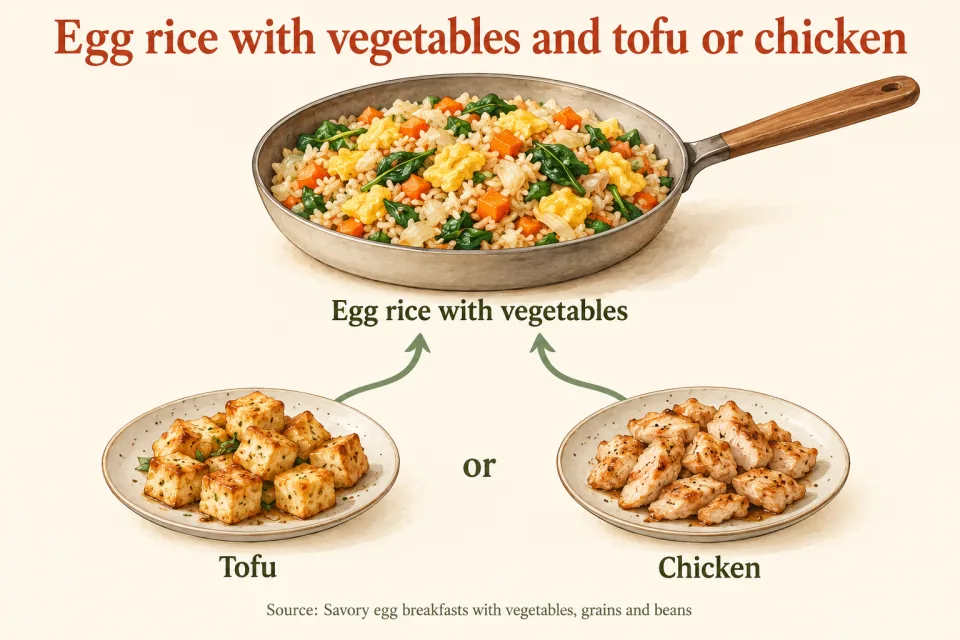
Egg rice combines scrambled eggs with cooked rice, mixed vegetables and a choice of tofu, chicken or pork. Food Hero’s method cooks the eggs separately and returns them near the end. The rice and vegetables therefore get their own cooking stages before the eggs are mixed back through.
The recipe yields eight cups and uses 1 teaspoon oil, 2 beaten eggs, 16 ounces frozen mixed vegetables or 1 pound fresh vegetables, 3 cups cooked rice and 1 cup diced cooked chicken, pork or tofu. Its seasonings are 1 teaspoon garlic powder or 4 minced garlic cloves, ¼ teaspoon ground ginger, 2 sliced green onions and an optional tablespoon of low-sodium soy sauce or hot sauce. Choose among the listed protein ingredients before starting; the cooking sequence is the same for these options.
Scramble the eggs in the oil, then remove them from the pan. Cook the vegetables with a small amount of water until tender-crisp. Add the cooked rice with the garlic and ginger, breaking up any rice lumps as it heats. The rice is already cooked when it enters the pan.
Heat the chosen chicken, pork or tofu before returning the eggs and adding the green onions. Brown rice is an explicitly suggested whole-grain option. Compared with the Parmesan grain bowl, this preparation distributes the egg through the grain and includes an additional ingredient from the recipe’s tofu or meat choices.
Part 07
of 10
07 / Field note
A vegetable and cheese omelet in a mug
A mug omelet cooks chopped vegetables, eggs, milk and grated cheese in the microwave. Food Hero’s method includes a stir between cooking intervals. Choose this format for an egg mixture cooked in its own mug, rather than eggs placed in tomato sauce as in the microwave shakshuka below.
Measure 2 eggs, 2 tablespoons low-fat or nonfat milk, ¼ cup finely chopped vegetables, 2 tablespoons grated cheese and a dash each of salt and black pepper. Mix the ingredients in a lightly greased, 12-ounce microwave-safe mug. The vegetables are finely chopped for this preparation, and the cheese is mixed into the eggs rather than used as a topping. Prepare the mixture in the mug before starting the microwave sequence.
Cook on high for 45 seconds, stir, then microwave for another 60–90 seconds until the omelet is puffed and set. The stir is part of the method, between the initial cooking interval and the finishing interval. Food Hero notes that the surface may look wet at first and become dry as the omelet cools. Read that surface observation alongside the recipe’s puffed-and-set endpoint; it describes the appearance of the finished mug omelet.
Part 08
of 10
08 / Field note
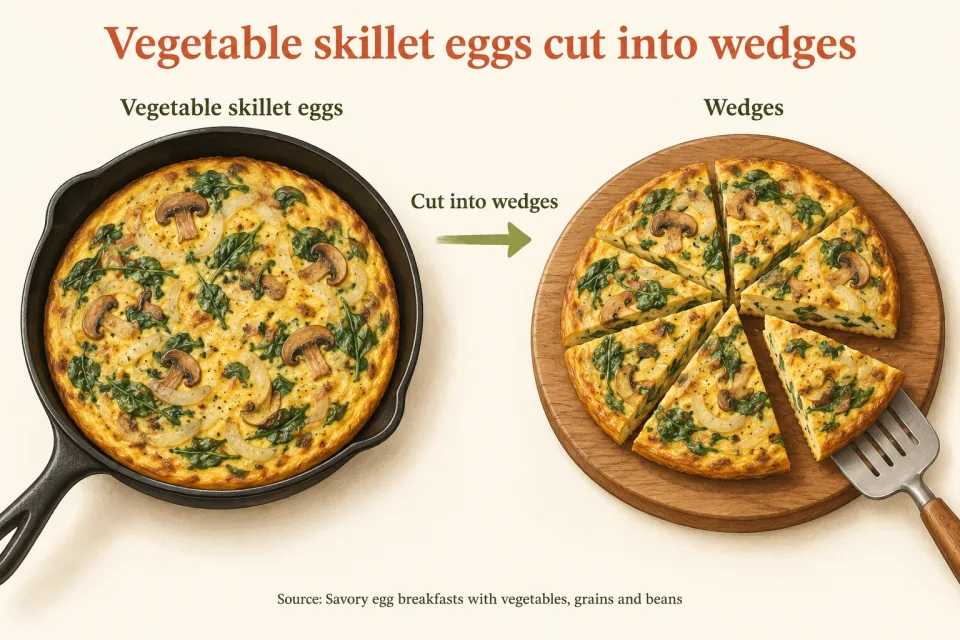
Vegetable skillet eggs cut into wedges
Vegetable skillet eggs make a cheese-and-vegetable egg dish that is cut into wedges. The Food Hero recipe accepts fresh, canned or frozen mixed vegetables. Unlike the loose scramble, the egg mixture stays together in the pan, with sliced tomato added at the end.
For the egg mixture and pan, use 6 medium or large eggs, ¼ teaspoon black pepper, ½ teaspoon oregano or basil, ⅓ cup shredded cheese weighing 1½ ounces, and 2 teaspoons vegetable oil. The vegetables are 1 small chopped onion measuring about ⅔ cup, 1 garlic clove or ⅛ teaspoon garlic powder, 2 cups mixed vegetables and 1 medium sliced tomato. Beat the eggs with the cheese, pepper and chosen herb. Reserve the tomato for the finish rather than adding it with the other vegetables.
Soften the onion, garlic and mixed vegetables in the oil before pouring the egg mixture over them. As the outer edge sets, lift it with a spatula to let uncooked egg flow underneath. Cook until set, about 6 minutes, then add the tomato slices. The lifting motion moves the liquid egg beneath the setting edge without folding the whole dish into scrambled pieces.
The recipe yields eight wedges. Thyme or dill can replace the listed oregano or basil. These herb options change the seasoning while preserving the same vegetable-first cooking sequence and tomato finish.
Part 09
of 10
09 / Field note
White bean shakshuka in the microwave
White bean shakshuka combines eggs with seasoned tomato sauce and beans in a microwave bowl. For this recipe from the US Department of Veterans Affairs Nutrition and Food Services, mix the sauce and beans before making a central well for the eggs. Finish cooking in short microwave bursts at the specified power setting.
The recipe calls for 2 eggs, ¼ cup no-salt-added tomato sauce and ¼ cup drained, rinsed white beans, such as cannellini or Great Northern. Add ¼ teaspoon each of dried thyme, paprika and onion powder, along with a pinch each of garlic powder, salt and black pepper. The sauce supplies the tomato component without the chopped vegetable stages used in the chickpea shakshuka.
Use a microwave-safe bowl coated with cooking spray. Combine the beans, sauce and seasonings in the bowl, make a well in the centre and add the eggs. This arrangement differs from the mug omelet, where the eggs, vegetables and cheese are mixed together before cooking.
Microwave on high for 1 minute, then use 20-second bursts at 80% power until the whites and yolks are set; the recipe gives about 2–4 minutes of total cooking time. For additional heat, the source suggests a pinch of cayenne or crushed red pepper flakes. Add that seasoning to the tomato-and-bean base if using it.
Part 10
of 10
10 / Field note
Eggs in bread with black beans and salsa
Eggs in a hole cook directly inside bread slices and are served with black beans and salsa. The Egg Farmers of Canada recipe also serves the bread cutouts alongside the finished dish. This gives the bread a role in the cooking itself, unlike toast served beside a scramble.
For two servings, use 2 eggs, 2 slices whole-grain bread, ½ cup drained and rinsed no-salt-added canned black beans, ¼ cup salsa, 2 tablespoons chopped cilantro, a pinch of chili powder and 1 teaspoon soft non-hydrogenated margarine. Mix the black beans and salsa with half the cilantro and half the chili powder. The rest of the cilantro and chili powder goes onto the eggs during cooking, so set that seasoning aside while preparing the bread.
Cut a 3-inch or 7.5-centimetre opening in each bread slice, spread the bread with the margarine and place it in a nonstick skillet over medium heat. Crack an egg into each opening and add the remaining cilantro and chili powder. The beans stay separate from the bread-and-egg cooking stage.
Cook for about 3 minutes until set, then turn and cook for about 1 minute. Serve with the black-bean-and-salsa mixture and the bread cutouts. Compared with the refried bean burrito, this breakfast leaves the bean accompaniment beside the egg and bread instead of rolling all the components together.
Sources / 10
Continue reading
Return to the card board