Field note
Strained or regular yogurt for breakfast bowls
Choose between strained and regular yogurt, compare equal weights, and account for fruit, nuts and oatmeal when estimating breakfast calories.
Part 01
of 08
01 / Field note
Choose the texture you want at breakfast
Greek yogurt gives breakfast a thicker base because straining removes whey. According to the American Dairy Association North East, regular yogurt is generally milder in flavor, while Greek yogurt is generally tangier. Those differences offer a practical starting point when deciding how you want breakfast to taste and feel on the spoon.
For a nutrition comparison, match plain yogurt with plain yogurt, at equal weights and within matching milk-fat categories. Then make a separate comparison of the breakfast as eaten, with its fruit, nuts or oatmeal included. This separates the choice of yogurt from the other ingredients that make up the dish.
Name the breakfast you are comparing. Yogurt with banana and nuts is a different combination from yogurt served beside baked oatmeal and fruit. Both appear in Oregon State University Extension's Food Hero breakfast suggestions. Start with the combination you intend to serve, then examine the yogurt within it.
Part 02
of 08
02 / Field note
Straining changes concentration and retention
Straining makes yogurt thicker by separating out whey. Yogurt's tart flavor begins earlier, during fermentation, when cultures change lactose into lactic acid. Fermentation also thickens the milk, as Harvard's Nutrition Source explains.
The liquid separated during straining contains more than water. A manufacturing paper published in Foods describes acid whey as containing lactose, protein and minerals. Its researchers examined how milk heating and the timing of whey separation affected strained yogurt.
In the experiment, samples from which more whey was separated contained less moisture. The same samples had more concentrated protein, fat and total solids.
Concentration describes the composition of the yogurt after liquid has been removed. Retention asks how much of the starting material's nutrients remain after separation. Since some protein leaves in the whey, an estimate for homemade strained yogurt has to account for that separation.
Calcium illustrates the distinction too. Harvard's Nutrition Source reports that straining removes some calcium. It also notes that calcium is added to some Greek yogurts. Use information that describes the finished yogurt, including any additions, when comparing breakfast ingredients.
Part 03
of 08
03 / Field note
Thickness can come from different methods
Milk solids and thickening ingredients can also give yogurt a thicker consistency. Harvard's Nutrition Source lists gelatin and pectin among the ingredients used to thicken or stabilize some yogurts. The paper in Foods describes adding milk solids as another way to increase total solids.
Utah State University Extension lists nonfat dry milk as an addition that makes homemade yogurt thicker. Its preparation guidance also says that longer straining produces a thicker result. These methods change the food in different ways: adding milk solids changes what goes into the yogurt, while straining changes what is separated from it.
The manufacturing paper describes cloth filtration, membrane filtration and centrifugation as methods of separating whey. It also reports that milk-heating conditions affected the fat, lactose and total solids content of the strained yogurts in the experiment. The finished yogurt's composition therefore belongs with a description of how that yogurt was made.
For a breakfast comparison, read the ingredient information alongside the description of consistency. Use texture to decide how you want the yogurt in the dish, and composition information to compare its nutrients. For homemade strained yogurt, record the starting yogurt and the straining method as part of that description. USDA FoodData Central provides information about individual food samples that makes variation in composition visible.
Part 04
of 08
04 / Field note
Give the yogurt comparison an equal-weight basis
Compare equal weights of yogurt before comparing complete breakfasts. Match the milk-fat category and use plain yogurt in each case. For calories, decide at the outset whether the comparison concerns the yogurt alone or the complete dish.
U.S. Nutrition Facts labels show a household serving measure followed by a metric amount. The U.S. FDA explains that the displayed calories and nutrients apply to the stated serving. The FDA describes serving size as a record of customary consumption, not an instruction about how much someone should eat.
Read the serving amount before comparing figures. If the listed yogurt portions differ, put the figures on the same weight basis first. Comparing unequal portions mixes a difference in the food with a difference in the amount being assessed. An equal-weight comparison separates those questions.
Use food descriptions that match the ingredients being compared. USDA FoodData Central's documentation explains that descriptions identify preparation characteristics, including whether a food is uncooked or cooked. That distinction matters when selecting information for an accompaniment such as oatmeal: describe the food in the form in which it enters the comparison.
FoodData Central reports composition on an edible-portion basis. Its documentation uses apple cores and stems as examples of material excluded from that portion. When weighing fruit for the comparison, record the part that goes into the dish. This gives the fruit and yogurt amounts a common practical meaning: the edible ingredients being served.
Part 05
of 08
05 / Field note
Compare matched banana and nut bowls
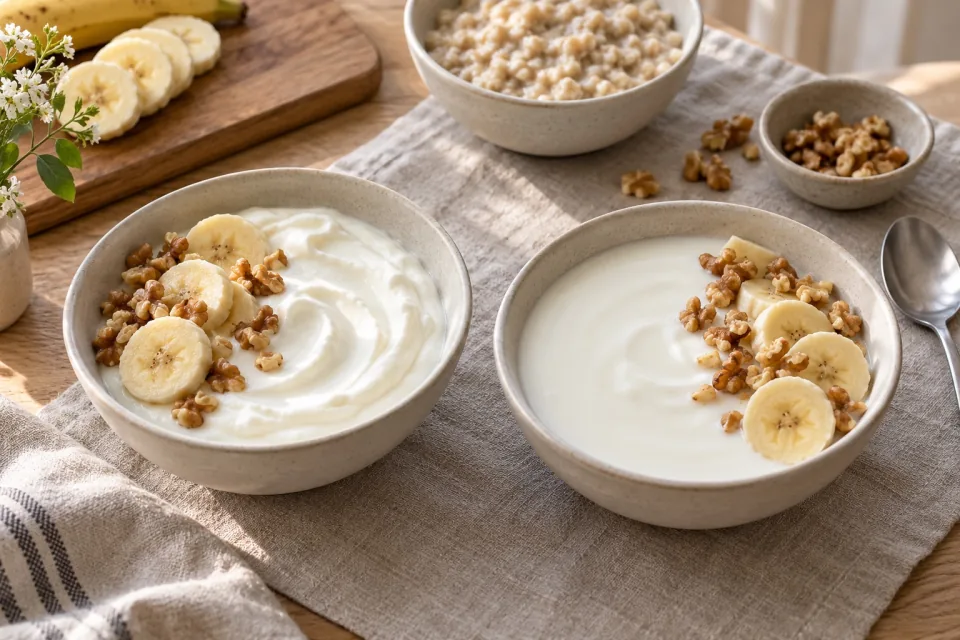
A banana-and-nut bowl makes the yogurt substitution easy to separate from a topping change. Oregon State University Extension's Food Hero suggests arranging banana beneath layers of yogurt and nuts for a breakfast banana split. Use that combination as the basis for a matched comparison.
Begin with the yogurt substitution. Make the banana and nut weights equal across the comparison, and match the yogurt weights too. Use Greek yogurt in the strained version and regular yogurt in the unstrained version. Match the milk-fat category and use plain yogurt in each. At this stage, the yogurt is the ingredient being changed.
Describe the complete bowls by their components: banana, yogurt and nuts. Record the yogurt separately from the other ingredients in your working notes. Compare the yogurt's protein on an equal-weight basis as its own question. Assess calories using the amount of every ingredient in the bowl.
USDA FoodData Central's portion method scales a food's reference value to the weight being assessed. Apply that method to each ingredient's calorie value, then add the ingredient estimates for the bowl. Using the same food entries and topping weights makes the estimated topping contribution identical. The difference between these matched bowls therefore comes from the yogurt substitution.
After that comparison, examine a topping change separately. Leave the yogurt and banana amounts fixed while changing the nut amount in the comparison. Identify the change as a difference in the topping amount. This answers a different question from changing yogurt: how the calorie estimate changes when the accompaniment changes.
Record which ingredient changed beside each comparison. A change in yogurt, a change in yogurt amount and a change in nuts are separate adjustments. Giving each adjustment its own comparison makes the result interpretable without attributing every difference to the words Greek or regular.
Part 06
of 08
06 / Field note
Use fruit and spices, or make a savory bowl
Fresh fruit and spices provide a serving option for either yogurt. Harvard's Nutrition Source suggests a sweeter bowl made with fresh fruit and a spice such as ginger, nutmeg or cinnamon. It describes nuts as an addition for crunch.
Choose the fruit-and-spice combination before comparing the yogurt bases. Record the fruit separately from the seasoning, and include nuts in the ingredient description when you use them. This describes what is being served closely enough to distinguish a fruit bowl with nuts from a fruit bowl without them.
Plain yogurt also works in a savory preparation. Harvard's savory suggestions pair herbs and spices with either strained or unstrained plain yogurt. Use that preparation when you want a breakfast comparison based on savory seasonings. The thicker strained base and the generally milder regular yogurt give you different starting textures and flavors within the same preparation.
Part 07
of 08
07 / Field note
Include the oatmeal when yogurt is an accompaniment
Yogurt can sit alongside baked oatmeal as part of breakfast. Food Hero suggests yogurt and fruit as accompaniments to baked oatmeal cups. For a comparison of the yogurts, use that breakfast format with matching oatmeal and fruit amounts.
Describe the oatmeal as the prepared dish being served. For an ingredient-based calorie estimate, account for the ingredients in that preparation. If using a prepared-food entry instead, select a description that matches the dish. Apply the same method to the breakfasts being compared.
Record the yogurt separately, using equal weights and matching milk-fat categories. Then include the oatmeal and fruit when assessing breakfast calories. The yogurt comparison describes the base ingredient; the complete-breakfast comparison includes the accompanying food as well.
The serving format also gives texture a distinct role. Food Hero's example places yogurt alongside the baked oatmeal, so the yogurt does not have to be the main body of the dish. Choose the strained yogurt for its thicker consistency, or regular yogurt for the generally milder flavor described by the American Dairy Association North East. Make that choice within the oatmeal-and-fruit breakfast you intend to serve.
Part 08
of 08
08 / Field note
Read sugar information alongside the bowl ingredients
On a U.S. Nutrition Facts label, Added Sugars is included within Total Sugars. The U.S. FDA explains that Total Sugars covers sugars naturally present in milk and fruit as well as sugars added to the food. Read the entries together, preserving the distinction between the total and the added amount already included in it.
The FDA places sugars from honey and syrups in its added-sugars category. If either is added to a breakfast bowl, record it as a separate ingredient in the calorie comparison. Use matching amounts in matched bowls, or identify the sweetener as the ingredient being changed. This distinguishes a yogurt substitution from a change in how the breakfast is sweetened.
Use flavor descriptions for a different purpose. The dairy association's tangier-versus-milder comparison describes taste. Sugar information describes composition. Record tartness as a flavor characteristic and assess sugar content from the food information, so each observation answers its own question.
Sources / 07
- Yogurt
- Effect of Modified Manufacturing Conditions on the Composition of Greek Strained Yogurt and the Quantity and Composition of Generated Acid Whey
- Homemade Fermented Yogurt
- Greek Yogurt vs Regular Yogurt: What's the Difference?
- How to Understand and Use the Nutrition Facts Label
- FoodData Central Foundation Foods Documentation
- Quick Breakfasts on the Go
Continue reading
Return to the card board