Field note
Tofu marinade calorie counting mistakes: oil, sweeteners and sauce
Follow oil, sweeteners and sauces through documented tofu recipes, and see why drained marinade and changes in cooked weight make calorie estimates uncertain.
Part 01
of 09
01 / Field note
Begin with everything that enters the recipe
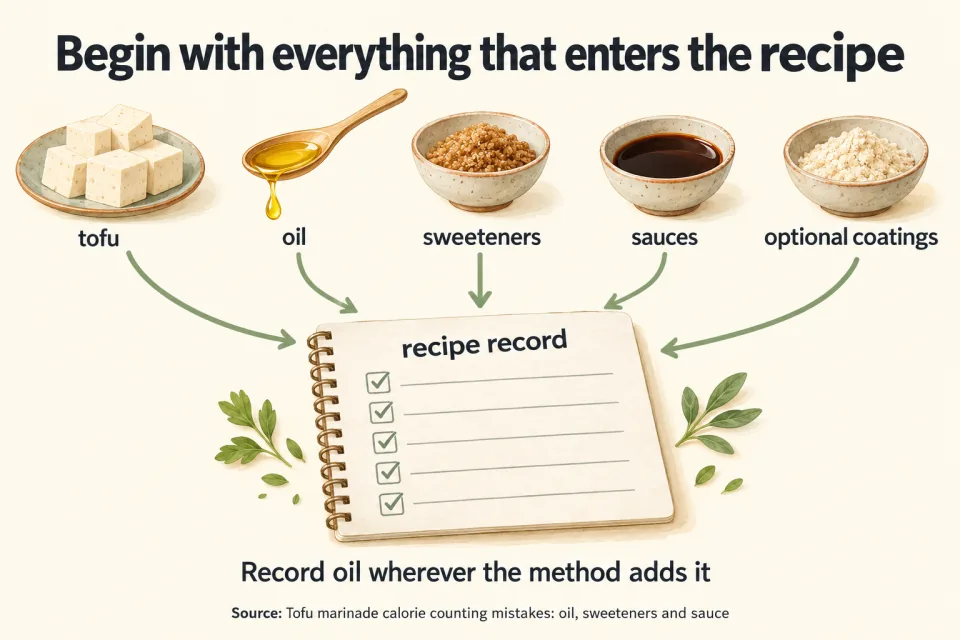
A tofu marinade calorie estimate needs to follow the ingredients through preparation, cooking and serving. Oil mixed into a marinade, oil added to a pan and sauce poured over the finished tofu enter at different stages. Start with the recipe as it was prepared, including the optional ingredients used.
The Food and Agriculture Organization, or FAO, begins recipe calculations with the weight and nutrient composition of each ingredient. Its method also accounts for preparation waste and material remaining on utensils or inside containers. Applied to marinated tofu, that means reading the cooking instructions alongside the ingredient list: the instructions show where those ingredients go.
Separate the mixture prepared from the portion discarded and the sauce served. A marinade can be drained away before baking, reserved for finishing or returned to cooked tofu. Each route calls for a different record of what reaches the finished dish.
Write ingredient amounts beside their use, so cooking fat and serving sauce have a place alongside the marinade. Record optional coatings where they enter the method. Then state what the estimate describes, such as drained baked tofu or tofu with its finishing sauce, and measure the finished quantity on that basis. This connects the ingredient calculation to a defined dish.
Part 02
of 09
02 / Field note
Record oil wherever the method adds it
Record oil at every point where the recipe adds it. The marinade ingredient list is only part of that check when the instructions also call for oil during cooking.
Food Hero's soy-honey marinade contains one tablespoon of vegetable oil. Its soy-lime alternative contains three tablespoons of vegetable oil. These are different formulas, so a record headed simply marinated tofu would leave an important ingredient choice unclear. Use the amounts for the selected marinade rather than combining the alternatives.
Concordia University's orange-soy tofu uses sesame oil in its marinade. Its instructions also call for oil on the grill or in the frying pan. For a record based on that method, measure the cooking oil as it is added and enter it separately from the sesame oil already mixed into the marinade. This gives the cooking step its own entry.
The Stanford roasted-tofu recipe offers parchment, a silicone mat, cooking spray or an oil wipe as ways to prepare the baking sheet. Record the preparation used, including any oil added at that stage. An entry for the tofu coating does not describe an oil wipe applied separately to the sheet.
The amount poured into a pan records an ingredient input. An adjustment for material remaining on the cooking surface belongs later in the calculation, following FAO's allowance for material on utensils and containers. Separate those decisions on the worksheet: first record what was added, then account for what did not reach the dish.
Part 03
of 09
03 / Field note
Include sweeteners and optional coatings
Include sweeteners in the mixture where the recipe uses them. Food Hero's soy-honey marinade contains one tablespoon of honey or brown sugar. Record the chosen ingredient and its amount; the alternative is a recipe choice, not an additional ingredient to enter.
Sweeteners can also appear in separate parts of a dish. Stanford's tofu coating uses honey or agave. Its peanut sauce uses brown sugar or date paste. A calculation covering tofu and sauce therefore needs the selected sweetener from each mixture. Recording the coating alone would leave the sauce ingredients outside that calculation.
Use separate entries for those mixtures while preparing them. Weigh the chosen sweetener before mixing it in, and attach that amount to the coating or sauce it belongs to. This follows FAO's method of recording each ingredient and makes the record easier to adjust if only part of the sauce accompanies the tofu.
Optional ingredients need the same attention. Stanford lists olive oil and an arrowroot or cornstarch coating as optional additions to its tofu. Mark which additions were used, with their measured amounts, before adding up the recipe. A calculation for the version with those additions should describe that version explicitly.
Part 04
of 09
04 / Field note
Follow marinade through draining and finishing
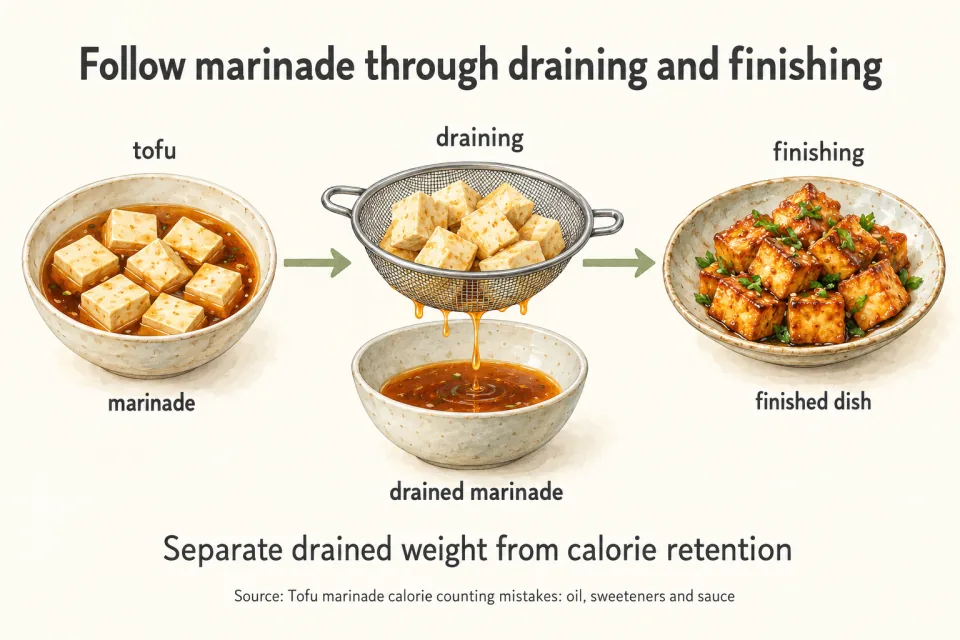
Draining marinade and returning it to cooked tofu require different recipe records. In Food Hero's baked-tofu method, the marinated pieces are drained before they go onto the baking sheet. A calculation that includes the entire starting marinade therefore includes material removed during that step. Describe that assumption if the full mixture remains in the estimate.
Concordia's orange-soy method takes another route. The marinade combines sesame oil, orange juice, soy sauce, ginger, garlic, orange zest and chili sauce. The cook reserves it during grilling, then tosses the cooked tofu with it. For this workflow, the record needs to follow the marinade back into the dish after cooking, with an allowance for material remaining in the container.
The Serious Eats chipotle-miso recipe combines vegetable oil, brown sugar, chipotle and miso in its marinade. It reserves one tablespoon of that mixture for a finishing sauce. Sesame oil and soy sauce are added to the reserved portion. After grilling, the reserved sauce is used to coat the tofu.
For that chipotle-miso record, distinguish a transfer from an addition. The reserved marinade comes from the mixture already recorded; the sesame oil and soy sauce added afterward need their own entries. If the full starting mixture is already included in the calculation, entering the reserved portion again as a new ingredient would duplicate that portion.
Part 05
of 09
05 / Field note
Separate drained weight from calorie retention
The weight of drained marinade measures material leaving the recipe; it does not by itself establish the calories retained by the tofu. Weighing the starting mixture and the liquid drained away can help document the preparation. A calorie calculation still depends on the composition of those materials.
The University of Tasmania explains that shaking oil with vinegar makes a temporary suspension that can separate quickly. Ingredients and mixing methods affect how stable such mixtures are. Applied to a marinade that separates, this creates uncertainty about the proportions of oil and water in the portion drained away. Subtracting liquid by weight would need an assumption about that liquid's composition.
FAO's method makes a separate distinction between weight changes and nutrient changes. Water changes during preparation or cooking belong in the recipe calculation alongside changes in fat. A change in weight alone therefore leaves the water and ingredient changes to account for. It cannot identify the amount of each marinade ingredient that accompanies the tofu.
For a drained marinade, describe absorption as uncertain. If an estimate counts the full starting mixture, say that all marinade ingredients were included despite the draining step. That wording tells the reader how the figure was assembled without attaching an unsupported absorption percentage to the tofu.
The same care applies to material on the bowl, spoon or baking sheet. FAO includes such material in its recipe corrections, but its weight still needs a composition to support a nutrient deduction. Use measurements to document what happened and make the remaining assumptions visible in the recipe record.
Part 06
of 09
06 / Field note
Match the tofu preparation to the record
Use the tofu type and preparation named in the recipe when building its ingredient record. University of Illinois Extension explains that firmer tofu contains less water than softer tofu. The description beside a weight should therefore identify the tofu being measured and its preparation stage.
University of Illinois Extension advises against pressing silken or soft tofu because its structure is delicate. For extra-firm or super-firm tofu, its guide uses the wetness of a paper towel to help decide whether pressing is needed. Tofu that is already baked needs no pressing in that guidance. These distinctions matter when choosing which preparation instructions to follow.
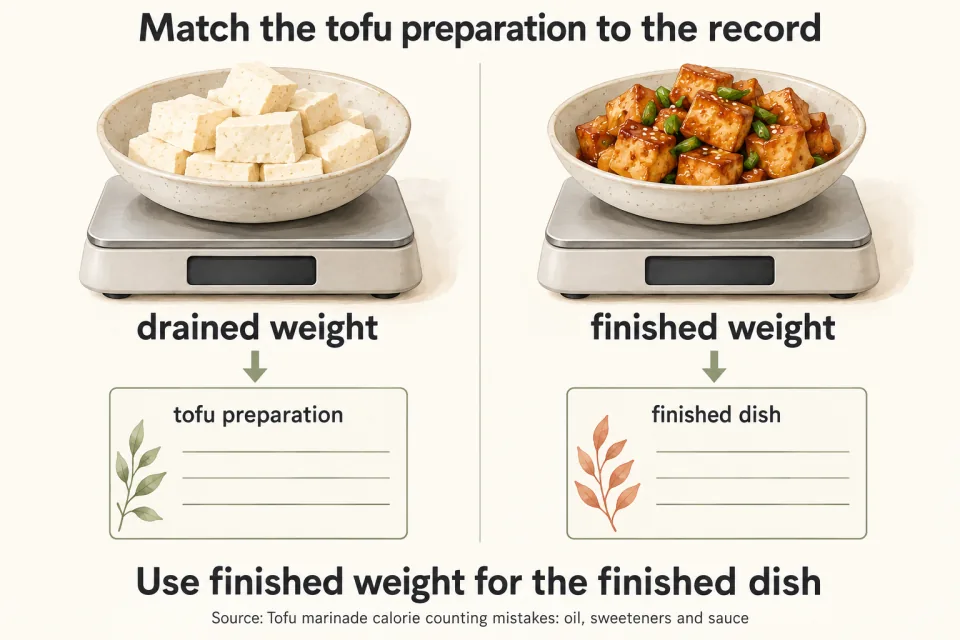
Food Hero begins its baked-tofu method by pressing water out with a clean towel. The tofu is then cut and marinated. For a record of that method, label whether the tofu weight was taken before or after pressing, and record the later cooking yield separately. That gives each measurement a clear place in the sequence.
Serious Eats describes non-silken tofu as more porous and able to draw more flavour from a marinade. Its grilling guide also favours thicker marinades because watery mixtures can interfere with browning. Those details guide how to prepare and cook the tofu. Record them as method details while leaving the amount of marinade retained as an estimate.
Part 07
of 09
07 / Field note
Use finished weight for the finished dish
The finished dish needs its own weight because cooking can change the water and fat content of a recipe. FAO's procedure weighs the assembled dish before cooking and again afterward. It distinguishes yield factors, which concern weight changes, from retention factors, which concern nutrient changes.
That distinction helps with tofu that becomes smaller during cooking. Serious Eats describes moisture loss and a decrease in volume during its slow-grilling method. A smaller cooked piece does not by itself establish a matching reduction in calories. Use the cooked weight to describe the quantity produced, with the ingredient calculation and relevant adjustments describing its nutrient content.
For an estimate expressed by finished weight, first calculate the nutrients in the ingredients included in the dish. Then relate that calculation to the measured finished yield, following FAO's method. Record whether a finishing sauce was already on the tofu when it was weighed. If the sauce has a separate calculation, weigh the tofu and sauce separately.
The components included in the weight and in the nutrient total need to agree. Pairing the weight of tofu alone with a total that includes a separate bowl of sauce would describe mismatched parts of the meal. Name the included components beside the finished weight before dividing the recipe into portions.
Part 08
of 09
08 / Field note
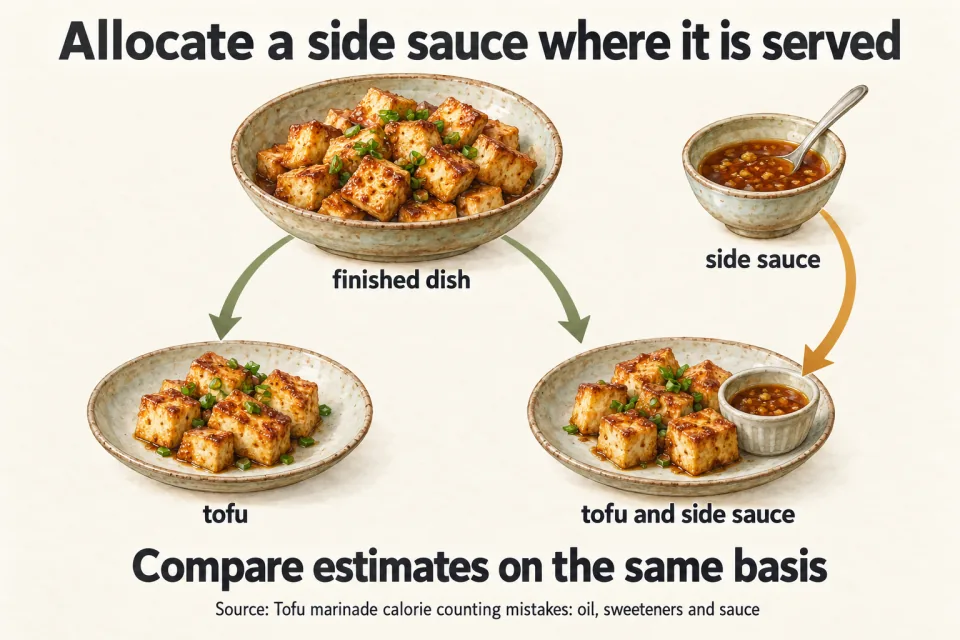
Allocate a side sauce where it is served
A separately served sauce needs its own ingredient calculation until it is added to the tofu. Stanford's roasted tofu with peanut sauce has separate ingredient lists for the coating and the sauce. The finished sauce can accompany the tofu in a separate dish or be poured over it.
The recipe mixes the peanut sauce while the tofu bakes and adds hot water to reach the desired consistency. Record that water as part of the sauce's finished yield. This applies FAO's distinction between the total ingredients and the quantity of food produced. Measure the sauce after that consistency adjustment so its finished weight describes the mixture being served.
For a shared dish with sauce spooned onto the tofu separately, record the amount added to each portion. If the sauce is evenly mixed, allocate its calculated total in proportion to those measured amounts. State that assumption alongside the allocation. Dividing the tofu equally does not establish how the sauce was divided, so record those allocations separately when they differ.
A bowl placed on the table establishes the amount offered. For an estimate describing plated food, include the sauce added to the plates and account separately for sauce remaining in the bowl. This applies FAO's attention to material in containers without assuming that the full bowl accompanied the tofu.
If the sauce is poured over the entire tofu dish before portioning, include the amount poured in the assembled recipe calculation. Record the combined finished weight at that stage. The ingredient record then follows the serving method: sauce added across the dish belongs in that dish's calculation, while sauce offered separately has its own measured allocation.
Part 09
of 09
09 / Field note
Compare estimates on the same basis
Compare tofu recipe estimates after checking the ingredients included and the quantity they describe. FAO allows finished recipe values to be expressed by weight, volume or serving once the quantity produced has been determined. Identify that basis before comparing figures, and check that each calculation includes the components named in the dish.
A comparison between drained baked tofu and tofu finished in sauce needs particular care. Check whether each estimate counts the full starting marinade, then check the cooking oil and sauce added later. This helps separate differences in the dishes from differences in what the calculations included.
EFSA, the European Food Safety Authority, explains that some factors used to calculate food energy are averages. Such factors do not necessarily describe every individual component within a food-constituent group. That adds uncertainty in the energy calculation itself, alongside the uncertainty about ingredients retained during preparation.
For an estimate attached to a recipe, add a brief note about the assumptions that affect it. For drained baked tofu, that could state that the calculation includes all the starting marinade, although the method drains it. For tofu with a side sauce, state the measured sauce amount included. These notes give the figure a meaning that follows the cooking method.
Sources / 09
- Calculation of the composition of dishes prepared from recipes
- Scientific advice related to nutrient profiling for the development of harmonised mandatory front-of-pack nutrition labelling and the setting of nutrient profiles for restricting nutrition and health claims on foods
- Baked Tofu
- All About Tofu
- How to Grill or Broil Tofu That's Really Worth Eating | The Food Lab
- Grilled Tofu With Chipotle-Miso Sauce Recipe
- Orange Soy Tofu Pockets
- Roasted Tofu with Easy Peanut Sauce
- The science of the ideal salad dressing
Continue reading
Return to the card board