Field note
Is adding dal to dosa batter worth it?
Compare published rice and dal formulas, their spreading and crispness, and the soaking, grinding and fermentation each method involves.
Part 01
of 09
01 / Field note
More dal changes the cooking choice
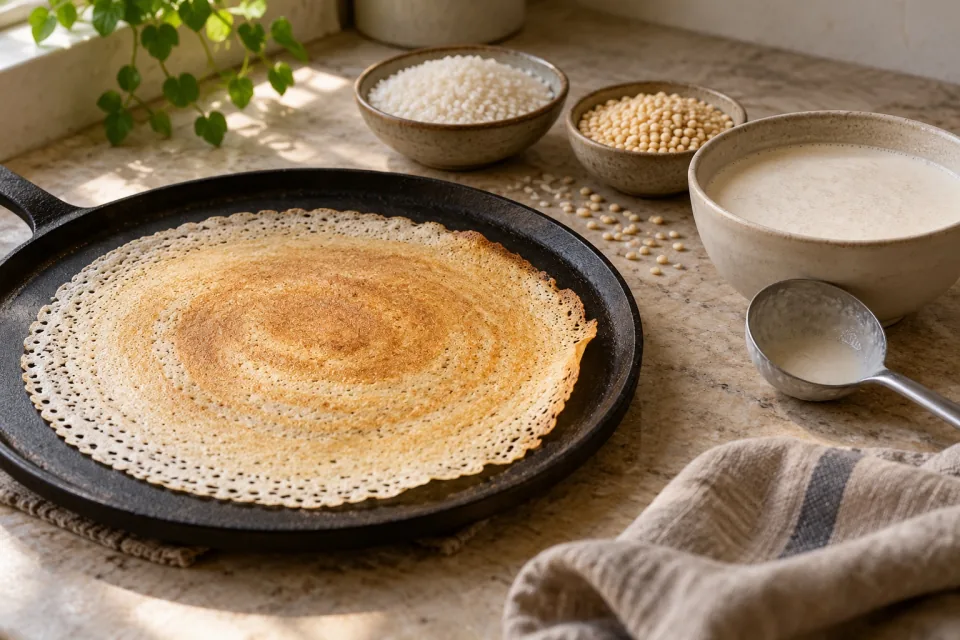
Adding more dal can work well when the texture and method suit the dosa you want. Swasthi's published variations include a dal-rich batter she describes as light and crisp, and an Andhra-style batter that she says softens quickly. The answer depends on which recipe you choose and how you prepare it.
Start by choosing the kind of batter you want to cook. Rice-and-urad dosa, adai made with rice and several dals, mixed-dal dosa without rice, and pesarattu made with whole green moong have different ingredient combinations and instructions. Compare each as a complete preparation when weighing the work involved.
Read the dal quantity alongside the grinding, fermentation and pan instructions. Swasthi's higher-dal variation, for example, comes with directions to spread it very thin and cook both sides. Those steps belong to her reported result, so use them with the formula rather than changing only the dal measure.
Part 02
of 09
02 / Field note
Rice and urad play different parts
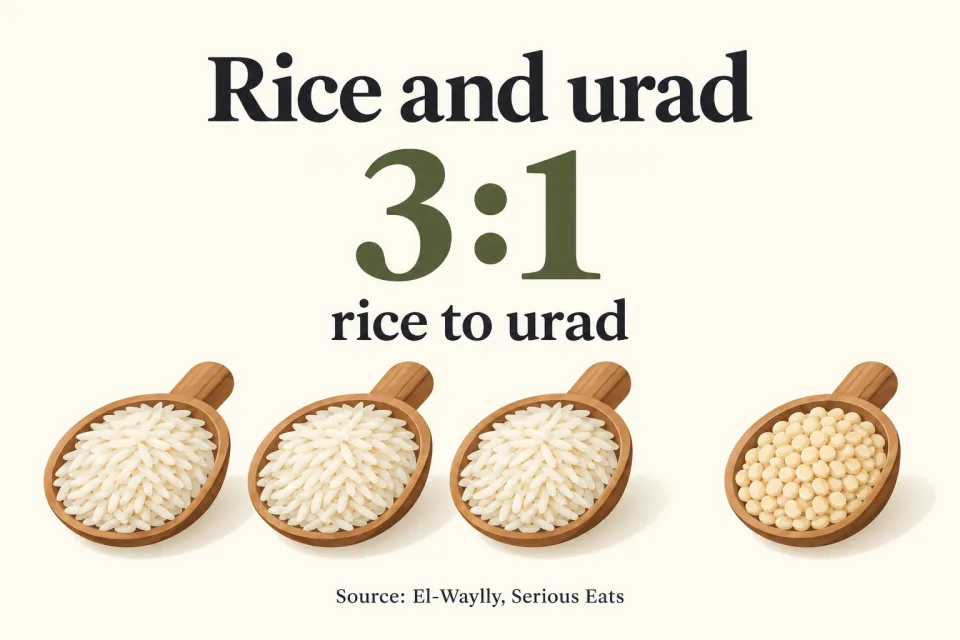
Rice and urad do different jobs in Sohla El-Waylly's dosa tests: she associates rice with crispness and urad with flexibility. After comparing ratios from 1:1 to 6:1, El-Waylly settled on 3:1 rice to urad for her Serious Eats recipe. That preference gives a starting point for her method, with crispness and flexibility considered together.
For approximately sixteen dosas measuring 10 inches across, her recipe calls for 135 g urad and 400 g rice. Use those gram amounts when following that recipe. They are the quantities attached to its stated yield, whereas the ratio describes the author's preferred balance.
In El-Waylly's trials, a second fermentation had a greater effect on texture than a change in the rice-to-dal ratio. If her texture is the aim, include that fermentation step in the comparison alongside the ingredient split. This matters when weighing preparation effort, because her result points to a change in the method as well as a change in quantities.
The poha and chana additions she tested did not give her tasters a noticeable improvement in texture. Swasthi's main recipe includes those ingredients, so the published methods do differ. The Serious Eats observation concerns the additions tested there; use it when choosing between methods, without assuming that every batter containing those ingredients will behave alike.
Part 03
of 09
03 / Field note
Read recipe measures alongside the food record
Recipe quantities and nutrient data answer different questions, so read each with its own description. In Tara O’Brady's homestyle recipe, ½ cup urad dal accompanies 2 cups long-grain white rice. Alongside poha and fenugreek, Swasthi uses ½ cup urad dal and 2 tablespoons chana dal with 1½ cups rice in her main formula.
These recipes name different ingredient combinations as well as different measures. For Swasthi's formula, include the chana dal when describing what goes into the batter. For O’Brady's recipe, retain the stated long-grain white rice in the description. This attaches the comparison to the ingredients the recipe names.
USDA FoodData Central advises matching a food to its database record before using the record's nutrient values and portion information. For a protein comparison, carry the ingredient description into that check. A recipe's cup measure describes an amount used in cooking; the food record supplies composition information for the food it identifies.
The FoodData Central FAQ explains that nutrient values reflect particular samples, collection times and locations, and analytical or calculation methods. It also explains that serving-size measures have different meanings across its data types. Read the record's description and portion information together before attaching a protein figure to an ingredient. Use the rice-and-dal balance as a cooking description, with nutrient comparisons based on matching food records.
The cooked shapes differ across these recipes too. El-Waylly specifies a larger dosa than O’Brady, while Urmila Ramakrishnan's adai is smaller again. Read each recipe's portion and diameter together when comparing the work at the pan; the shared name dosa does not make those cooking instructions identical.
Part 04
of 09
04 / Field note
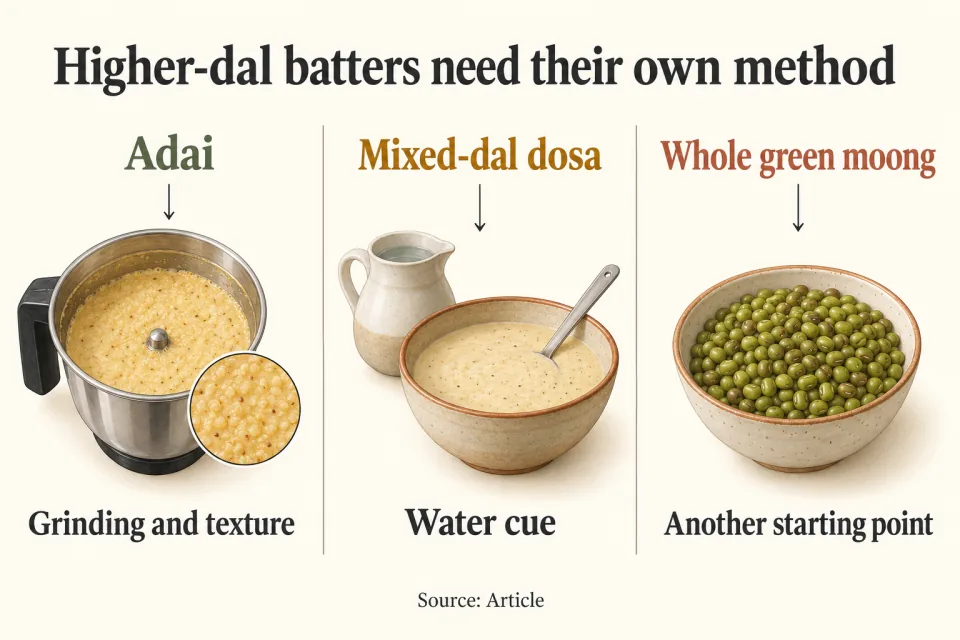
Higher-dal batters need their own method
Swasthi's higher-dal variations pair different dal combinations with different textures. Her Andhra-style option pairs 1 cup urad dal with 2 cups rice. Cooking both sides is her recommendation for a less noticeable dal flavor; she describes this version as quick to soften.
For her higher-dal variation, she combines 1 cup urad dal and ½ cup chana dal with 1½ cups rice. She describes it as light and crisp when spread very thin and cooked on both sides. For someone choosing that crisp version, the spreading and turning instructions are part of the choice.
Compare this with her main formula: the rice stays at the same cup measure while the urad and chana amounts increase. Read the change as more dal alongside a fixed rice measure. The chana amount changes too, so following this variation means using its full dal combination, not simply increasing the urad in isolation.
The Andhra-style option lists rice and urad, while the higher-dal variation specifies chana as well. Decide which of these published combinations you want to make before soaking the ingredients. That choice determines the ingredient measures and the cooking directions to follow.
Fermentation also needs attention in Swasthi's higher-dal version. She cautions that excessive fermentation can make the batter too airy, while too little leaves the dal flavor noticeable. Follow those fermentation instructions along with the quantities, especially if the dal flavor is what concerns you.
Part 05
of 09
05 / Field note
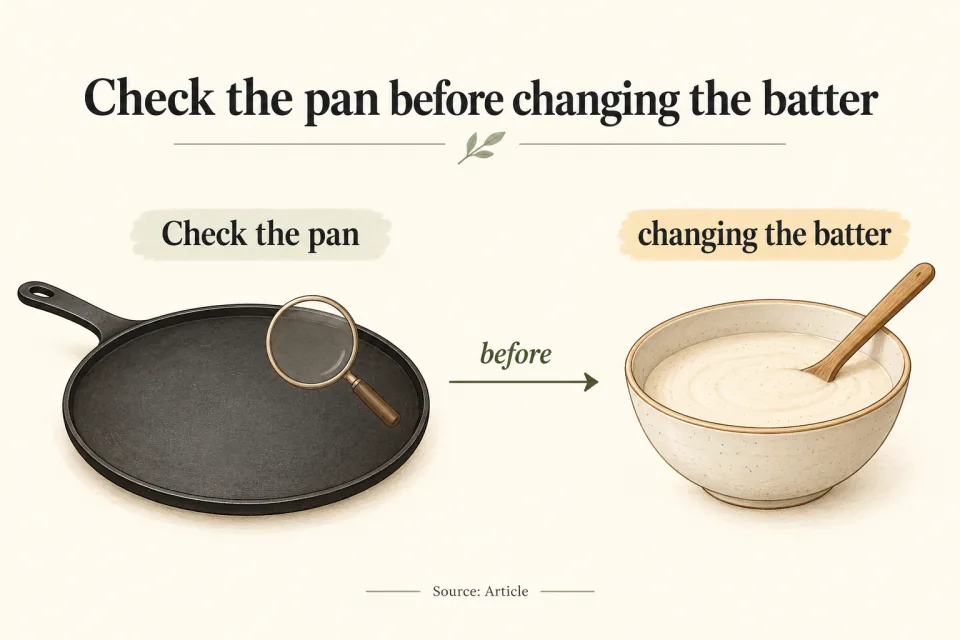
Check the pan before changing the batter
Pan heat and surface fat can explain spreading trouble in O’Brady's homestyle method. Thick or torn dosas can result when a very hot pan sets the batter before spreading is finished, she explains. If that happens, review the heat before deciding that the rice-and-dal balance needs changing.
In her recipe, a dosa approximately 8 inches across starts from a generous ⅓ cup of batter. Use the portion and spread together when following her instructions. This gives a defined shape to work toward, rather than judging the batter only by how it sits on the ladle.
A slippery surface is a different problem. O’Brady explains that batter needs to catch on the pan during spreading, and excess surface fat makes it slide. If the ladle moves the batter around without spreading it, check the amount of fat on the surface.
Her intended homestyle dosa has thin, lacy areas and thicker, spongy ridges. Varied thickness can therefore match this recipe's intended shape; use that description when judging the result. For a drier version, O’Brady cooks the reverse side once the top has set. This finishing choice belongs after the initial spreading and setting stage.
Part 06
of 09
06 / Field note
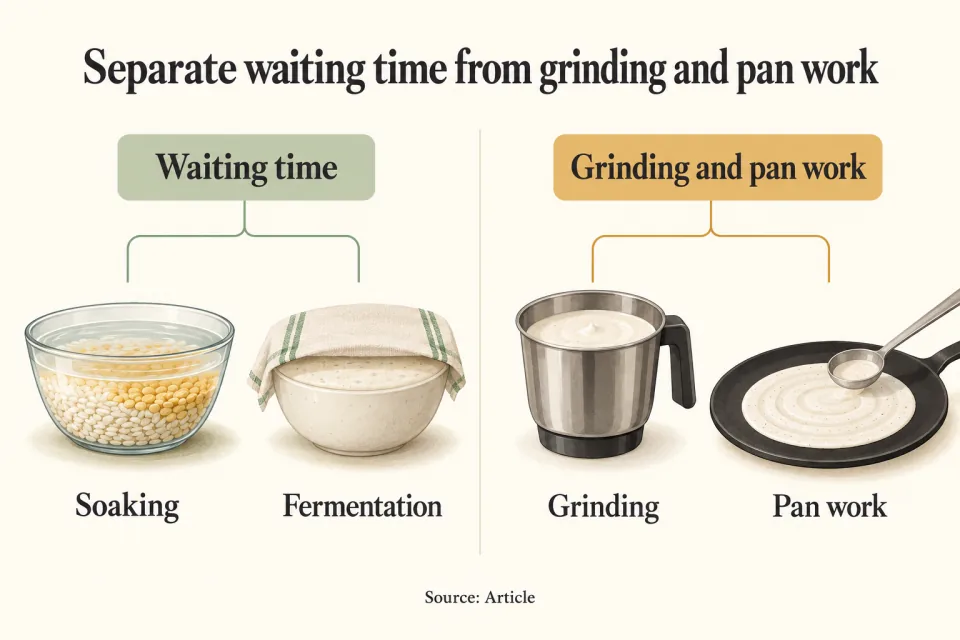
Separate waiting time from grinding and pan work
The preparation choice includes soaking, grinding, fermentation and the work at the pan. For Swasthi's main method, soaking takes 5–6 hours; fermentation then takes approximately 8–16 hours, with temperature affecting the timing. O’Brady leaves the rice and dal to soak for 8–10 hours, then grinds them.
Those are different stages of the recipe, so put them into the plan separately. Follow the soaking period for the recipe you have chosen, then its grinding and fermentation directions. Cooking both sides, where the recipe asks for it, is another instruction to include when weighing the work involved.
Small batches are O’Brady's advice for a standard blender, to avoid warming the pastes and letting the motor get too hot. Her goal is fluffy rice and dal pastes made with minimal water. Work toward that stated paste texture rather than borrowing the pouring consistency of a different kind of batter.
O’Brady assesses fermentation through airiness, bubbles and a pleasantly sour character, with volume increase only part of the judgment. Use those signs together when following her method. Check the batter's character as well as its rise before moving to the pan.
If waiting for fermentation does not fit the cooking plan, choose a published method that proceeds from blending to cooking. Urmila Ramakrishnan's adai and Swasthi's mixed-dal dosa follow that route. Compare those preparations with fermented dosa as complete alternatives, including their soaking and grinding, instead of simply dropping fermentation from the rice-and-urad method.
For example, O’Brady's soaking stage leads into grinding, where the target is a fluffy paste. Ramakrishnan's adai takes its hot-water soak into blending and then cooking. Choosing between them changes the sequence of tasks as well as the ingredients. Compare those sequences when planning breakfast preparation.
Part 07
of 09
07 / Field note
Adai changes the grinding and texture
Adai offers a rice-and-dal preparation without required fermentation in the recipes compared here. Urmila Ramakrishnan's version uses equal cup measures of rice, toor dal, urad dal and yellow split peas. Before blending, she soaks that mixture together in hot water for 2–4 hours.
Her recipe goes straight from blending to cooking. With ¼ cup batter spread into a circle 6–7 inches across, the recipe makes approximately 12–14 adai. Follow its portion and spread as well as the ingredient mix when making that version.
Ramakrishnan links a thick batter with fluffier adai and a more fluid batter with crisp, lacy adai. Choose the consistency within her recipe according to the texture you want. That gives you a choice within the method without changing the stated rice-and-dal combination.
Raks Anand combines ½ cup chana dal, ¼ cup toor dal, ⅛ cup urad dal and an optional ⅛ cup moong dal with 1 cup each of uncooked rice and idli rice. Her separate rice and dal soaks last three hours, and the grinding leaves a coarse texture. Her intended result is thicker than dosa, with a crisp outside and soft inside.
Anand wants more thickness than in ordinary idli or dosa batter, while warning that an excessively thick mixture is difficult to spread. She cooks both sides over medium or low heat to develop crispness. Use that coarse grind and thick batter together if following her version, rather than aiming for Ramakrishnan's lacy result.
Her batter can go straight to the pan; Anand's preference is an optional 3–4-hour rest for flavor. This offers a choice within her recipe: proceed to cooking or include the rest she describes. Include the separate soaking, coarse grinding and chosen rest when comparing its preparation with Ramakrishnan's method.
Part 08
of 09
08 / Field note
Mixed-dal dosa has its own water cue
Swasthi's mixed-dal dosa is a rice-free preparation with its own consistency and cooking instructions. Urad dal, whole green gram, chana dal and toor dal each contribute ¼ cup to her mixture. Soaking lasts at least four hours, followed by blending the dals with seasonings.
The method moves from blending to cooking without fermentation. Swasthi says the lentil combination affects both flavor and crispness. If following this recipe for its stated texture, start with the listed mix before choosing a different combination.
Her consistency advice differs from Ramakrishnan's adai guidance. For mixed-dal dosa, Swasthi associates a thick but pourable batter with crispness and more water with a softer result. Ramakrishnan, by comparison, uses a more fluid batter for crisp, lacy adai. Apply the water adjustment that belongs to the batter in front of you.
Swasthi also offers an optional scraping step to even out the mixed-dal dosa and make the layer thin while it cooks. This gives a way to work on the layer at the pan. It is separate from changing the amount of water during blending, so follow it at the cooking stage if using that option.
Her cooking sequence covers both sides, with another turn for crispness. She warns that these dosas can become dry if cooking continues too long. Follow that finishing sequence with the drying warning in mind, instead of extending cooking indefinitely in pursuit of a crisper surface.
Part 09
of 09
09 / Field note
Whole green moong offers another starting point
Pesarattu starts with whole green moong in Nandita Iyer's recipe. Her optional rice flour amounts to 3 tablespoons for a batter made from 1½ cups whole green moong. The whole green moong soaks overnight or for 5–6 hours in Iyer's method.
Iyer links including rice with a crisper pesarattu and leaving it out with a softer result. The rice is therefore a texture choice within her recipe. If the question is whether to move away from a rice-and-urad batter, this gives a whole-moong preparation with that choice included in the method.
She blends a thick batter first, then adjusts it until it pours readily. Follow that sequence when making her version: establish the thick blend, then work toward the pouring consistency she describes. Read that instruction alongside the optional rice when deciding which version of her pesarattu to make.
Fermentation is optional in Iyer's method, as is flipping the pesarattu. She also allows it to be spread thick or thin. Decide which options to follow before comparing the work with a recipe that specifically calls for fermentation and cooking both sides. For a change from rice-and-urad dosa, pesarattu offers a published whole-moong method with those choices already explained.
Sources / 10
- Authentic Dosa Recipe, How to make Dosa Batter
- Dosa (Indian Rice-and-Lentil Crepes) Recipe
- Homestyle Dosas with Tomato Chutney
- How to Make Homestyle Dosas: A Primer
- Adai (Quick Lentil Dosas)
- Adai Recipe, How to make Adai
- Mixed Dal Dosa | Lentil Dosa without Rice
- Pesarattu – All you need to know about this savoury breakfast from South India
- FoodData Central FAQ
- FoodData Central Help
Continue reading
Return to the card board