Field note
Suhoor and iftar menus with eggs, dal, dairy and chicken
Pair an egg skillet, oats with dairy or chicken wraps at suhoor with dal or chicken and bean chili at iftar. Measured recipe ingredients and clear batch yields make the menus easier to plan.
Part 01
of 08
01 / Field note
Build the menu around the main dishes
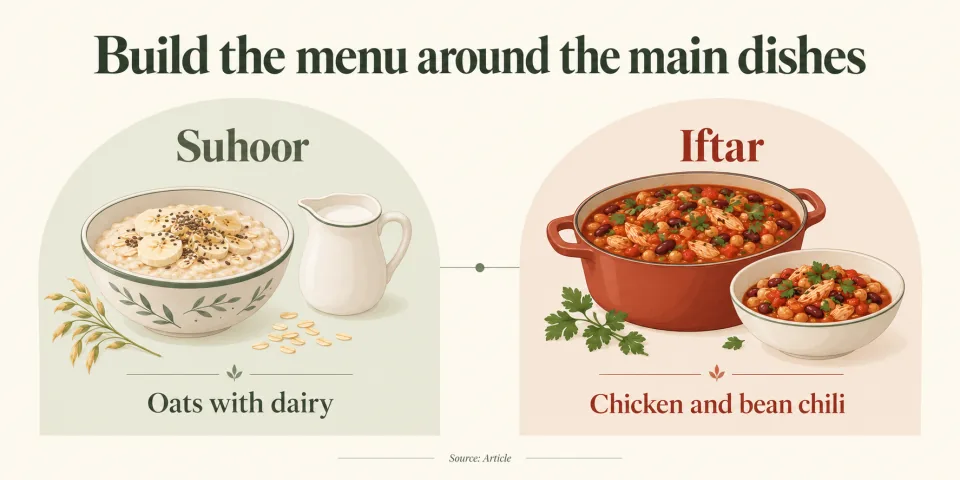
Pair a suhoor dish built around eggs, dairy or chicken with an iftar dish made with dal or chicken and beans. The combinations below are menu suggestions assembled from published recipes, with ingredient measures attached to the dish they belong to.
Suhoor, also called sehri, comes before dawn; iftar follows sunset. Planning the meals together gives the menu a clear structure: choose the main dishes, then identify their accompaniments. An egg skillet can lead into dal with rice or chapatis, while oats with dairy can be paired with a chicken and white bean chili.
The World Health Organization describes a light suhoor containing vegetables, whole-grain rice or whole-wheat bread, and skinless chicken breast. That provides a useful reference for arranging a meal around a main ingredient, vegetables and a grain food. The recipe combinations here offer different ways to organize those components without setting an eating target.
Read the measures as recipe quantities. A pan cut into wedges, a pot measured in cups and a recipe described by its serving yield each give a different way to divide the finished dish. The menu descriptions preserve those distinctions, so a quantity of uncooked lentils never gets presented as the weight of a bowl of dal.
Part 02
of 08
02 / Field note
Egg skillet at suhoor, dal and yogurt at iftar
Pair a vegetable egg skillet at suhoor with dal, rice or chapatis and plain yogurt at iftar. Eggs and cheese belong to the morning dish; lentils, mung dhal and yogurt belong to the evening meal. This is an editorial pairing of the Food Hero skillet and the NHS dal recipe.
Food Hero's vegetable skillet combines two cups of mixed vegetables with six medium or large eggs and one-third cup of shredded cheese, and the finished pan yields eight wedges. These measures describe the whole skillet. Use the wedges as the recipe's way of dividing it, with the accompaniments considered separately.
The vegetable choices in the recipe include zucchini, peas, broccoli and mushrooms. Choose from those examples when deciding what will go into the pan. The recipe allows fresh, canned or frozen vegetables, so its vegetable component is not tied to a particular season or a single mix.
Follow the skillet's cooking sequence: soften the vegetables before adding the beaten egg mixture. As the egg cooks, lift the edges to let uncooked egg flow underneath. Food Hero's method cooks the eggs until set, then finishes the skillet with sliced tomato before cutting it into wedges.
At iftar, use the dal as the main dish and follow the NHS serving suggestion of rice or chapatis with plain yogurt. This gives the evening meal a pulse base and a separate dairy accompaniment. Write the yogurt into the menu explicitly, rather than leaving it as an unnamed extra beside the bread or rice.
The pairing also gives a clear division of cooking tasks. The skillet needs vegetables softened before the eggs are added; the dal uses a simmering method. Choose the menu with those different cooking sequences in mind, rather than treating the dishes as if they require the same attention.
Part 03
of 08
03 / Field note
Measure the pulses and choose the dal method
The NHS Panjabi dhal combines red split lentils and split mung dhal, with onion, garlic, green chillies, turmeric and cumin. It is a specific mixed-pulse recipe, so retain the distinction between its lentils and mung dhal when measuring the ingredients.
For a recipe serving four, the NHS specifies 170 g of split mung dhal, 50 g of red split lentils and 1.5 litres of water. Its ingredient list also includes 30 ml of rapeseed oil. Those are batch measures: the water and pulses go into the recipe together, and the stated serving yield refers to the prepared dish.
The main method partly covers the pulses as they simmer. In a separate pan, the cumin, onion, garlic and chillies are cooked. This method separates the pulse cooking from the preparation of the seasoned onion mixture, so read through both parts before beginning.
The NHS also gives a one-pot method in which all the ingredients come to a boil and then simmer for 25–30 minutes. Choose this version when planning a menu around a single cooking vessel. Follow the alternative as written, rather than combining selected stages from the separate-pan and combined methods.
According to the NHS recipe, soaking the pulses in cold water for three or four hours can shorten their cooking time. That is an optional preparation step within this recipe. Decide which method to follow before arranging the rest of the meal, so the pulse preparation and the accompaniments fit the same cooking plan.
For serving, the NHS names rice or chapatis and plain yogurt. Present those as separate parts of the menu: dal is the cooked pulse dish, rice or chapatis are the grain accompaniment, and yogurt is the dairy component. This wording makes the meal clear without treating the weight of dry pulses as a finished portion.
Part 04
of 08
04 / Field note
Oats with dairy at suhoor, chicken and beans at iftar
Pair oats, yogurt, milk and fruit at suhoor with chicken and white bean chili at iftar. This combination draws on Food Hero recipes for the measured ingredients, while the British Nutrition Foundation also names oats and dairy among its suhoor examples.
The British Nutrition Foundation's examples include porridge and muesli with milk or yogurt, as well as oats prepared overnight. It identifies yogurt as a protein source and suggests pairing it with cereal and fruit. These examples give the morning meal a different form from the egg skillet, with cereal and dairy in place of a cooked egg dish.
Food Hero's oats recipe uses one-third cup each of rolled oats, yogurt and milk, together with two tablespoons of dry milk. It also includes half a cup of cut fruit. These are the ingredient measures for that recipe, rather than an eating target for anyone following the menu.
Name the dairy ingredients separately when writing the menu. The yogurt, milk and dry milk are distinct entries in the recipe, and the dry milk should not disappear into a vague description such as oats with dairy. The fruit is also part of the measured recipe, rather than an unspecified garnish.
For another oat presentation, the British Nutrition Foundation names fresh or dried fruit, nuts and seeds as toppings. Treat these as its separate suggestions, rather than silently adding them to the measured Food Hero recipe. That distinction lets a cook see which ingredients belong to a published recipe and which belong to a broader meal example.
At iftar, move to the chicken and white bean chili described below. Chicken, beans and dairy all appear in that dish, while the morning menu uses oats, dairy and fruit. The pairing connects the meals through named ingredients without assigning a nutrient target.
Part 05
of 08
05 / Field note
Use the chili's batch yield to plan serving
Food Hero's white chicken chili combines chicken breast, white beans and dairy in a pot measured by its finished volume. Its yield gives a practical reference for serving the dish, distinct from the weights and volumes used to assemble it.
The recipe yields eight cups and uses one pound of boneless, skinless chicken breast plus two drained and rinsed 15.5-ounce cans of white beans. The can size describes the beans as listed in the recipe; draining and rinsing are part of their preparation. Follow that preparation before adding them to the dish.
For the dairy component, the recipe lists one cup of sour cream or plain yogurt and half a cup of milk. Sour cream and plain yogurt are alternatives in this recipe, while milk is a separate ingredient. When naming the planned dish, specify which alternative you intend to use so the menu reflects the recipe being cooked.
After the beans, broth, chillies and seasonings are added, Food Hero's method simmers the chili uncovered for 30 minutes. The saucepan then comes off the heat and cools briefly before the dairy is stirred in. Follow that sequence when finishing the dish, with the dairy added at the stage the recipe specifies.
Food Hero offers two additional cups of cooked beans as a substitute for the chicken. This changes the recipe's main ingredients and gives a bean-based version of the iftar dish. Because the recipe still includes dairy, describe the alternative as bean chili with dairy rather than leaving its ingredients unclear.
When dividing the finished chili, work from its stated cup yield. The chicken weight and bean can sizes belong to the ingredient list; they do not describe the size of a bowl. A menu can therefore name the chili, record the batch yield and leave the amount served as a separate decision.
Part 06
of 08
06 / Field note
Chicken and pear wraps at suhoor, dal at iftar
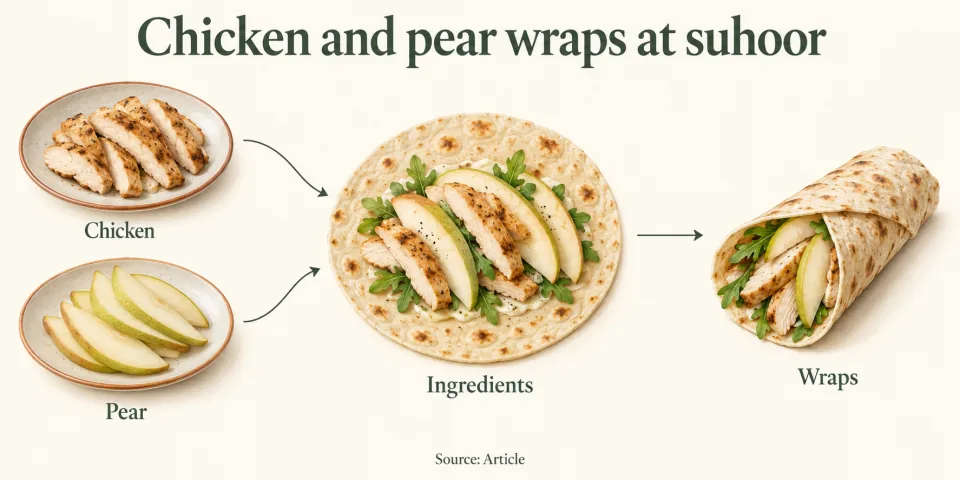
Pair a chicken and pear salad wrap at suhoor with the mixed-pulse dal at iftar. Food Hero suggests serving its chicken salad in a whole-wheat tortilla, while the NHS dal provides the evening dish with rice or chapatis and plain yogurt.
Food Hero's salad uses one cup of diced cooked chicken and two cups of diced pear. Celery, onion and raisins also belong to the salad. Name the dish as chicken and pear salad so the fruit is clear from the outset, rather than describing it only as a chicken filling.
The dressing combines two tablespoons each of plain yogurt and mayonnaise with one tablespoon of lemon juice. Yogurt is therefore part of a mixed dressing in this recipe. Retain the mayonnaise and lemon juice in the description instead of presenting the salad as chicken dressed only with yogurt.
Use the whole-wheat tortilla as Food Hero's suggested serving format for the salad. In the menu, distinguish the filling from the wrap: chicken, pear, vegetables, raisins and dressing make up the salad, and the tortilla is the accompaniment used to hold it. This avoids making the measured chicken quantity sound like a measure for the entire assembled wrap.
For iftar, return to the NHS dal recipe rather than inventing a different pulse curry. Its serving suggestion already supplies rice or chapatis and plain yogurt. The British Nutrition Foundation also describes meals combining pulse curries with rice, chapattis and yogurt, giving this arrangement a place among its varied Ramadan meal examples.
Choose this pairing when you want the menu to include chicken in a salad format and pulses in a cooked dish. It differs from the oats-and-chili pairing in where the chicken appears and how the dairy is used: yogurt forms part of the salad dressing at suhoor and accompanies the dal at iftar.
Part 07
of 08
07 / Field note
Keep ingredient measures separate from finished portions
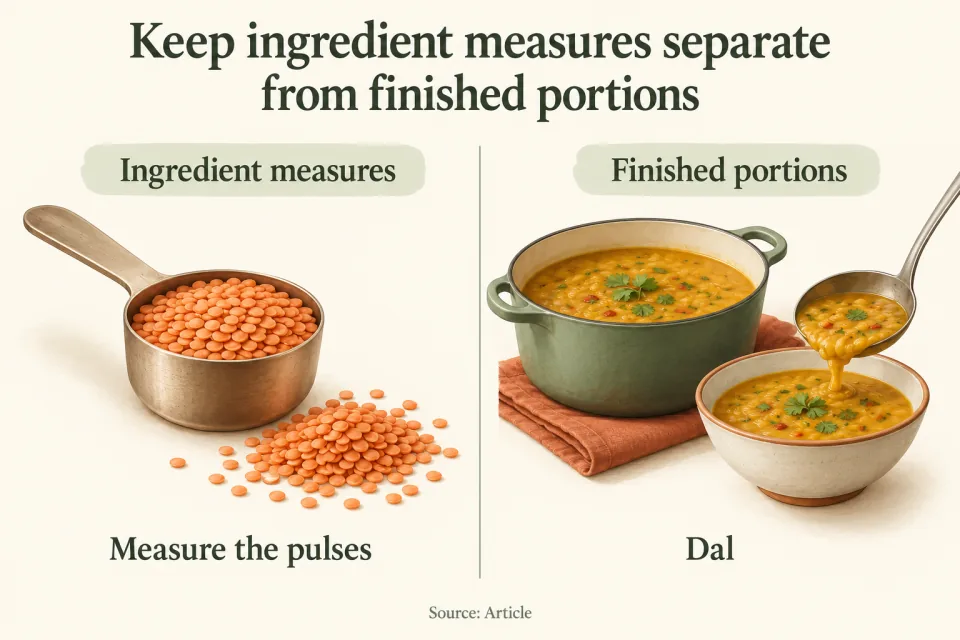
Read every measure alongside the food and cooking stage it describes. Dry pulses, cooked beans, cooked chicken and a finished pot of dal are different entries in these recipes. A useful menu names that stage instead of recording a number beside an ambiguous ingredient name.
For the dal, record the split pulses as recipe ingredients and use the recipe's stated serving yield for the finished dish. Its ingredient list includes water, oil and aromatics as well as pulses. A bowl of the finished dal therefore represents the prepared recipe, rather than an isolated measure of lentils or mung dhal.
For the chili, distinguish the listed cans of beans from the cooked-bean measure used in the chicken substitution. The original version calls for beans to be drained and rinsed; the alternative is expressed as an additional quantity of cooked beans. Preserve those descriptions when choosing the version to cook.
The chicken salad specifies cooked chicken. Carry that word into the menu notes so the measure remains attached to the ingredient the recipe names. Similarly, identify yogurt as part of the dressing in the wrap menu, as an accompaniment in the dal menu, and as a dairy option within the chili.
Finished yields also need their own labels. Wedges describe the egg skillet, cups describe the chili, and servings describe the dal recipe. Use each recipe's own format when dividing the dish, and list bread, rice, tortillas or yogurt separately where they are accompaniments. This makes the menu readable without implying that all the dishes share an identical portion.
Part 08
of 08
08 / Field note
Arrange the accompaniments and cooking schedule
Complete each menu by naming its accompaniments and deciding which cooking method each main dish will use. This turns a pairing of dish names into a practical plan: a skillet with its vegetable preparation, dal with its selected method, or chili with its dairy added at the end.
The World Health Organization includes homemade soup, cucumber, lettuce, tomato and watermelon among water-containing foods for sehri and iftar. Use those named foods when considering additions to the main dishes. Cucumber, lettuce and tomato offer a vegetable accompaniment, while watermelon can be named separately as fruit.
For Ramadan cooking, the World Health Organization suggests grilling or baking in place of deep-frying. It also recommends using less oil in curries. These are general cooking recommendations; the measured recipes above retain their own ingredient lists and methods. If choosing a different dish, identify its recipe rather than assuming an existing skillet or curry can be changed without further instructions.
The World Health Organization also describes an eating pattern comprising iftar, a light evening meal and seheri. A paired suhoor-and-iftar menu can sit within that broader arrangement. It need not be presented as a complete schedule or as the full amount of food anyone should eat.
For fruit, the World Health Organization recommends eating it rather than drinking fruit juice. Fruit already appears in the oats and chicken salad examples, and it can remain clearly named in the menu. Finish the plan with the dishes and their accompaniments written out, each measured quantity attached to its published recipe and each finished yield identified in the form the source provides.
Sources / 09
Continue reading
Return to the card board