Field note
Vegetarian lunch menus with lentils, beans, yogurt and grains
Build Mediterranean-style vegetarian lunches from lentil salads, white beans, yogurt, eggs and grains, with practical preparation steps and a method for recording oil, cheese and bread alongside the main ingredients.
Part 01
of 11
01 / Field note
Choose the lunch by its main ingredients
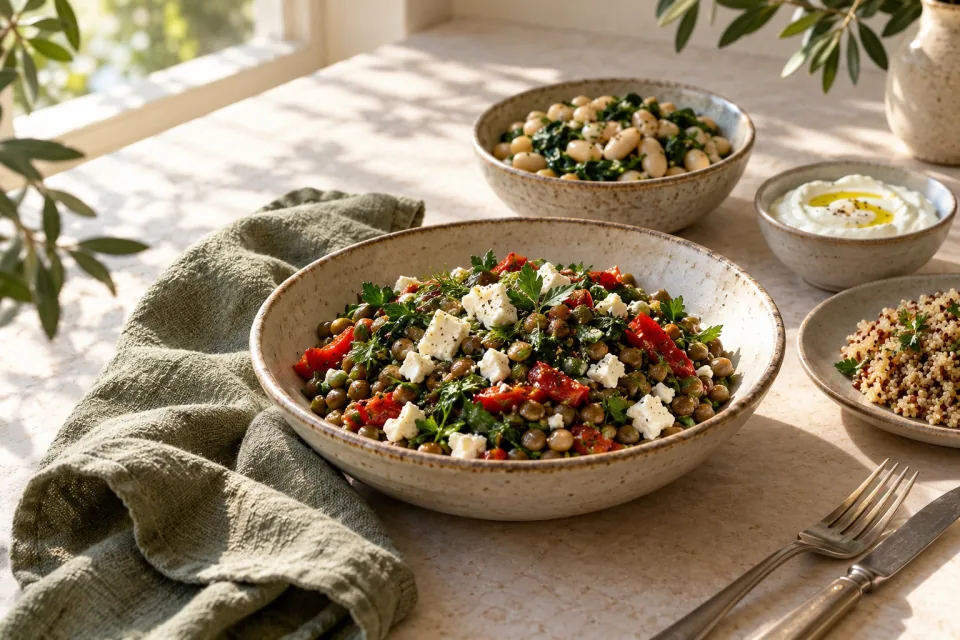
Lentil salads, white bean dishes and savory yogurt bowls offer several ways to plan a Mediterranean-style vegetarian lunch. Start with a researched recipe, then follow its combination of pulses, vegetables, grains, eggs or dairy. Include its dressing and accompaniments in the menu description so the whole dish is clear.
For a salad lunch with bread already included, choose white beans and broad beans with yogurt-avocado dressing and wholemeal pitta. For a warm dish, choose butter beans and spinach with garlic yogurt. Quinoa with lentils and feta supplies a grain-and-pulse option, while yogurt topped with spiced lentils and a poached egg gives a different assembly.
Use these dishes as choices for a general lunch rotation. Match the preparation to the occasion: a salad assembled from canned lentils involves different work from a stew or a dish with poached eggs. Write the chosen recipe's name and its components together, then use the preparation notes below to organize the cooking.
Part 02
of 11
02 / Field note
Lentil and red pepper salad with feta
Lentil and red pepper salad combines lentils, roasted peppers, radishes, olives, lettuce and feta without a cooking stage. Good Food Middle East gives a preparation time of 15 minutes for a recipe serving two. It is a useful menu choice when assembly is the main task.
Rinse the canned lentils and drain them before mixing. Combine them with the peppers, radishes and olives, then add the balsamic vinegar and olive oil. Spoon this mixture over the lettuce and finish with feta. Following that order gives the lentils and chopped vegetables the dressing before they reach the leaves.
The recipe explicitly permits cannellini or flageolet beans in place of lentils. Use that option when planning a white bean version of the same salad, and change the ingredient record to match. The substitution belongs to this recipe; it does not require inventing a separate dressing or a different set of vegetables.
Describe this lunch as a lentil, vegetable and feta salad, including the oil in the ingredient record. Feta is part of the recipe, even though it goes on at the end. Measure it with the same care as the lentils, and record the dressing before mixing it through the salad.
Part 03
of 11
03 / Field note
Quinoa and lentil salad with citrus and feta
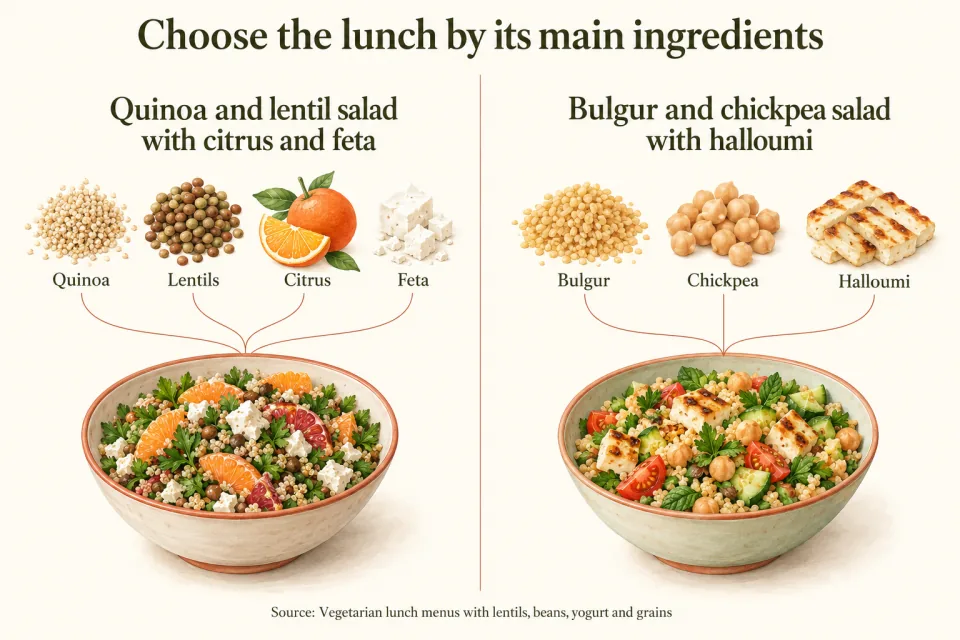
Quinoa, lentils and feta make a salad with a cooked grain component and a citrus dressing. Silvana Franco's Good Food recipe uses orange zest, orange juice and wine vinegar, with tarragon added to softened shallot or onion. Choose it when the menu calls for grains within the main dish.
Boil the quinoa until tender, then drain it thoroughly and allow it to cool before assembly. The recipe gives a quinoa cooking time of 10–15 minutes. Set out the other ingredients during this preparation, separating those that need cooking from those that will be mixed into the salad later.
Soften the shallot or onion in the oil before stirring in the tarragon. This is a separate preparation from boiling the quinoa. Follow the recipe's sequence rather than adding the onion directly to the finished bowl, because the specified ingredient is softened onion with herbs.
For the menu record, name the quinoa, lentils and feta separately, followed by the vegetables and citrus seasoning. Record the quinoa amount at the stage specified by the recipe, and label any cooked weight separately. Do the same for the canned lentils after draining. That gives the eventual recipe calculation clearly identified ingredients instead of an undifferentiated weight for the finished salad.
Part 04
of 11
04 / Field note
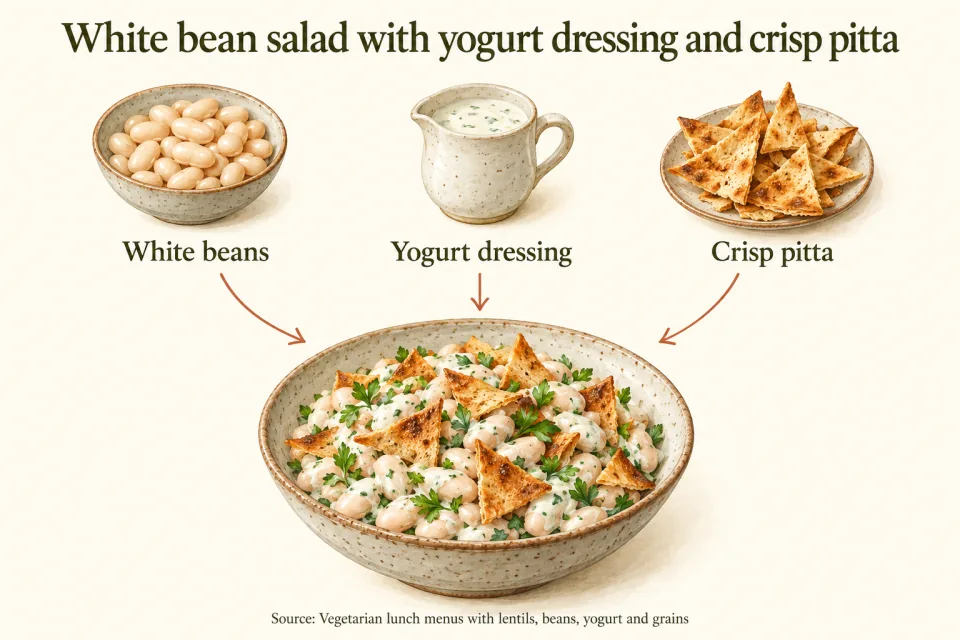
White bean salad with yogurt dressing and crisp pitta
White beans, broad beans and wholemeal pitta form a salad lunch with a blended yogurt-avocado dressing. The Good Food Middle East recipe combines the beans with lettuce, spring onions, grated carrots and radishes. Its bread component is prepared as crisp triangles and added during the final assembly.
Rinse and drain the white beans before combining them with the vegetables. Prepare the broad beans separately, then drain them and remove their outer skins. This gives the bean preparation its own place in the workflow instead of treating all the ingredients as ready to mix straight away.
Blend avocado, parsley, yogurt, garlic, lemon juice and lemon zest for the dressing. Record the avocado and yogurt individually before blending, along with the other dressing ingredients. On a menu, the phrase yogurt dressing should still refer to this full mixture.
Cut the wholemeal pitta into triangles and toast them until crisp. Dress the bean-and-vegetable mixture, then add the pitta pieces and cress. The recipe's final assembly puts the bread after the dressing, so arrange the work around that order. Include the pitta in the lunch description and in any later nutrition calculation, even though it appears as a topping.
Part 05
of 11
05 / Field note
Butter bean and spinach stew with garlic yogurt
Butter beans and spinach make a warm lunch with carrots, red pepper, cherry tomatoes and tomato purée. Sara Buenfeld's recipe finishes the stew with a separate garlic-yogurt topping. Rosemary, smoked paprika and sherry vinegar provide its seasoning.
Begin with the onion, carrots and sliced garlic. The recipe cooks these in oil for ten minutes before adding sherry vinegar and the remaining stew ingredients. Drain the butter beans for this dish, and prepare the pepper and tomatoes before moving into the next cooking stage.
Rosemary and smoked paprika season the stew during a further 15-minute cooking stage. Mix crushed garlic into yogurt separately for the topping. Preparing that mixture while the stew cooks gives each component a clear place in the sequence, with sliced garlic in the pan and crushed garlic in the yogurt.
Stir in the spinach near the end and cook until it has wilted. Add a splash of water if needed, as the recipe directs. Finish the menu description with the garlic yogurt so it remains part of the planned lunch. Record the stew ingredients and topping separately, then bring them together in the record for the complete dish.
Part 06
of 11
06 / Field note
Savory yogurt bowls with herbed lentils
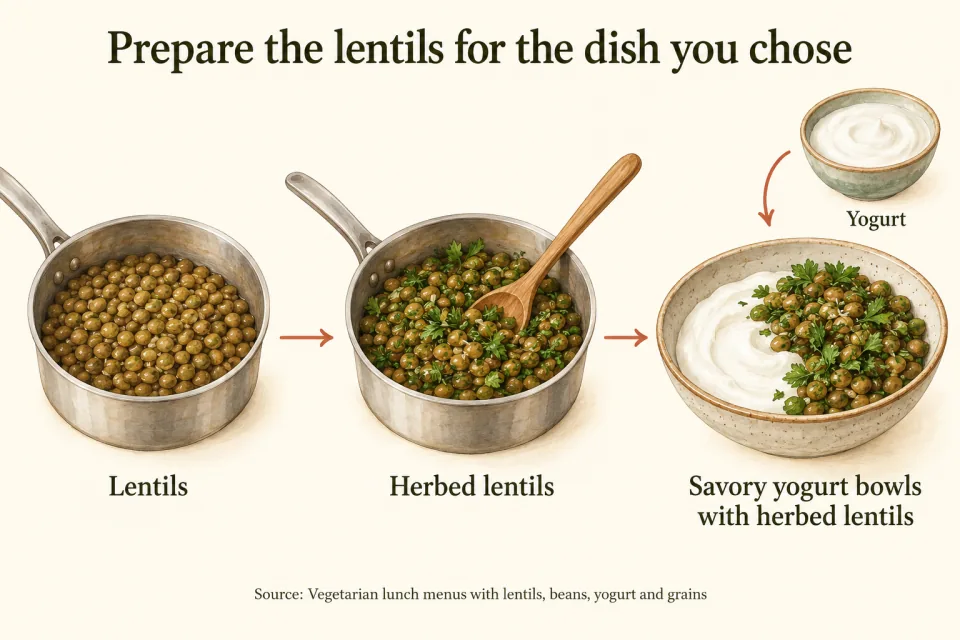
A savory yogurt bowl places dressed green lentils over plain Greek yogurt, with tomatoes, olives and artichokes on top. Zannat Reza's recipe uses lemon juice and olive oil with oregano, basil, thyme, parsley and turmeric to season the cooked lentils. The yogurt forms the base of the dish.
Prepare the lentil mixture before assembling the bowls. Measure the yogurt separately, spoon the dressed lentils over it, and finish with oil-packed sun-dried tomatoes, black olives and artichoke quarters. This arrangement gives the recipe a different form from a salad in which yogurt is blended into a dressing.
The source also suggests presenting the components as a self-serve yogurt bar. For a shared lunch, arrange the yogurt, lentil mixture and specified toppings as separate components. Use the same ingredient record as for assembled bowls, with each topping named rather than grouped under a general garnish entry.
Pay particular attention to the distinction between the oil used to dress the lentils and the oil-packed tomatoes. Record each as it is used in the recipe. The tomatoes belong in the record under their stated preparation, while the dressing oil has its own measured amount.
Part 07
of 11
07 / Field note
Yogurt, spiced lentils and poached eggs
The Turkish-style egg recipe combines yogurt, cooked whole red lentils and poached eggs. Its lentil topping includes browned butter, Aleppo pepper, cayenne and olive oil. Dill, mint and a lemon wedge finish the assembled bowls.
Warm plain nonfat Greek yogurt over a double boiler while stirring in garlic and salt. Prepare the lentil topping separately by browning the butter and folding in the cooked lentils with the peppers and olive oil. These are distinct preparations, so set out the yogurt ingredients and lentil ingredients separately before starting.
Assemble the dish with the yogurt underneath, followed by the lentils and poached egg. Finish with the herbs and lemon specified in the recipe. For a general lunch rotation, this provides an egg-containing choice alongside the lentil-and-feta salad or the butter bean stew.
Use the recipe's stated whole red lentils when recording this version. Name the yogurt type as well, rather than shortening the entry to dairy. Include butter and olive oil separately in the ingredient record, since both appear in the lentil preparation. The egg is another component of the bowl, and the herbs and lemon complete the recipe description.
Part 08
of 11
08 / Field note
Bulgur and chickpea salad with halloumi
Bulgur, chickpeas and rocket form the salad beneath fried halloumi in this Good Food Middle East recipe. Lime zest, lime juice and sweet paprika season the grain through the dressing. Choose this menu when you want the grain, pulse and cheese prepared as distinct components before serving.
Cook the bulgur, then stir the lime-and-paprika dressing through it before adding the drained, rinsed chickpeas and rocket. This sequence dresses the grain before the other salad ingredients join it. Slice the halloumi for frying and prepare it separately from the salad.
The recipe fries the halloumi for three to four minutes on each side, until golden and beginning to crisp. Place the cooked cheese with the grain-and-chickpea salad to complete the dish. Record the cheese amount before cooking, along with the oil allocated to the pan.
The source offers couscous, quinoa or mixed grains as alternatives to bulgur. If using a named alternative, identify that choice in the menu and ingredient record. Follow the preparation for the grain chosen, and preserve the rest of the recipe's stated structure: seasoned grain, chickpeas and rocket with fried halloumi. Record the frying oil and dressing oil as separate entries during preparation.
Part 09
of 11
09 / Field note
Lentil and quinoa salad without eggs or dairy
The Vegetarian Society's lentil, quinoa, kale and smoked almond salad provides a vegan choice for the lunch rotation. It combines cooked Puy lentils and quinoa with finely chopped kale, carrot and courgette. Lemon juice, minced garlic, rapeseed oil and tamari season the mixture.
Cook the lentils and quinoa in separate pans, then allow them to cool before combining them with the vegetables. Prepare the chopped vegetables while working through those cooking stages. The recipe gives each cooked ingredient its own preparation rather than boiling the lentils and quinoa together.
Chop half the smoked almonds into the salad and leave the remaining almonds whole. This is a specified part of the recipe's assembly, so account for all the almonds even though they appear in different forms. Record the rapeseed oil used in the seasoning as well.
Use this complete recipe when planning the egg-free and dairy-free option. It has its own ingredients and seasoning, including almonds and tamari, so write those into the menu description. For a mixed selection of vegetarian lunches, label this dish separately from the feta, halloumi and yogurt dishes. That makes the available choices clear without presenting it as the same recipe with an ingredient omitted.
Part 10
of 11
10 / Field note
Prepare the lentils for the dish you chose
Whole lentils are suited to salads because they retain their seed coats and hold their shape better when cooked. The lentil cooking guide describes split red lentils as blending more readily into sauces, soups, stews and purées. Match the lentil form to the named recipe before starting the preparation.
The cooking guide says lentils do not need soaking. Rinse dried lentils before boiling to remove dust or debris, then choose a saucepan with room for them to expand. The guide specifies three cups of cooking liquid for each cup of dried lentils. Its typical cooking times are 15–20 minutes for whole lentils and five to seven minutes for split red lentils.
For the lentil-and-pepper salad, the recipe starts with canned lentils that are rinsed and drained. The savory yogurt bowl starts with cooked green lentils, while the egg dish specifies cooked whole red lentils. Write those forms into the preparation plan so the correct ingredient reaches each dish.
When organizing a lunch menu, separate tasks that start with dried ingredients from tasks that start with canned or already cooked ingredients. Put the quinoa cooking alongside the dried-lentil preparation where the recipe uses separate pans. Reserve the dressing and assembly steps for after the ingredients have reached the stage the recipe specifies.
Part 11
of 11
11 / Field note
Record oil, cheese and bread with the whole lunch
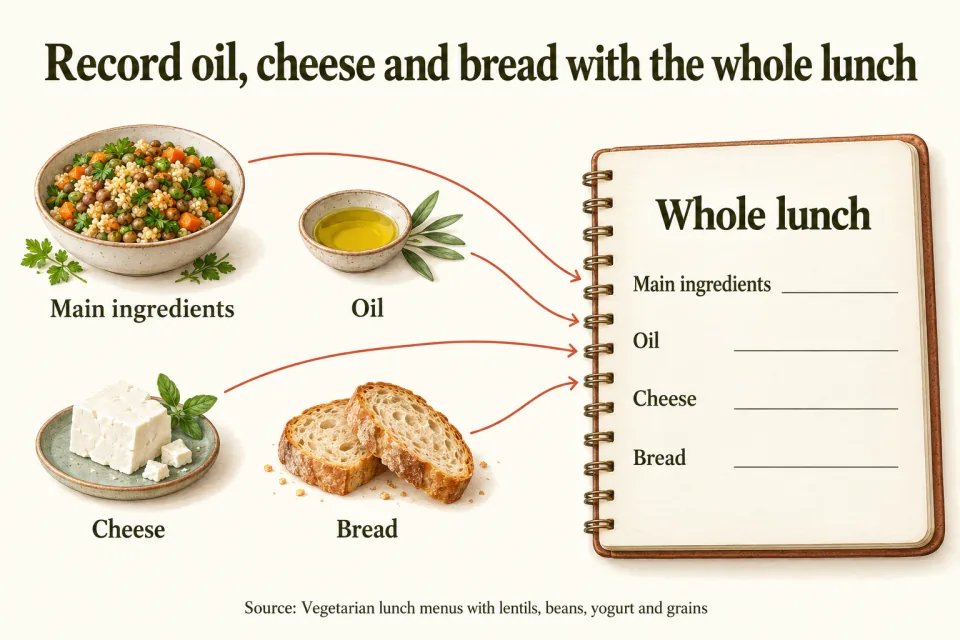
A complete lunch calculation should include the recipe's oil, cheese, yogurt and bread alongside its beans, lentils and grains. Start with an ingredient record for the full recipe, naming each ingredient and the form used. Add the dressing and toppings before deciding that the record is complete.
The lentil-and-red-pepper recipe specifies four tablespoons of olive oil and 150–200 g of feta for two servings. The quinoa-and-lentil recipe serves four and lists 200 g of quinoa, a 400 g can of lentils, 100 g of feta and one teaspoon of olive oil. Compare those ingredient lists at their stated recipe sizes rather than treating lentil-and-feta salads as interchangeable.
The halloumi recipe specifies five tablespoons of olive oil, allocating two tablespoons to frying and the rest to dressing. Enter those uses separately while preparing the dish, then include both in the recipe record. The bean salad includes two wholemeal pitta breads. Add them to the record before they are cut and toasted, even though the finished pieces are scattered over the salad.
Label weights by preparation stage. If weighing cooked quinoa, identify it as cooked; if weighing drained beans, identify them as drained. For a self-serve yogurt lunch, record the components placed in the bowl as well as the recipe used for the lentil mixture. This gives the complete lunch a specific ingredient record, including additions that can disappear behind words such as dressing or topping.
Sources / 09
Continue reading
Return to the card board